




















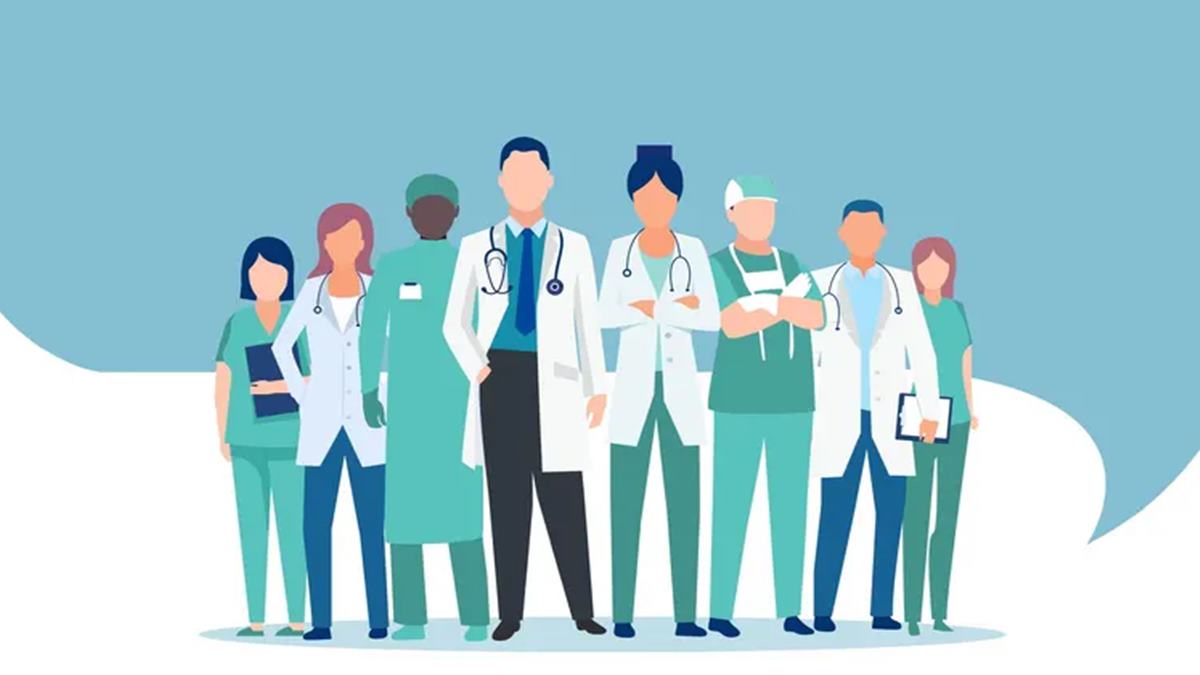
rtificial intelligence is being integrated into healthcare at remarkable speed. AI tools now read medical images, draft clinical notes, assist with diagnosis, summarize charts and communicate with patients. As these technologies mature, a critical question faces students, clinicians and educators. Which healthcare jobs will remain secure in an AI-enabled future?
The answer is not simply which tasks AI can perform. It is which roles can’t be automated without undermining safety, quality or trust. Professions that rely on hands-on skill, judgment, empathy and adaptability remain fundamentally human. Below are 10 AI-proof healthcare careers that will remain essential in the decades ahead.
1. Surgeons
Surgeons diagnose and treat disease through complex operative procedures that require technical mastery, precision and rapid decision making. AI has been integrated into surgery through robotic platforms, real-time imaging analysis, preoperative tools that predict surgical risk.
Despite these advances, surgery remains one of the most AI-proof professions. The operating room is unpredictable. Surgeons must interpret tactile feedback, adjust techniques on the fly and respond to unexpected anatomy or sudden bleeding. These moments demand judgment that autonomous systems can’t replicate.
To become a surgeon, individuals must complete college, medical school and five to seven years of residency involving long hours, and sometimes additional fellowship training of one to three years. According to the 2025 Doximity Salary survey, average annual earnings for a general surgeon are $482,574. For plastic surgeons and orthopedic surgeons, annual salaries are $621,445 and $679,517, respectively.
2. Paramedics and Emergency Medical Technicians
Paramedics and EMTs provide emergency care in uncontrolled environments such as roadside crashes, homes and public spaces. Their work includes assessing patients with limited information, performing lifesaving procedures and making rapid decisions under pressure. AI is beginning to support paramedicine through improved dispatch routing and automated triage tools.
Even so, field care is among the most AI-resistant roles in healthcare. The chaotic settings, need for physical improvisation and hands-on management of airway emergencies or trauma make automation unrealistic. Human adaptability remains essential.
EMTs train through certificate programs involving 120 to 150 hours. Paramedics complete one- or two-year programs with clinical rotations. According to the Bureau of Labor and Statistics, 2024 median annual wages for EMTs were $41,340 and $58,410 for paramedics.
3. Registered Nurses
Registered Nurses (RNs) deliver continuous bedside care that blends technical skill, clinical assessment, emotional support and advocacy. AI is helping nurses by automating documentation and predicting risk of falls or sepsis.
Nursing is an AI-proof profession because its core tasks depend on empathy, situational awareness and physical assessments. Nurses are trained to recognize subtle deterioration, comfort distressed patients and interpret nonverbal cue. A human nursing presence is vital to patient safety and trust.
RNs train through associate or bachelor’s programs. The median 2024 annual salary for a registered nurse is $93,600 dollars.
4. Emergency Medicine Physicians
Emergency physicians diagnose and stabilize patients with life-threatening conditions ranging from trauma to strokes to psychiatric crises. AI supports emergency medicine by helping support documentation, interpret imaging and improving triage accuracy.
However, the emergency department remains deeply AI-resistant because clinicians must work with incomplete information, shifting presentations and time-critical decisions. The constant need to improvise and rapidly reassess makes human judgment indispensable.
Emergency physicians need to complete college, medical school, followed by a three- or four-year residency. In 2025, the average annual salary for an emergency physician was $411,133.
5. Anesthesiologists And Certified Registered Nurse Anesthetists
Anesthesiologists and Certified Registered Nurse Anesthetists (CRNAs) manage sedation minute-to-minute throughout surgery and other procedures by adjusting medications, monitoring vitals and performing airway procedures. AI is increasingly used in real-time physiologic monitoring and early warning systems.
Yet anesthesia remains AI-proof because the job requires interpretation of subtle changes in vital signs and immediate response to crises such as airway obstruction or sudden blood loss. These situations demand human intuition, hands-on skill and constant collaboration with the surgical team.
Anesthesiologists complete college, medical school and a four year residency with optional fellowship training in pain medicine, critical care and others. CRNAs complete a bachelor’s degree in nursing, gain critical care experience as an RN, and then earn a doctoral degree in nurse anesthesia through an accredited program before national certification and state licensure. The average annual salary of an anesthesiologist is $523,277 (2025) and the average salary of a CRNA is $214,200 (2024).
6. Obstetricians
Obstetricians manage pregnancy, labor and delivery, providing continuous assessment, hands-on procedures and rapid decision making to ensure the safety of both mother and baby. AI is being used in obstetrics to support fetal monitoring interpretation and to predict complications.
Obstetrics remains AI-proof because childbirth is highly variable and often unpredictable, requiring immediate human response to emergencies and other issues that arise. Obstetricians must integrate tactile feedback, interpret maternal and fetal physiology and manage the emotional context of labor while performing procedures that demand real-time situational awareness.
Obstetricians complete college, medical school and a four year residency in obstetrics and gynecology. Some many pursue additional fellowship subspecialty training. The 2025 average annual salary of an obstetrician-gynecologist is $389,566 dollars.
7. Dentists
Dentists diagnose and treat oral disease through procedures like restorations, extractions, implants and root canals. AI is used in dentistry to interpret radiographs, identify early decay, enhance scheduling and improve treatment planning.
Yet dentistry remains highly resistant to automation because procedures require fine motor skills, real-time tactile judgment and adaptation to patient discomfort or unique oral anatomy. Robots cannot reliably operate with the precision and variability required inside the human mouth.
Dentists complete college, dental school and optional specialty training. The 2024 median annual salary of a dentist is $179,210.
8. Mental Health Clinicians
Psychiatrists, psychologists and therapists diagnose and treat mental health conditions using therapy, medication management and crisis intervention. AI is increasingly used in mental health through chatbots, digital cognitive behavioral therapy tools and predictive models for relapse risk.
Yet, mental health care remains deeply human. This is because the therapeutic alliance between clinician and the patient is one of the strongest predictors of improvement. Clinicians also interpret tone, hesitation, facial expression and emotional nuance. They navigate complex personal narratives and provide empathy, reassurance and ethical judgment. These functions cannot be replicated by automated tools.
Psychiatrists complete medical school after college, followed by a four-year psychiatry residency and optional fellowship training. Psychiatrists earn $344,177 per year on average (2025). Psychologists typically earn a doctoral degree such as a PhD or PsyD after college and complete supervised clinical training. The average 2024 salary for psychologist is $94,310. Therapists generally complete a master’s degree in fields such as counseling, social work or marriage and family therapy, followed by supervised clinical hours. Therapists earned $75,660 on average per year in 2024.
9. Primary Care Physicians
Primary care physicians diagnose a wide range of conditions, manage chronic disease and provide preventive counseling. They build long-term relationships and integrate medical, psychological and social factors into decision making. AI is used in primary care for documentation, diagnostic suggestions and population health management.
Despite these tools, primary care remains AI-proof because trust, continuity and nuanced communication drive better outcomes. AI can offer recommendations but cannot understand a patient’s values or life context the way a human clinician can.
Training includes for primary care physicians includes college and medical school followed by a three-year residency. The annual salary for a primary care physician is $326,116 (2025).
10. Nurse Practitioners and Physician Assistants
Nurse practitioners (NP) diagnose and treat illnesses, prescribe medications and provide counseling across primary and specialty care. Similarly, physician assistants (PA) evaluate patients, order tests, perform procedures and provide counseling while working closely with supervising physicians. AI supports NPs and PAs through decision aids and automated note drafting.
NPs and PAs and remain resistant to automation because their work relies on patient relationships, communication and individualized judgment. They integrate medical knowledge with a holistic understanding of patient goals and preferences. AI can support care but cannot replace the human elements central to NP and PA practice.
NPs first become RNs, then complete a graduate program such as a Master of Science in Nursing or a Doctor of Nursing Practice. PAs complete a two or three year master’s-level program which includes classroom instruction and clinical rotations across multiple specialties. The median 2024 annual salary for NPs is $124,680 while PAs earn $125,270 on average.
Ultimately, AI will continue to reshape clinical practice. But it cannot replace the relational and hands-on work that defines these professions. For students and early career clinicians, the message is clear: choose roles where human presence matters. In these careers, AI will become a powerful partner that allows clinicians to focus on what only humans can do.