











The way employees are trained, coached and supported is being transformed through artificial intelligence, according to a warehousing expert.
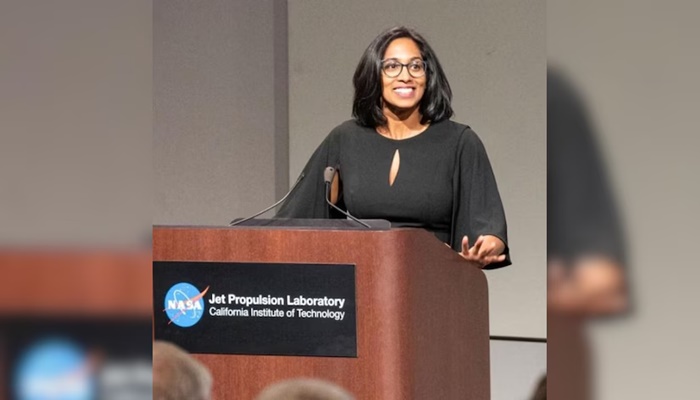
Paige Wilkinson, senior director of solution consulting at Softeon, noted how AI is revolutionizing employee performance management during ProMat 2025 in Chicago, an event for manufacturing and supply chain professionals.
“Traditional management language” of manual scheduling and reactive coaching is giving way to more intelligent, data-driven approaches, she explained. The technology can now provide nuanced, targeted feedback that goes far beyond traditional performance reviews.
“I have been in a lot of performance management,” Wilkinson explained. “I have managed a lot of supervisors that have not always given the best feedback. They will go to employees and say things like, ‘You’re not hitting standard, you need to be better.’ That’s not really a productive conversation.”
Generative AI offers a solution, helping supervisors provide more constructive and empowering feedback. The technology can help craft conversations that are both honest and supportive, focusing on improvement rather than criticism.
Importantly, the approach isn’t just about addressing low performers. “A big part of employee retention and happy employees is actually getting our high performers positive reinforcement,” Wilkinson noted.
When an employee isn’t meeting performance standards, AI can dig deeper. Using causal modelling, it might recommend targeted retraining. For instance, if an employee is struggling in a specific area, the AI could suggest that “we retrain Stephanie in that specific area since the cause of her falling below standard is maybe she didn’t get enough training.”
The predictive capabilities go even further. The AI can potentially calculate the broader operational impact of such interventions. As Wilkinson describes, the system might determine that “retraining Stephanie might actually improve the overall operation” and could even help the company “staff half a person less in that department.”
Other AI technologies add another layer of insight, using camera systems to analyze work patterns and provide additional performance data. These systems can identify non-optimal task completion structures and suggest improvements.
The goal is collaboration, not replacement. AI serves to enhance human decision-making, providing unprecedented insights and suggestions while leaving critical judgments to human managers.
“AI in labour management is not just about automation,” Wilkinson said. “It’s about enabling warehouse management to make more data-driven decisions with unprecedented precision.”
Source- https://www.autoserviceworld.com/how-ai-is-reshaping-employee-performance-workplace-expertise/