



















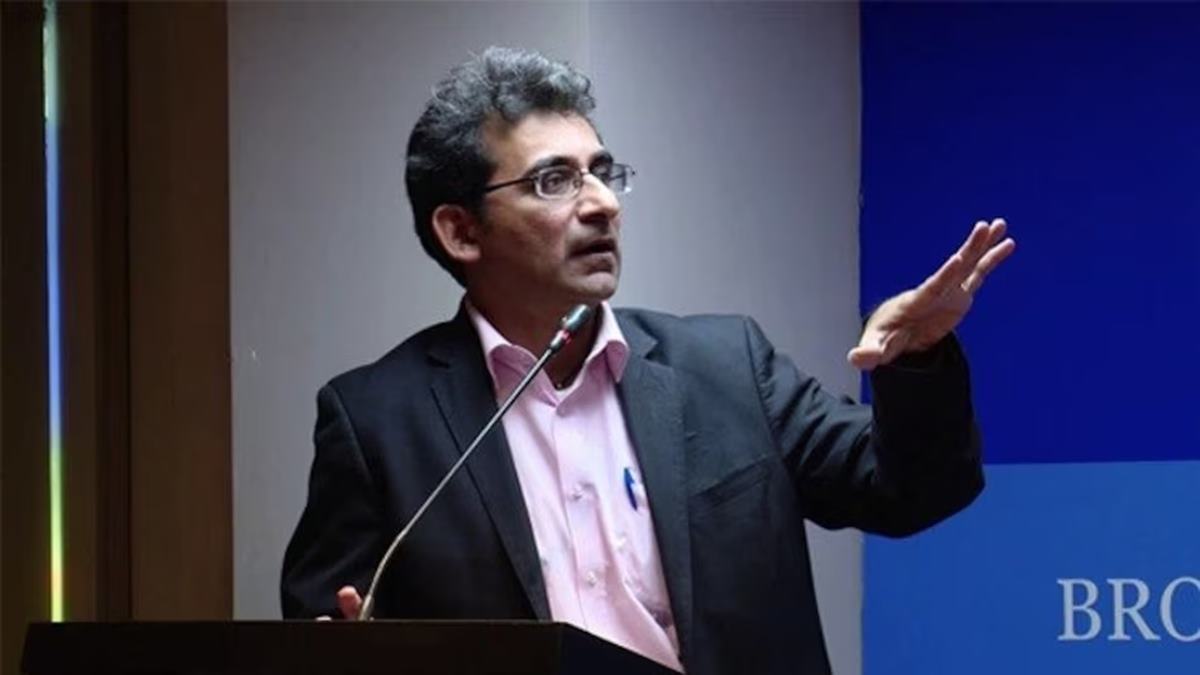
JPMorgan’s Chief India Economist Sajjid Chinoy has warned that Chinese exports are “flooding Asia” and said India faces a twin challenge in a world that is rapidly deglobalising and simultaneously shifting toward capital-intensive, AI-driven production. Speaking to Govindraj Ethiraj on The Core, Chinoy said the global exuberance around growth and technology must be viewed through the lens of emerging markets, which stand to be squeezed the most.
He said emerging markets, including India, are entering a period of weaker globalisation. “If you look through all the noise…the ones that get really squeezed are going to be emerging markets because the world is getting much less globalized,” he said.
According to him, advanced economies now broadly agree that “the globalization of the last 10 or 15 years failed them” and that fiscal policy has become much less well-behaved and much more vulnerable and precarious in advanced economies.
“But you’re in a world where you will face much less globalization or much more deglobalization. Why does this matter? Because if you look at emerging market growth over the last 25 years and you take China out of this picture and you look at those growth rates and you plot a line of global trading volumes, it’s essentially the same line.”
In other words, he said, emerging markets, including India, have been far more reliant on export-led growth than we believe.
He added that the ongoing tariff war between the US and China was reshaping trade flows. “With the US putting on high tariffs on China, what China used to export to the US is now being progressively redirected to the rest of the world,” he said.
Using an analogy, he added, “Think of a river flowing down. Those are Chinese exports. And the US puts on a big tariff wall akin to a dam. What happens? The water floods the adjoining areas. That’s what you’re seeing. The Chinese exports are flooding Asia, coming into India, the Middle East, North Africa, even Latin America.”
This, Chinoy said, leaves India with two problems – finding export growth in a Balkanised trading system and protecting domestic manufacturing from cheap inflows driven by China’s excess capacity and deflation. “You’re also playing defense at home,” he said.
Chinoy then turned to the threat emerging from artificial intelligence and automation. Manufacturing globally, he said, is already seeing fewer workers per unit of output. “Every unit of output involves more machines and fewer people,” he said, noting that AI may replicate this challenge at the white-collar level.
“If you’re an aging economy like Japan, China, and Europe, you don’t worry about this. When you’re India and you’ve got your dividend in front of you over the next 15 years, that’s a very real question.”
To illustrate the new economic model emerging from the AI boom, he pointed to Taiwan. “The buildout of Taiwan is very instructive. This is AI buildout, not adoption,” he said. Taiwan, he noted, is the single largest beneficiary of data-center demand in the US. “All the servers and the GPUs and the high-end chips go from TSMC, Taiwan,” he said.
Yet the spillover to workers remains negligible. “Taiwanese exports have been growing at 33% over the last year. Taiwanese private consumption over the last year has grown less than 1%,” he said, highlighting that the gains are too capital-intensive to create jobs. The consequences, he added, are already visible.
“The Taiwanese government has had to roll out 2% of GDP in fiscal support and cash transfers for an economy that is at the center of the AI boom that’s growing at 7% this year.”
Chinoy said Taiwan’s experience is “a harbinger of things to come globally”.