











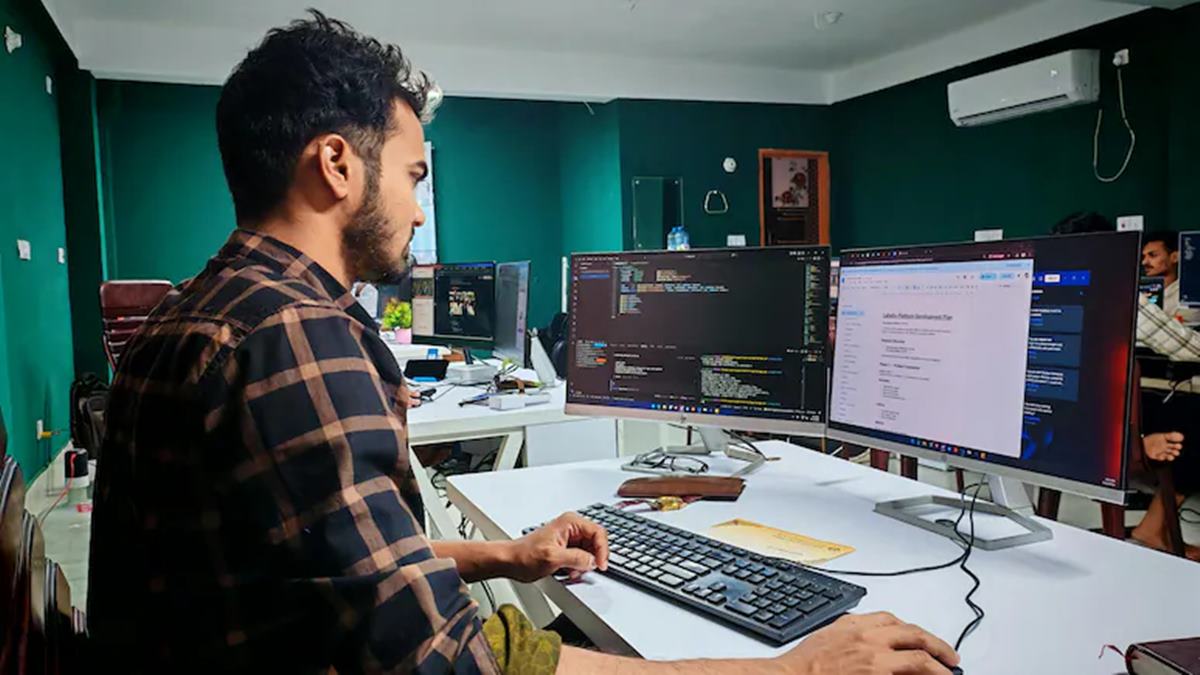




Goodbye cubicles, hello collaboration! In less than a decade, what started as a quick alternative for startups, has turned into a disruptive force in the Indian office sector. Flexible offices are reimagining how millions of Indians work every day.
As more and more companies bring back the “office-first” policy, these spaces are witnessing an increased interest. The findings of our latest 2025 India Office Occupier Survey validate this. It said that 94% of the Indian companies want their employees to work from office at least three times a week. At the same time, the number of companies with 26-50% of their office space being flexible is set to increase by over two-fold in the next two years.
The growing preference of these spaces was even strongly reflected in the finding that one in every ten of the surveyed companies want to have 76-100% of their office portfolio as flexible. Another 5% want to have 51-75% of their portfolio as flexible over the next couple of years.
Nearly half of the occupiers surveyed (49%) expect to have more than 10% of their office portfolio in flexible workspaces by 2026. So, this isn’t a fleeting trend but a strategic necessity that allows companies to adapt to evolving business needs, manage growth, and optimize their real estate costs.
The occupiers are also focussing more on employee experience and the flight-to-quality trend is expected to gain further momentum. Access to public transport, green open spaces and diverse food & beverages options are becoming key decision-makers for them.
To cater to this, flexible space operators are increasing their focus on refining their offerings by incorporating more amenities including better technology and value-added services like pantries. They are also shifting towards more adaptable lease terms, allowing their finances to remain nimble.
A particularly high interest in these types of offices is being witnessed in the GCC occupiers. Currently, around 22% of GCC occupiers have more than 10% of the total office portfolio as flexible. This is likely to jump to 48% over the next two years.
They prefer flex spaces to support a wide array of functions including data analytics, research & development, and product development. Some of these require collaboration, which is facilitated easily by these workplaces.
Moreover, it also helps them host temporary project teams and test new markets before deciding a substantial investment.
And this trend is not limited to bigger cities. While the trend started in the metros, they are now gaining traction in smaller cities as well. Shared managed offices and on-demand spaces are becoming popular among people with smaller businesses, which require a relatively limited access to dedicated workplaces.
Moreover, companies are also demanding the flex operators to embed attendance systems in their spaces, to allow them to track the employees in different cities. This reduces the need for some of them to relocate to metros and gives a chance to the firms to not lose out on better candidates.
There is also a renewed consideration for sustainability. Environmental, Social, and Governance (ESG) goals are no longer a side note but a central part of real estate strategies. Our survey found that 63% of firms have defined ESG goals specifically for their real estate portfolios, signalling a more holistic approach to ecological consciousness, moving beyond just securing green-certified spaces.
The future of work in India is not a binary choice between remote and in-office. It is a nuanced, strategic, and adaptive model that combines a focus on in-person collaboration with the agility of flexible workspaces. It is a future where the physical office is a strategic asset designed to attract talent, foster culture, and drive business growth, all while keeping a close eye on sustainability and long-term viability. India’s corporate leaders are ready to build this “better workplace” and that their choices will define the next chapter of work.
Source – https://cxotoday.com/story/the-future-is-flexible-rise-of-a-new-workplace-in-india/