




















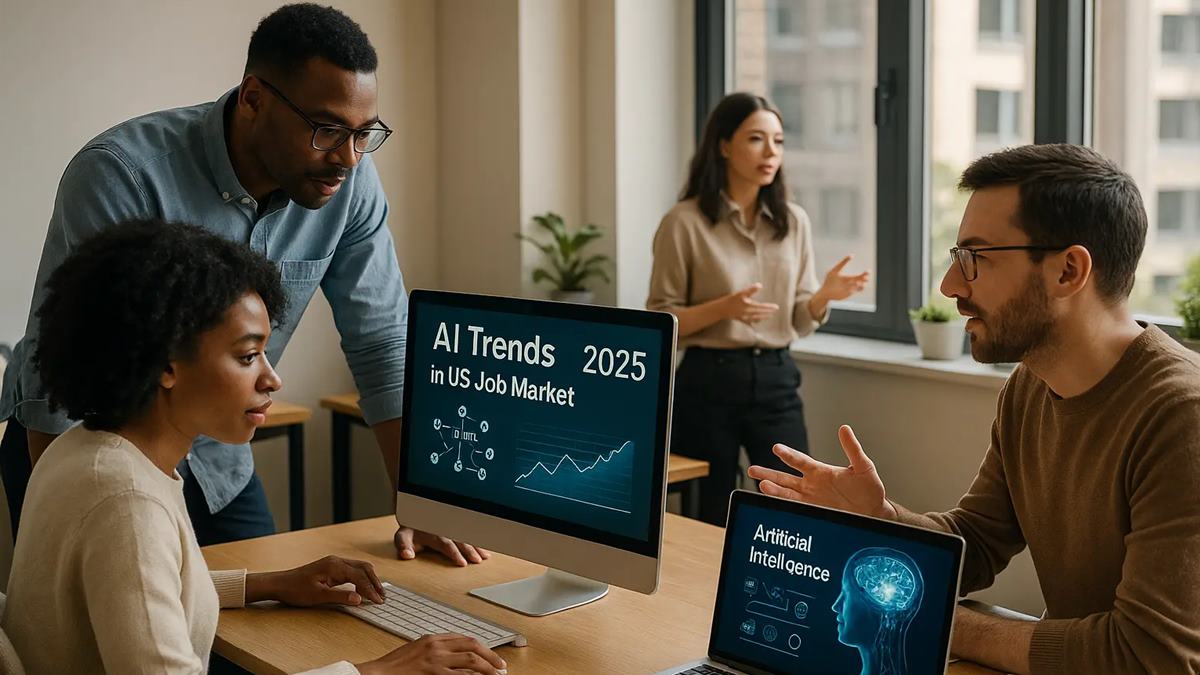
The Evolving Landscape of Work in the United States
The future of work in the United States is undergoing a substantial transformation, driven by rapid advancements in artificial intelligence, automation, and a shifting demographic landscape.
Experts underscore that while technology is reshaping job functions, it does not diminish the necessity for human involvement; rather, it redefines the competencies that workers must offer in today’s market.
“No profession will remain untouched by artificial intelligence or automation,” asserted Anu Madgavkar, a partner at McKinsey Global Institute. “In the coming five to seven years, whatever job you hold will likely interact with AI or automation in some capacity.”
Human Skills: The Bedrock of Employment
Amid the escalating influence of AI, a significant proportion of the workforce remains entrenched in roles that prioritize human interaction. Over one-third of all jobs in the U.S. are characterized as “people-centric,” necessitating emotional intelligence, judgment, and effective interpersonal communication.
Looking ahead, the employment landscape will demand that workers amalgamate human and technological expertise, added Madgavkar, co-author of the recently published study, “Agents, robots, and us: Skill partnerships in the age of AI.”
Furthermore, jobs traditionally perceived as hands-on and resistant to automation are also evolving. “Even essential human roles, ranging from customer service to construction, will feel the impact of technology and artificial intelligence,” Madgavkar cautioned.
The Imperative of Lifelong Learning
Experts contend that adaptability will be paramount for career success in the forthcoming decade. Workers—whether entering the labor force for the first time or possessing extensive experience—must familiarize themselves with technology and AI, as highlighted by Madgavkar.
Continuous upskilling will be a necessity—not an occasional endeavor. With AI and robots capable of handling the more arduous and time-consuming tasks, human workers will have the opportunity to channel their energies into more innovative and thoughtful pursuits.
They will require fluency in AI and technology, not necessarily in coding, but in collaborating with technological tools, refining outputs, and elevating workflows.
“Companies that are evolving will enhance their operations by collaborating with technology,” she emphasized. “They are inventing and reinventing new work methods in real time.”
The Indispensable Role of Humans in Workspaces
Even as the march toward automation accelerates, experts affirm that human contributions remain pivotal. Madgavkar stressed that humans will remain at the heart of the workforce.
Skills that translate across a spectrum of industries—such as robust communication, leadership, and problem-solving—will continue to deliver immense value that machines are incapable of replicating.
Data compiled by the U.S. Bureau of Labor Statistics illuminates that a majority of the fastest-growing occupations are situated within healthcare and social service sectors, which are not easily outsourced or automated. Technical and trade roles that necessitate hands-on expertise are also projected to maintain strong demand.
As the U.S. demographic ages, the need for healthcare services will intensify, thereby augmenting the demand for professionals across varying levels of education and training. This includes a range of roles such as doctors, nurses, nurse practitioners, physical therapists, and occupational therapists.
In addition to clinical positions, the healthcare industry also encompasses numerous office-based careers, including administrators in hospitals and senior living facilities, healthcare consultants, recruiters, office managers, and health insurance claims processors.
Frequently Asked Questions:
Q1. What constitutes high-paying careers?
High-paying careers are positions that offer significant salaries and promising long-term earning potential, typically requiring specialized skills, training, or experience.
Q2. Will artificial intelligence replace a majority of jobs?
AI is expected to transform job functions rather than eliminate roles altogether. Many professions will evolve to integrate human skills with technological advancements.
Source- https://www.rswebsols.com/news/future-lucrative-careers-the-impact-of-ai-on-the-u-s-job-market/