

















For years, resilience has been held up as a leadership virtue. The ability to adapt, endure, and bounce back has been praised as essential in uncertain times. But in the post-Covid workplace, resilience is increasingly doing the opposite of what leaders intend. Instead of strengthening organizations, it is quietly pulling them back into structures that were already failing.
The Pandemic Revealed a More Human Model of Resilience
During the pandemic, many organizations proved something remarkable: work could be more human without collapsing performance. Flexibility expanded. Trust increased. Well-being became a legitimate leadership concern rather than a personal afterthought. And long-standing assumptions about where, when, and how work had to happen were overturned almost overnight.
In the years since, however, the pendulum has swung sharply back.
Rigid return-to-office mandates, tighter controls, shrinking tolerance for flexibility, and renewed command-and-control leadership have become common. In many organizations, the implicit message is clear: whatever we learned during the pandemic, it’s time to “get back to normal.”
The problem is that normal was already breaking people.
When Resilience Masks System Problems, Not Leadership Strength
What’s often labeled as resilience today looks less like healthy adaptation and more like institutional avoidance. Teams are asked to absorb more work with fewer resources. Leaders praise endurance while leaving underlying constraints untouched. Burnout is treated as an individual issue rather than a signal from the system.
In systems terms, this isn’t resilience. It’s self-protection.
Extractive systems are remarkably good at recovery. They bounce back quickly, reassert familiar hierarchies, and absorb shocks without altering their operating logic. When resilience is emphasized without redesign, it becomes a way for the system to survive unchanged — at the expense of the people inside it.
A Better Model: Resilience Through Redesign
This wasn’t inevitable.
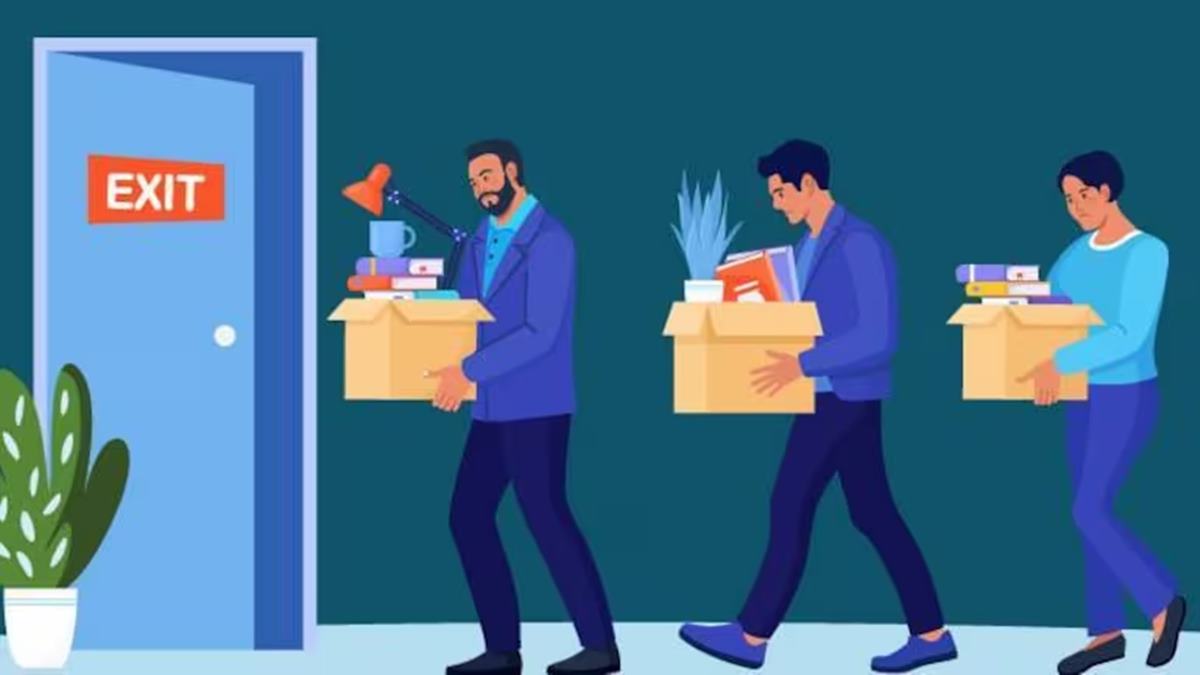
Early in the pandemic, several large organizations demonstrated a different model of resilience. In April 2020, companies including Verizon, Accenture, and Lincoln Financial Group collaborated to launch a cross-company talent platform that rapidly redeployed thousands of employees from stalled sectors into areas of urgent demand. Instead of asking individuals to be endlessly resilient in shrinking roles, leaders redesigned the system itself — moving people to where they could contribute meaningfully and sustainably.
That wasn’t resilience as endurance. It was resilience through redesign.
In my work with senior leaders, I remember thinking during that period that once we saw this level of flexibility and trust in action, we wouldn’t be able to unsee it. We had real-time evidence that organizations could operate differently — and often more effectively — when fear loosened its grip.
And yet, many leaders reverted.
The Three Leadership Responses Driving Today’s Resilience Problem
Not all leaders responded to the snapback in the same way. Broadly, three patterns have emerged:
- Some never believed in a more humane model of work and were relieved to return to familiar hierarchies.
- Others believed—but panicked when markets tightened and boards demanded certainty.
- A third group sees clearly that trust-based, people-first systems are essential for long-term performance, but their voices are drowned out by short-term pressures and institutional inertia.
When resilience becomes the answer to every strain, leaders stop asking the more important question: What is this system asking people to absorb instead of redesigning?
The Hidden Costs of Misplaced Resilience
This question matters because the cost of misplaced resilience compounds. Over time, it erodes trust, narrows the talent pipeline, and pushes capable leaders — especially caregivers and those from underrepresented groups — out of roles they could otherwise thrive in. What looks like strength on the surface becomes fragility underneath.
The path forward isn’t abandoning resilience altogether. It’s being far more discerning about when resilience is appropriate and when it’s being used as a substitute for leadership.
Resilience Should Enable Redesign — Not Replace It
Healthy organizations still need adaptability. But adaptability should prompt redesign, not just endurance. It should lead leaders to examine policies, incentives, workflows, and decision rights — not simply encourage people to cope better with structural misalignment.
The leaders who will succeed in this next chapter aren’t the ones who demand the greatest resilience from their teams. They’re the ones willing to ask harder questions about the systems they’re maintaining — and brave enough to let go of practices that no longer serve their people or their mission.
Resilience shouldn’t pull organizations backward. It should create the conditions for moving forward. And that requires less celebration of endurance — and far more courage to redesign.