


















Artificial intelligence is no longer an abstract future concept. It is already embedded in offices, banks, newsrooms, customer service centers, logistics hubs, and public administration systems, News.Az reports.
AI now drafts texts, summarizes documents, answers customer questions, writes code, analyzes data, and manages workflows at a scale that was impossible just a few years ago.
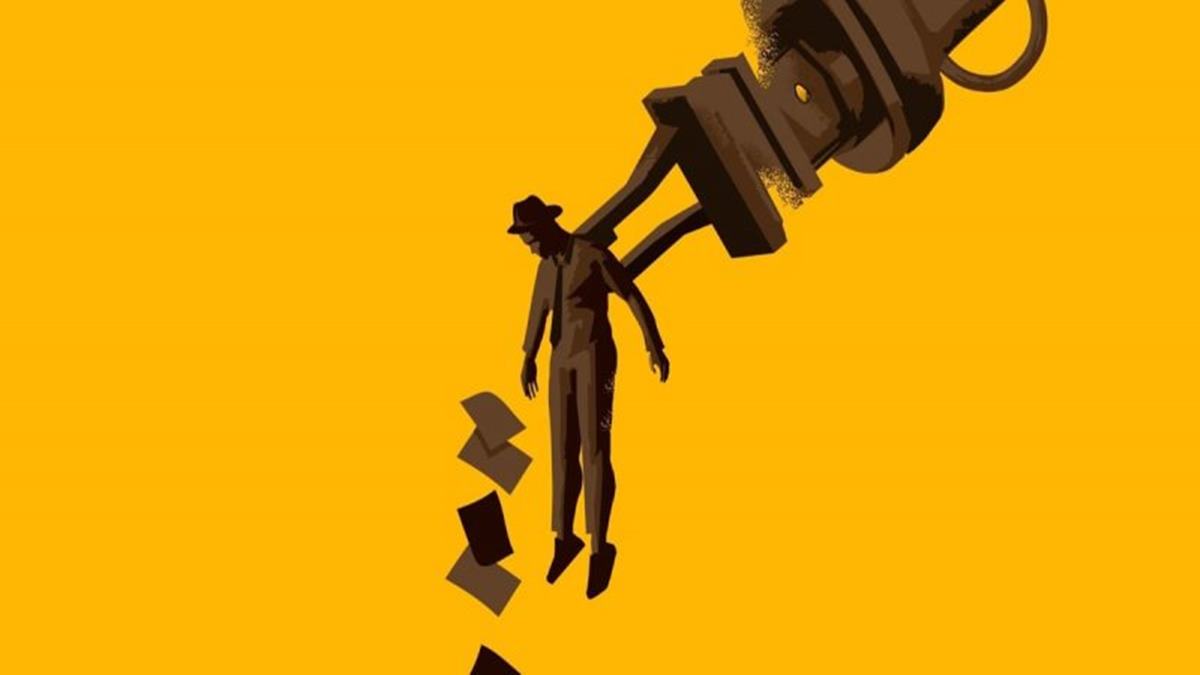
As a result, a growing number of professions are not just changing but steadily shrinking. Some roles will not vanish overnight, but they are likely to disappear as standalone jobs over the coming years as AI absorbs most of their core tasks. The key issue is not mass unemployment, but the quiet erosion of routine roles, especially entry-level positions.
This FAQ explains which professions are most at risk, why AI targets them, and what the coming years may realistically look like.
What does it really mean when people say a profession will “disappear” because of AI?
In most cases, “disappear” does not mean that all work connected to that profession suddenly stops. Instead, it usually means one of three things.
First, AI allows one employee to do the work that previously required several people, leading to sharp reductions in hiring.
Second, entry-level roles vanish because AI handles beginner tasks, leaving only senior positions.
Third, the job title itself disappears as its functions are absorbed into another role.
This is how professions fade in modern economies. They shrink gradually until they are no longer common or recognizable as separate careers.
Why are some jobs more vulnerable to AI than others?
Jobs are most vulnerable when they share four characteristics:
They involve repetitive tasks.
They rely on standardized inputs and predictable outputs.
They are mostly digital rather than physical.
They require limited independent judgment or accountability.
AI excels at pattern recognition, rule-based decisions, text generation, and data processing. When a job is built mostly around these activities, automation becomes both efficient and economically attractive.
Which professions are most likely to disappear or sharply decline due to AI?
Several job categories stand out as especially exposed.
Routine clerical and data entry roles are among the most vulnerable. Jobs that focus on transferring information between systems, filling forms, updating databases, and processing standardized records are already being automated at scale.
Basic customer support and call center roles are also under pressure. AI chatbots and voice systems can now handle common requests such as password resets, delivery tracking, appointment scheduling, and basic troubleshooting. Human agents will remain for complex cases, but the number of entry-level support roles is likely to decline.
Scheduling, travel booking, and coordination roles are shrinking as AI systems handle calendars, meetings, reservations, and policy-compliant travel planning in one workflow.
Transcription, captioning, and basic proofreading jobs are fading quickly. Speech-to-text systems and grammar tools are now fast, accurate, and inexpensive. Human oversight remains necessary for sensitive or high-risk content, but pure transcription work is becoming rare.
Bookkeeping and basic accounting support roles are increasingly automated. Tasks such as expense classification, invoice matching, reconciliations, and standard reports are now handled by AI-powered financial software. Accounting itself will remain, but the number of junior roles is likely to fall.
Junior legal support and document review roles face similar pressure. AI can summarize contracts, extract clauses, compare documents, and flag inconsistencies. While lawyers are not being replaced, the traditional pathway through large volumes of junior document work is narrowing.
Routine content production roles are also at risk. AI can generate product descriptions, basic news rewrites, templated articles, and SEO filler at scale. Original reporting, analysis, investigation, and editorial judgment remain human strengths, but low-differentiation writing roles are shrinking.
Basic coding roles focused on repetitive implementation are changing rapidly. AI tools can generate boilerplate code, tests, and standard features, reducing demand for junior developers whose work is limited to simple execution.
Will blue-collar jobs or white-collar jobs disappear first?
In the near term, white-collar jobs are more exposed. AI works best with text, data, and digital workflows, which are central to many office jobs.
Physical jobs require robots, sensors, safety systems, and expensive infrastructure. These factors slow adoption. Over the longer term, automation and robotics will affect logistics, manufacturing, and retail, but software-driven disruption is moving faster in office environments.
Is AI mainly eliminating entry-level jobs?
Yes, and this is one of the most serious long-term risks.
Many professions rely on junior roles as training grounds. Entry-level employees traditionally handle repetitive, lower-risk tasks while learning the profession. AI now performs many of these tasks faster and cheaper.
As a result, companies may hire fewer juniors and expect new employees to arrive with higher-level skills. This creates a “broken ladder” problem, where it becomes harder for young professionals to enter fields such as law, accounting, media, and software development.
How fast will these professions disappear?
The change is unfolding in stages.
In the short term, AI automates tasks within existing jobs. Employees remain, but their responsibilities change. Hiring slows for junior roles.
In the medium term, organizations redesign workflows and consolidate teams. Headcounts decline in clerical, support, and routine content roles.
In the longer term, some job titles become uncommon because their core functions have been fully absorbed into other roles or automated systems.
This is a gradual process, but once a profession starts shrinking, it rarely returns to its previous scale.
Which jobs are least likely to disappear despite AI advances?
Jobs are more resilient when they involve responsibility, judgment, and human interaction.
Roles that require accountability for decisions, such as senior management, compliance, and governance, are harder to automate.
Jobs that involve negotiation, trust-building, care, and emotional intelligence remain human-centered.
Professions that require physical presence in unpredictable environments, such as healthcare, emergency services, and skilled trades, are also more resistant.
Leadership, strategy, and coordination roles are likely to grow rather than shrink.
AI will still change these jobs, but it is unlikely to replace them entirely.
Does AI mean mass unemployment is inevitable?
Not necessarily. AI changes the structure of work more than it eliminates work itself.
Many jobs will be redefined rather than erased. New roles are emerging around AI supervision, risk management, system design, cybersecurity, data governance, and ethics.
However, the transition may be painful, especially for workers whose skills are narrowly focused on tasks that AI now performs easily.
What skills reduce the risk of being replaced by AI?
The safest position is not competing with AI on speed or volume, but supervising it.
Skills that remain valuable include domain expertise, critical thinking, verification, decision-making, and communication. Workers who can define the right questions, evaluate AI outputs, detect errors, and take responsibility for outcomes will remain in demand.
Understanding how AI systems work, even at a basic level, is becoming essential across professions.
Which professions are most likely to disappear first in practical terms?
The clearest near-term candidates include data entry clerks, tier-one call center agents, transcription workers, routine scheduling staff, junior document reviewers, and low-differentiation content producers.
These roles may not vanish completely, but they will exist in far smaller numbers than before.
What is the key takeaway for the coming years?
AI is not simply replacing people. It is redefining what counts as valuable work.
Professions built around routine, predictable tasks are shrinking. Roles that combine judgment, accountability, creativity, and human interaction are becoming more important.
The future of work will not be about doing more tasks faster, but about deciding what should be done, why it matters, and who is responsible when things go wrong.
Source – https://news.az/news/how-ai-is-changing-jobs-and-which-professions-may-vanish