


















When Shane Legg, co-founder and chief AGI scientist at Google DeepMind, says artificial intelligence may effectively end work-from-home, it deserves careful attention. This is not a political statement or a corporate preference disguised as futurism. It is a technical assessment from someone deeply involved in building systems that increasingly outperform humans in cognitive tasks. His core argument is simple, once intelligence becomes cheap, scalable, and reliable, the economic logic that enabled remote work weakens rather than strengthens.
Work from home expanded rapidly because digital tools allowed companies to separate output from physical presence. Knowledge work could be measured by deliverables rather than desk time. AI alters this equation by compressing both labour and coordination. Tasks that once required large distributed teams can increasingly be done by smaller, tightly integrated groups assisted by intelligent systems. When productivity scales through machines instead of people, proximity regains value, not because managers want control, but because high-impact human roles shift toward oversight, judgement, and integration, which benefit from physical collaboration.
Cognitive labour Is The First Pressure point
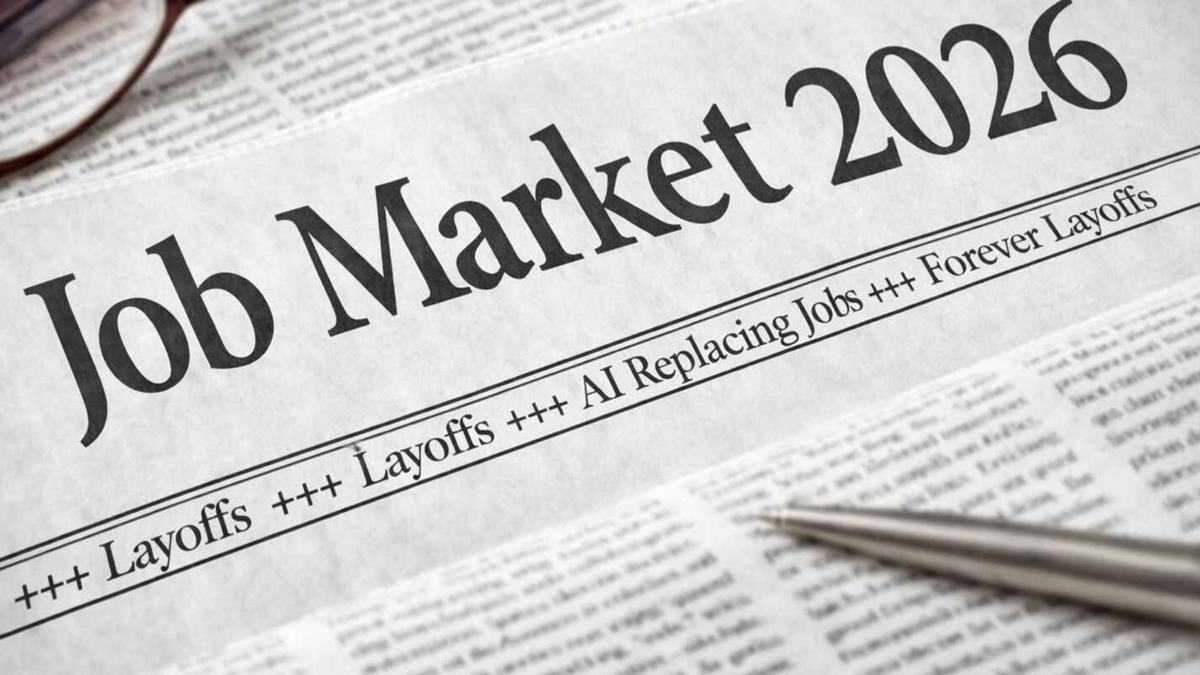
Legg’s emphasis on cognitive, computer-based roles is crucial. Software development, data analysis, content creation, research synthesis, and financial modelling are already seeing productivity jumps from AI tools. Multiple industry studies show that developers using advanced AI assistants complete tasks significantly faster with fewer errors. Consulting firms, technology companies, and financial institutions are quietly reducing hiring at the junior and mid-level, not through mass layoffs, but through attrition and slower intake. Remote roles are often the first to go because they are easiest to replace with machine output.
One of the most disruptive consequences is team compression. Where 100 engineers were once needed, 20 may now suffice, with AI handling routine coding, testing, documentation, and even design suggestions. This has two implications. First, organisations value depth over headcount. Second, the apprenticeship model breaks down. Entry-level roles, which were often remote and task-based, become redundant. Without these stepping stones, remote work loses its economic justification, especially for roles where AI can already match or exceed average human performance.
This does not mean a full return to the old nine-to-five office culture. Instead, offices evolve into coordination hubs rather than production floors. Senior decision-makers, product leaders, domain experts, and AI supervisors benefit from in-person interaction to resolve ambiguity, manage risk, and align strategy. Physical presence becomes less about control and more about speed and trust. Ironically, AI does not eliminate offices, it makes them more selective.
Physical Work Gains Relative Advantage
While digital roles face compression, physical and hybrid jobs gain relative resilience. Healthcare, skilled trades, logistics, hospitality, infrastructure, and on-site services are harder to automate at scale. Even where robotics advances, real-world complexity slows replacement. This creates an inversion of prestige. White-collar remote roles once seen as future-proof now face greater disruption than many hands-on professions. Policymakers and educators are slowly recognising this, though institutional inertia remains strong.
For economies that built export strength on remote services, the implications are profound. India’s IT and services sector benefited enormously from distributed work and global outsourcing. If AI allows companies in developed markets to internalise more work with smaller teams, offshore remote roles face pressure. This does not mean collapse, but it does mean transition. Value shifts from labour arbitrage to domain expertise, trust, regulatory understanding, and integrated solutions. Countries that adapt quickly can still thrive, those that rely purely on scale may struggle.
Similar warnings are emerging elsewhere. Sam Altman of OpenAI has repeatedly noted that future careers will look very different from today’s expectations, with fewer traditional jobs and more AI-augmented roles. Economic think tanks and labour researchers increasingly agree that AI does not eliminate work overnight, but it steadily reduces the number of humans needed to produce the same output. Remote work, by definition detached from physical constraints, becomes easier to replace.
The Real Risk, Income Without Effort Becomes Rare
Legg’s deeper concern is not about offices versus homes, but about the mental effort economy itself. For decades, people exchanged cognitive labour for income. If machines outperform humans at that labour, the social contract fractures. Work from home symbolised flexibility and autonomy, but it also symbolised the commoditisation of mental output. AI accelerates that commoditisation to the point where human input becomes optional in many cases.
Despite the disruption, Legg and others remain cautiously optimistic. AI can unlock enormous productivity, scientific discovery, and economic growth. The challenge is distribution, not creation, of wealth. New models of income, reskilling, and purpose will be required. Remote work may not disappear entirely, but it will shrink from a default option to a niche arrangement for roles where human judgement, creativity, and trust remain irreplaceable.
Conclusion
The debate should move beyond whether work from home survives. The more important question is how societies adapt when intelligence becomes abundant. Remote work was a response to technological possibility and social necessity. AI introduces a new possibility, extreme efficiency with minimal human input. Those who understand this early can reposition skills, organisations, and policies accordingly. Those who cling to past models may find that the change arrives quietly, but permanently.
Source – https://www.businessworld.in/article/the-quiet-end-of-work-from-home-in-the-age-of-ai-585311