















In more senses than one, 2025 became the year when workplaces across the world had the rudest awakening since the shake-up by the covid-19 pandemic five years ago.
To begin with, remote jobs, the most controversial legacy from that period, seemed to have their death knell sounded this year. Hybrid offices became the norm, as did co-working hubs. A survey by Robert Half, a talent solution and business consulting firm, in November found that, currently, 88% of employers in the US are willing to offer some form of hybrid arrangement, depending on the seniority or the role they are hiring for. Only 12% of jobs posted in Q3 of 2025 were remote.
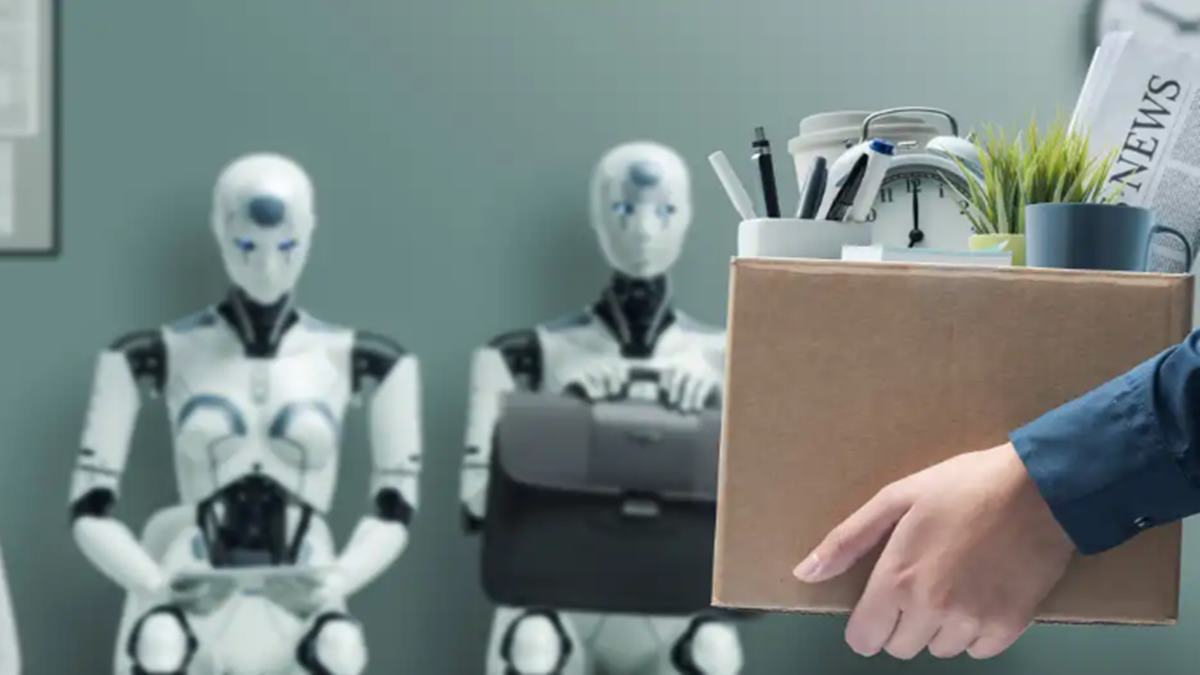
However, the biggest disruptor this year was the integration of AI tools by a wide range of businesses across the world, a trend that led to lay-offs, especially in tech roles, and spread a sense of panic and foreboding about the future of work.
With over 1.7 million job cuts announced throughout the year, corporations entered an era where blue-collar workers seemed to have a much better chance of surviving against their white-collar counterparts. When Nvidia CEO Jensen Huang said, “The next millionaires will be plumbers and electricians rather than techies,” he was only half joking.
Be that as it may, this was also the year when the world surrendered to AI agents, accepting that these tools are here to stay.
The State of AI: Global Survey 2025 report, published by McKinsey & Co. last month, showed that organisations of all sizes are demonstrating a growing appetite to pilot AI agents in 2025, even though there isn’t enough evidence yet to correlate these experiments with overall business growth.
Most respondents surveyed for the report confirmed that while there were “use-case level cost and revenue benefits” of using AI at work, the impact of deploying Agentic AI at scale, across an organisation, is yet to be fully validated. Especially in countries like India, where AI came into the workforce in an ad hoc manner, mostly through individual initiatives rather than structured deployment plans by employers, the gap between implementation and impact was not surprising.
A key reason behind the limited scalability of AI is the disconnect between its deployment and talent development initiatives undertaken by organisations. Compared to the investments made towards AI adoption by companies, not enough resources are being spent to train employees to get the most out of such pivots.
The 2025 AI at Work survey, recently conducted by BCG, showed that out of 10,600 workers across 11 countries, only 33% had been formally trained to use AI at work. Instead of introducing AI agents into an organization as shared resources for success, these tools are being imposed as a top-down mandate from the leadership, creating an atmosphere of fear and mistrust among workers.
As Agentic AI gets a free hand to redesign workflows, there is a steady erosion of psychological safety among the human workforce, who, until recently, have owned these responsibilities and ensured a smooth running of businesses. As employees are cut out of the decision-making process, firms are not only creating a disgruntled workforce but also harbouring risks that cannot be mitigated by AI. Even as AI agents become increasingly sophisticated, emotional intelligence and interpersonal skills honed through years of experience by human beings cannot be entirely replaced, especially while diffusing stress and conflict in the workplace.
So, in 2026, the success of human-AI collaboration will be determined by leadership behaviours that foster understanding and empathy. “Leadership is less about giving directions,” a respondent to a survey by Harvard Business Review’s social media community recently said, “and far more about giving people something steady to stand on.” Agility in business is no longer about speed and increased productivity alone—its true measure lies in the way leaders help drive decisions, cut out the noise, and make their employees feel valued.
Aside from AI, unpredictable shifts in government policies, especially in the US, has rocked the talent pool for organizations across the board. As the US tightens its visa restrictions to curb illegal immigration, the future of thousands, especially workers from India on H-1B visas, becomes increasingly vulnerable. Several companies have already announced their intention to steer clear of the H-1B programme and focus on sourcing local talent from the US or to rely more heavily on automation.
Whether these alternatives will address the gap in the talent pool is yet to be determined, but in the coming months, the abrupt and unpredictable policy changes will have a significant impact on the global economy. If 2025 rocked the boat of workplaces, the turbulence is only going to get stronger in the coming year. So hold on tight.