


















AI in the workplace continues to evolve. Early capabilities, enabled by generative AI, were mostly focused on saving employees time by summarizing meeting transcripts, documents and messages, improving search and access to knowledge, and enabling basic content creation.
These capabilities have become table stakes with just about every collaboration vendor now either including generative AI in its products or enabling add-ons at additional cost. Generative AI has certainly been helpful, but it hasn’t fundamentally changed the nature of our work; in most cases it has just saved time.
As we move into 2026, we are entering a much more disruptive phase: The shift from Generative AI to Agentic AI.
From Summarization to Automation
Generative AI is now moving into agentic AI. Metrigy defines agentic AI as “an advanced AI framework that uses large language models to make decisions and take actions autonomously or, in other words, without human involvement.” In action, agentic AI-powered assistants help humans in the moment and/or automates interactions or processes.
The primary difference between the AI we’ve been using and agentic AI is autonomy. While GenAI is reactive—waiting for a prompt to create content—Agentic AI is proactive. It doesn’t just suggest a response; it understands a goal, breaks it into steps, and executes them across different applications, on its own based on guardrails and capabilities provided to it by its users.
In the collaboration space, agentic AI can monitor activities, suggest courses of action, or even act on their own based on what they know and the permissions provided to them. An agent could, for example, see a chat message requesting a project update and provide a response, without human intervention. Agents could prioritize work based on what they know and have learned, allowing employees to better focus on activities most critical to their organization. And they can kick off workflows such as onboarding customers and employees, based on their ability to interact with a broad range of applications.
Metrigy’s AI for Business Success: 2025-26 global study of more than 1,100 organizations found that interest in agentic AI is high with more than 52% already familiar with the technology, and nearly 36% saying that they think agentic AI will deliver more value than generative AI. Most participants (72.9%) say their organizations plan to use agentic AI to complement their human employees rather than replace them.
The rise of the digital twin
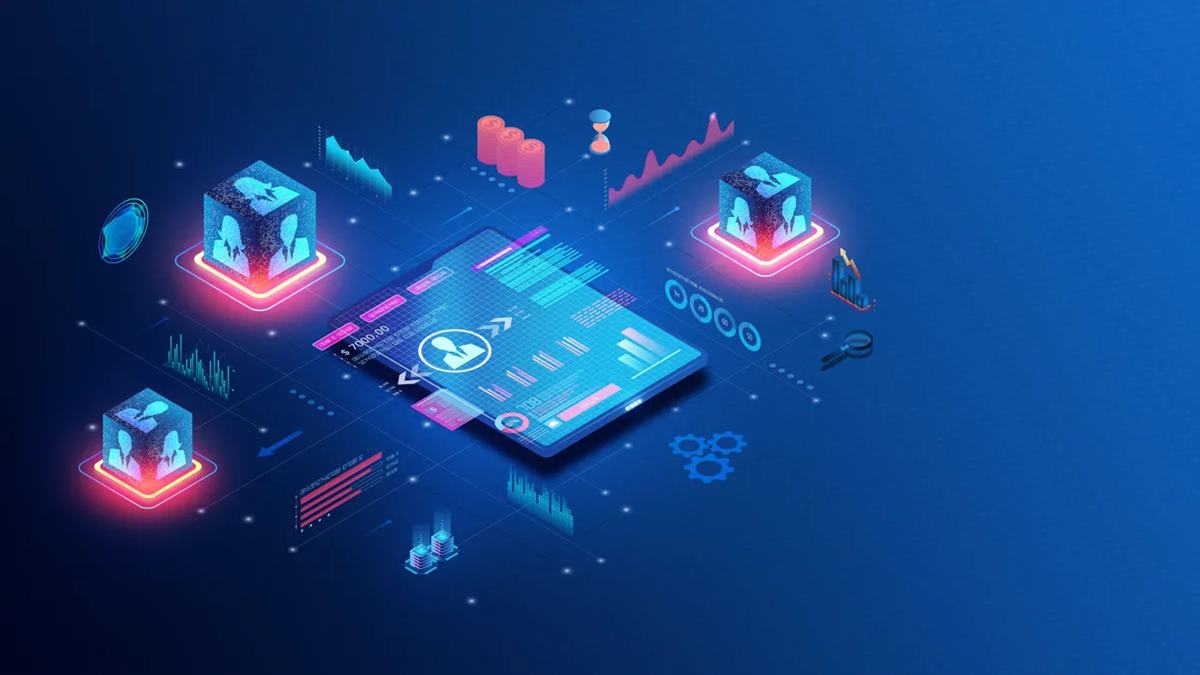
Agentic AI is poised to create the digital twin for the individual knowledge worker. A collaboration digital twin is a model trained on your specific communication style, your project history, and your decision-making patterns. These digital twins can live within specific platforms, such as CRM and ERP, or can be integrated across a wide range of applications through APIs or access to apps and data through MCP (Model Context Protocol) servers.
The abilities of the digital twin are only constrained by its access to data and apps, and by the abilities granted to it. In the future, digital twins will handle multi-step processes, such as identifying a project delay, rescheduling the necessary stakeholders, and updating the project team through a chat channel, all without human action.
A company I recently spoke with, supply chain risk management platform vendor Apexanalytics, is working on implementing this capability within its internal platforms. The digital twin will learn both from its human counterpart, as well as from knowledge available throughout the organization. Its ability to field queries can stick around long after the original employee leaves.
Example abilities of a digital twin include:
- Attending meetings on your behalf: The digital twin doesn’t just record the meeting; it represents your “viewpoint” based on past data and flags you only if a decision requires your unique human intuition.
- Managing Inquiries: The digital twin responds to routine questions such as “What is the status of X?” pings by pulling real-time data from your project folders, messages, and connected project management, CRM, operations, and ERP apps.
- Project Orchestration: The digital twin autonomously nudges team members for deliverables, ensuring that projects stay on track while you focus on high-level strategy.
The browser as the new center of work
Agentic AI is poised to change the way we interface with work. For years, we’ve debated whether the “hub” of work is the in-box, team chat app, or role-specific apps like ERP or CRM. The answer, in the not-so-distant future, is likely to be the AI-enabled browser.
New entrants like Dia, Kosmik, and Perplexity Comet, alongside established players like Microsoft Edge Copilot, and browser plug-ins such as Anthropic’s Claude in Chrome are reimagining the browser as an operating system for agents.
These browsers don’t just display web pages; they interact with them. An agent within the browser can read your various messaging and email apps, check your calendar, and write responses, bridging the gap between siloed SaaS applications that historically haven’t talked to each other. Rather than checking in on multiple activity streams, an employee could start their day with a report in their browser from their bot. From there they could invoke customized dashboards and have the AI agent take actions on their behalf. AI browsers may also provide an interface for vibe coding, allowing employees to create their own bots and apps to optimize their work.
Anticipating AI challenges
Of course, this shift brings significant challenges. As I’ve noted in previous posts, security and data governance remain the “elephant in the room.” If an agent is taking actions on your behalf, the potential for automated mistakes or data leakage increases exponentially.
Organizations must move beyond “AI policies” to “Agentic Governance” frameworks that define exactly what an AI twin can and cannot do. Metrigy’s recent Workplace Collaboration and Contact Center Security and Compliance: 2026 global study of more than 300 companies found that already 65.2% have a security and compliance strategy in place for AI agents. Another 20.9% plan to have one by the end of this year.
Your challenge, should you choose to accept it
Agentic AI will fundamentally change the way people do their work and interact with one another. IT and business leaders must be aggressive in identifying ways to leverage agentic AI to improve productivity and reduce friction, and they must do so in a way that protects against security risk, and that meets compliance requirements.
Source – https://www.nojitter.com/digital-workplace/agentic-ai-poised-to-transform-workplace-collaboration