





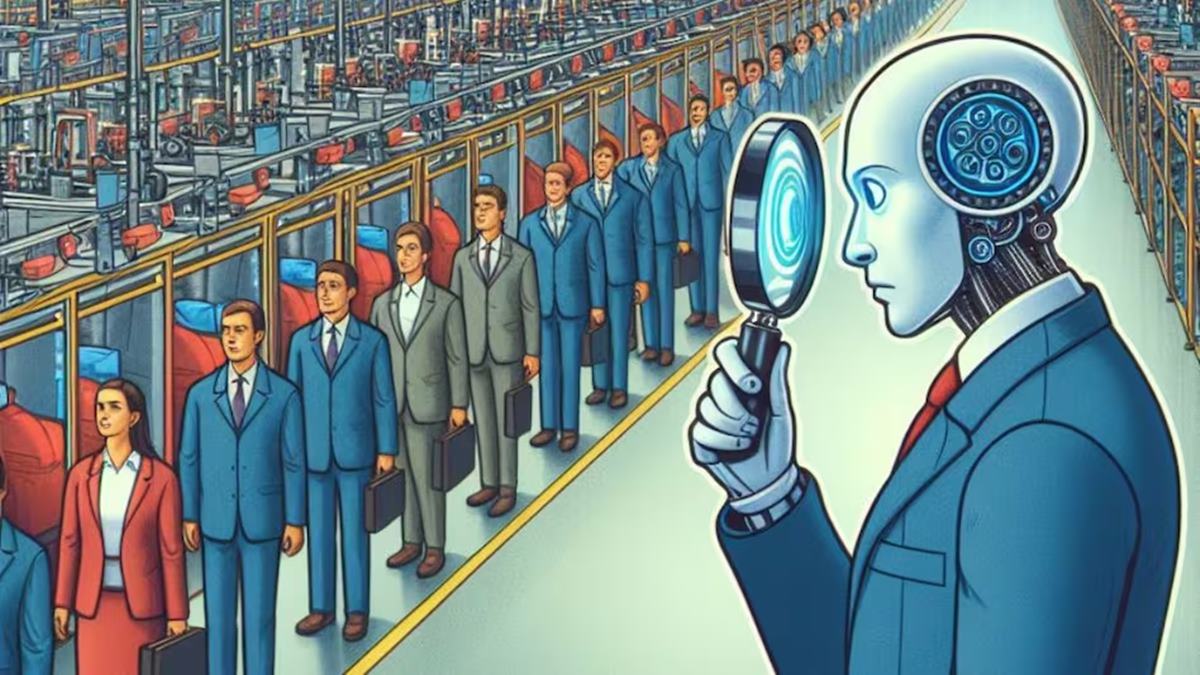





There is a different question being asked at workplaces as 2026 begins. Not what’s next for me? But how long do I have?It surfaces in offhand jokes about automation. In nervous laughter during town halls. In the way employees scan internal emails for words like “restructuring” or “efficiency.” Artificial intelligence has stopped being an abstract future. For millions of workers, it has become a countdown clock, visible, silent, and deeply unsettling.A new national survey by Resume Now, titled the 2026 AI & Job Security Outlook Report, puts numbers to this unease. But the data does more than quantify anxiety. It exposes a workforce slowly coming to terms with a disturbing possibility: that the era of stable, predictable careers may already be ending.
When confidence gives way to calculation
For decades, workers were told that technology creates opportunity. That new tools mean new roles. That disruption, while painful, ultimately benefits everyone willing to adapt. The Resume Now findings suggest that this faith is fraying.According to the survey, 60 percent of workers believe AI will eliminate more jobs than it creates in the year ahead. Only 12 percent expect the opposite. The rest hover in an uneasy middle, anticipating balance but not reassurance.Workers are watching tasks disappear. They are seeing roles compressed, teams downsized, and responsibilities quietly reassigned to systems that do not need breaks, benefits, or explanations. They are doing the math, and they do not like the result.“Could this happen to me?” is no longer hypotheticalMore than half of workers, 51 percent, say they are worried about losing their jobs to AI or automation in 2026. That includes 10 percent who describe themselves as extremely worried, already living with a sense of professional precarity.What makes this fear different from past cycles of automation is its intimacy. This is not about factories in another state or industries “somewhere else.” One in five workers personally knows someone who lost a job to AI in the past year, according to the report. For 13 percent, it was not just one person, but several.Once job loss enters your personal circle, it stops being theoretical. It becomes contagious.The future is nearer than workers expected. Ask workers when AI might threaten their own jobs, and the answers reveal a compressed timeline. Sixty-seven percent believe AI will eventually threaten their role. Alarmingly, one in ten say it is already happening. Another 15 percent expect impact within the next one to two years.This matters because careers are built on planning. On the belief that skills gained today will still matter tomorrow. When workers believe the ground beneath them could shift within months, not decades, that foundation cracks.And yet, only 33 percent believe AI will never threaten their job. That shrinking group may be confident, but they are increasingly alone.
An expectation of loss, not transition
Perhaps the most damning insight from the Resume Now report is how workers see AI reshaping entire industries. Nearly half (46 percent) expect job reductions in their field by the end of 2026. Twelve percent anticipate large-scale losses. Only 4 percent believe AI will create more jobs than it eliminates in their industry.That number, four percent, should give policymakers pause. If workers no longer believe in the promise of transition, if they expect erosion rather than evolution, then reskilling slogans ring hollow. Training only works when there are destinations to move into. Right now, many workers are unsure whether those destinations exist.
The 2030 question: Am I replaceable?
Looking further ahead, the anxiety deepens. Nearly half of workers (46 percent) believe their job could be replaced by AI by 2030. For 16 percent, that outcome feels very likely. Only 16 percent are fully confident that AI could never replace what they do.This belief, that one’s work is ultimately replicable by a machine, cuts deeper than fear of unemployment. It challenges the meaning workers attach to their labour. If what you do can be automated away, what does that say about its value? About your value?When people begin to feel interchangeable, loyalty erodes. Risk-taking increases. Cynicism sets in.
A pessimism that is settling in
The emotional toll is unmistakable. Fifty-four percent of workers feel pessimistic about how AI will affect their career over the next three years, with 12 percent describing themselves as very pessimistic.This is not resistance to progress. It is grief, anticipatory grief for careers that may never fully materialise, for ladders that no longer reach where they once promised to go.
What this moment demands
The Resume Now survey, conducted among 1,006 US adults in December 2025, does not argue that AI is inherently destructive. What it reveals is something more urgent: Workers feel exposed.They are being asked to adapt faster than systems can support them. To retrain without guarantees. To stay productive while quietly questioning their own relevance.If this anxiety is dismissed as paranoia, it will metastasise. If it is acknowledged honestly, publicly, and structurally, it may yet be addressed.Because the real danger is not that AI will change work. It is that work will change without a plan for the people who depend on it.As 2026 begins, the question is no longer whether AI will reshape jobs. That is already assumed.The question is simpler and far more uncomfortable: Who will be protected when it does?