















Humanity has achieved some truly remarkable things. We’ve split the atom, put a man on the moon, and figured out how to fry butter at state fairs. But there is one puzzle that has baffled the greatest minds of management for centuries: How do we stop Srini from looking at cat memes for forty-five minutes after lunch?
This question has birthed a multi-billion-dollar industry of office time-wasting solutions. It is a relentless, high-stakes arms race between the “Efficiency Experts” (people who wear clipboards and unironically use the word “synergy”) and the “Time-Wasting Tacticians” (you, hiding a Reddit tab behind a very complex-looking spreadsheet).
From 1920s nightmare helmets to toilets that physically reject you, the history of productivity device history is a comedy of errors. Grab a coffee (but finish it quickly, the clock is ticking), and let’s dive into the bizarre world of inventions designed to keep your nose to the grindstone.
The Isolator (1925): The Original Cone of Silence
Imagine it’s 1925. You’re a writer. The sound of a passing horse-drawn carriage or the clink of a milk bottle is enough to shatter your concentration. What do you do? If you’re Hugo Gernsback, you invent The Isolator.
The Isolator was a terrifying, heavy wooden helmet that looked like a cross between a deep-sea diving bell and something a medieval torturer would use for “light interrogation.” It physically blocked all peripheral vision, leaving you only two tiny glass eye-holes through which to view your typewriter. It even had an oxygen tank connection because Gernsback realized that without it, the wearer would eventually suffocate on their own carbon dioxide.
The Unintended Consequence: Aside from looking like a Victorian astronaut, users found that after about 15 minutes of sensory deprivation, they didn’t become hyper-productive geniuses. Instead, they became hyper-sleepy. The brain, deprived of the outside world, decided that if it couldn’t see or hear anything, it might as well shut down. It turns out extreme focus devices can accidentally become high-end nap pods.
The Tilted Toilet: The “Slip-N-Slide” of Corporate Discipline
Fast forward to the modern era, where management has moved from the head to the… other end. Enter the 13-degree tilted toilet. This isn’t a joke; it’s a real patent. The seat is sloped downward at an angle that makes sitting on it feel like you’re trying to park a car on a steep hill without the emergency brake.
The goal? To stop employees from using the bathroom as a private sanctuary for mobile gaming or “quiet weeping.” After five minutes on this thing, your leg muscles begin to scream, forcing you to finish your business and get back to your cubicle.
The Unintended Consequence: This is where workplace surveillance effects get messy. Literally. Labor advocates have pointed out that this prioritizes profit over basic human dignity. Not only does it penalize employees with actual medical conditions, but it also fosters a culture of resentment. If your boss is literally trying to slide you off the toilet, the “Company Culture” slide in the onboarding deck starts to feel a bit dishonest.
Digital Guardrails: The Software Shogunate
In the digital age, the distractions aren’t horses or milk bottles; they are Reels, TikToks, and the bottomless pit of Instagram. To combat this, companies have turned to digital distraction prevention tools.
Extensions like StayFocusd, Gram Control, and Distraction-Less IG act as the stern librarians of the internet. They strip out the “Explore” pages, hide the “Suggested” posts, and block your favorite news sites after you’ve spent your allotted ten minutes of “educational reading.” Then there are tools like Freedom and RescueTime, which essentially put your computer into a digital straitjacket.
The Unintended Consequence: Humans are remarkably good at being annoying. When we are blocked, we don’t work; we game the system. Employees spend thirty minutes trying to find a proxy server or adjusting their “allowed” settings out of sheer frustration. It becomes a game of “Cat and Mouse” where the mouse is very motivated to see what’s happening on Twitter.
Saent: The Magic Button (That You Can Just Not Press)
Then we have Saent, a piece of focus technology that is actually quite elegant. It’s a physical button you place on your desk. When you press it, a “focus session” begins, and your computer locks you out of everything fun. It’s a hardware-software duo designed to help you reach “deep work.”
The Unintended Consequence: It’s voluntary. In the world of management, “voluntary” is a four-letter word. While Saent is great for the self-motivated freelancer, it’s not a manager’s favorite tool because an unmotivated employee will simply use the ‘Saent’ button as a very expensive paperweight while they scroll on their phone.
“Bossware”: The Eye in the Sky
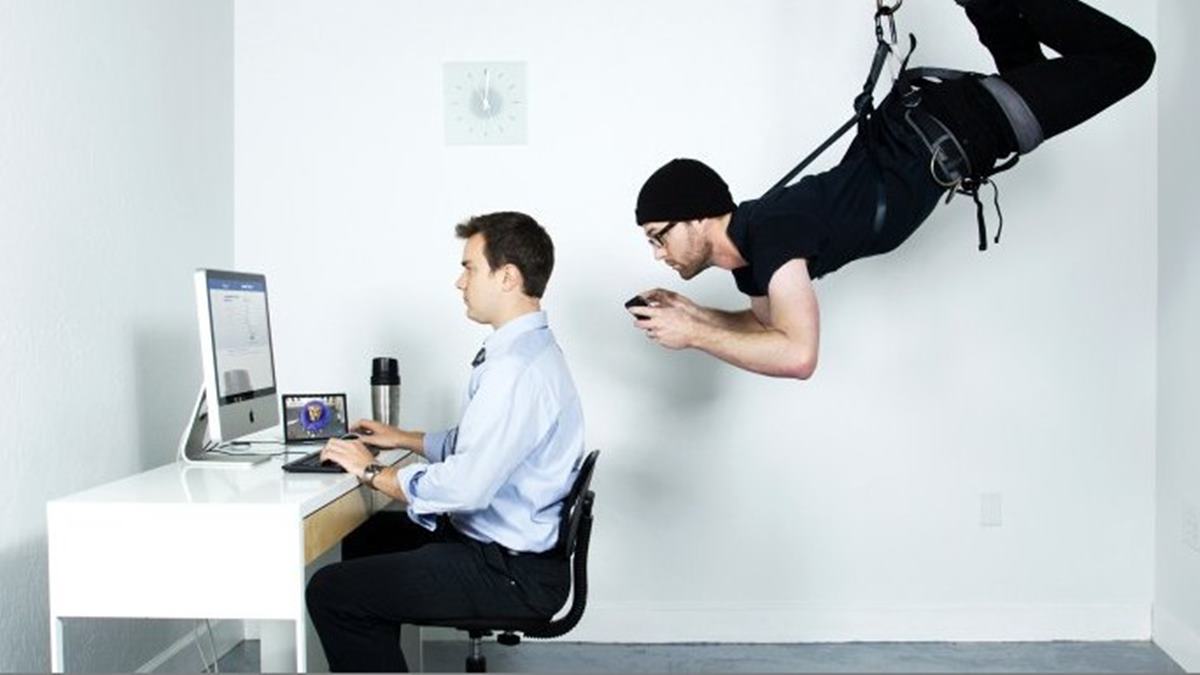
We’ve moved past simple time clocks & punch cards. While Amazon became the poster child for tracking every second of a worker’s movement, the corporate world has leveled up to Employee Monitoring Software, or “Bossware.”
This software tracks your keystrokes, takes random screenshots of your desktop, and monitors your “idle time.” If your mouse doesn’t move for three minutes, the software sends a notification to your manager that says, “Gary might be dead, or worse, he’s thinking without typing.”
The Unintended Consequence: This is the ultimate killer of the “vibe.” Research shows that this level of surveillance leads to massive erosion of trust and morale. It also leads to the “Mouse Jiggler” industry—actual devices that physically move your mouse so the computer thinks you’re working while you’re actually making a sandwich. When you measure work by “activity” rather than “results,” you get a lot of active people doing absolutely nothing of value.
The Panopticon: Why Open Offices Are Actually Stress Labs
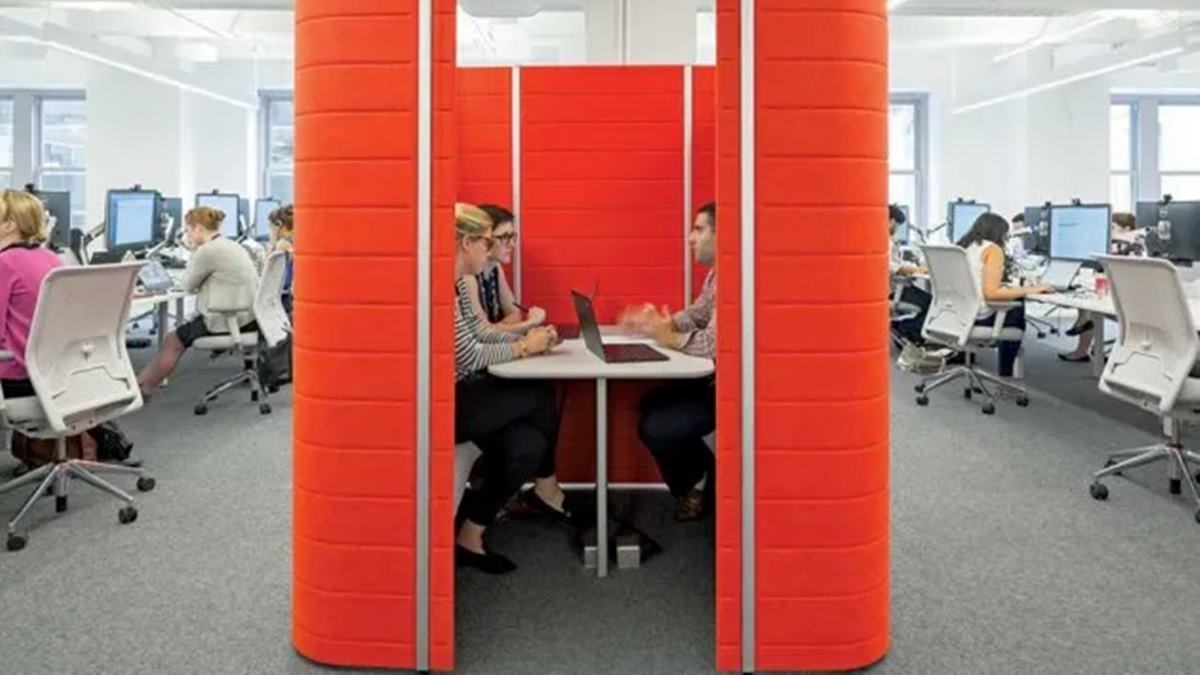
The Panopticon-style office design, transparent desks, low walls, and central glass offices et al was sold to us as “collaboration hubs.” In reality, they are based on an 18th-century prison design where one guard can see every prisoner at once. The theory is that if you think you’re being watched, you’ll behave.
The Unintended Consequence: This produces performative behavior. In an open office, people stop having meaningful conversations because everyone can hear them. Instead, they put on noise-canceling headphones and stare intensely at their screens, typing gibberish just to “look busy.” It’s a theater of productivity where the lead actors are all burnt out.
The Real Cost of “Total Efficiency”
When we look at the employee monitoring consequences, we see a recurring theme. The more you treat a human like a gear in a machine, the more that human will try to gum up the works.
- Creativity Decline: You cannot schedule a “breakthrough” for 2:15 PM while a 13-degree toilet is waiting for you. Innovation requires the very thing these tools try to kill: unstructured time.
- Physical Discomfort: From the Isolator’s CO2 buildup to the leg cramps of the tilted toilet, physical deterrents are just a lawsuit waiting to happen.
- Gaming the System: As soon as you put up a “productivity guardrail,” the human brain spends 100% of its power trying to figure out how to jump over it.
The irony of all these office time-wasting solutions is that they often take up more time and money than the “time-wasting” they were meant to prevent. Perhaps the best employee productivity tools aren’t helmets or tilted toilets, but rather radical concepts like… trust?
But until that catches on, I’ll be over here, wearing my wooden helmet, trying to balance on my tilted toilet, while my mouse jiggler keeps my status “Active” on Slack.