

















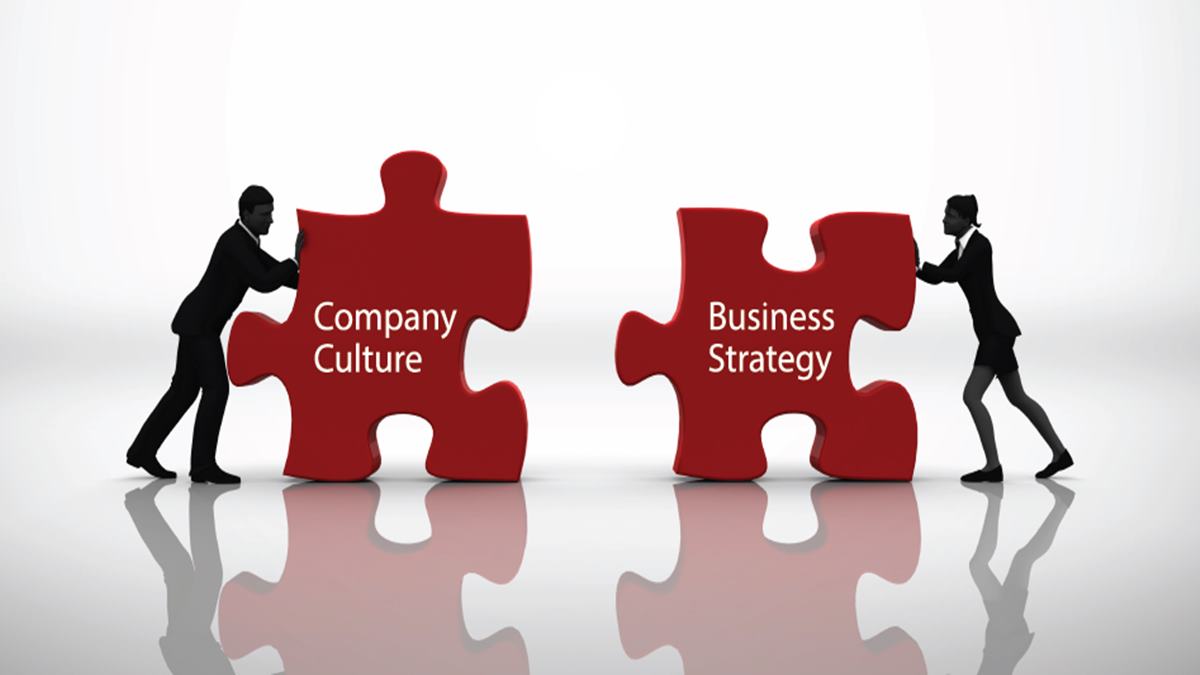
Peter Drucker, or whoever actually said it, was right: “Culture eats strategy for breakfast.” You can have a strategy so brilliant it would make Sun Tzu weep with joy, but if your culture is a toxic soup of “reply-all” threads and passive-aggressive Slack emojis, that strategy is never getting off the plate.
In the old days (circa 2019), culture was easy. You threw a ping-pong table in the breakroom, provided slightly-above-average coffee, and occasionally forced everyone to wear a branded lanyard. But we are now firmly in the era of the hybrid work culture, and things have changed. “Culture” is no longer a physical place you go to; it’s a vibe you have to maintain while half your team is in a boardroom in Manhattan and the other half is wearing pajama bottoms in a kitchen in Des Moines.
For managers and CXOs, preserving office culture in this split-screen reality is the ultimate leadership challenge. Here is your execution manual for keeping the breakfast of champions from turning into a soggy mess.
Clarify the Culture: Move Beyond the Wall Slogans
Most corporate culture statements are about as meaningful as the “Terms and Conditions” on a software update—everyone clicks “Accept,” but nobody reads them. In a hybrid world, you can’t rely on a framed poster in the lobby to tell people who you are, because half your people will never see that lobby.
According to McKinsey & Company, you must define your culture through observable rituals and norms, not slogans. Culture isn’t what you say you do; it’s how decisions are made when the boss isn’t looking and how people treat each other during a 4:00 PM technical meltdown.
The Action: Don’t just say you value “Transparency.” Instead, create a norm that every executive meeting has a publicly accessible summary. That is a “ritual” people can see from their home office.
Make Rituals Hybrid-First: Ending the Zoom Seance
We’ve all been there: a “hybrid” meeting where the people in the room are laughing at an inside joke while the remote participants stare at the screen like ghosts trying to communicate through a Ouija board.
To preserve office culture, your rituals must be “hybrid-first.” This means designing recurring moments that work equally well for everyone. If you have a “Demo Day” or a recognition ritual, it shouldn’t feel like the remote people are watching a live stream of a party they weren’t invited to.
The Action: If you’re celebrating a win, send the remote team a digital gift card for coffee at the same time the in-office team gets their catered lunch. Use inclusive hybrid meetings where the “default” is that the camera stays on and the remote voices are called upon first.
Measure What Matters: The Death of the Badge Swipe
For decades, the primary metric for “culture” was attendance. If you were at your desk, you were part of the culture. This is the management equivalent of measuring the quality of a marriage by how many hours both people spend in the same house. It’s a terrible metric.
Gallup suggests that managers should track inclusion, psychological safety, and employee belonging remote metrics rather than just badge swipes. Use pulse surveys and people analytics hybrid tools to spot the “cultural dead zones” before they become turnover statistics.
The Action: Ask your team: “Do you feel like you have the same opportunities for growth as those who work in the office?” If the answer is “No,” your culture isn’t hybrid; it’s a two-tier caste system.
Equip Managers as Culture Carriers
Your managers are the “routers” of your organization. If the router is broken, the signal doesn’t reach the edge. In a hybrid environment, a bad manager is a single point of failure for the entire culture.
Gallup research shows that teams that co-create their own hybrid rules—deciding together which days to be in and how to communicate—report much higher levels of fairness. This requires manager training hybrid programs that move away from “supervising tasks” and toward “coaching people.”
The Action: Train your managers to be “onboarding ninjas.” Hybrid onboarding best practices aren’t just about getting the laptop delivered; it’s about the manager scheduling three “non-work” coffee chats in the first week to make the new hire feel like a human, not a headcount.
Invest in Face-to-Face with Purpose
Nothing kills culture faster than “Commuter’s Regret”—the feeling of driving an hour into the office only to sit on Zoom calls all day. If you force people into the office, there has to be a “Why.”
As reported by Business Insider, quarterly or monthly gatherings with a specific purpose (strategy sprints, mentoring, or high-level brainstorming) often outperform a “three days a week” mandate. In-person time should be for high-bandwidth human connection, not for clearing your inbox.
The Action: Treat the office like a “destination,” not a “default.” If the team is coming in, clear the calendar of routine meetings and fill it with collaborative workshops or social bonding.
Design Spaces and Tech for Parity
If your remote employees feel like “second-class citizens,” your culture is already failing. Parity means ensuring that the remote person has the same “visual real estate” as the CEO.
McKinsey & Company emphasizes that tech shouldn’t just be an afterthought; it’s the physical infrastructure of your hybrid culture. Digital whiteboards (like Miro or Mural) and async-first documentation (like Notion or Loom) ensure that the “meeting after the meeting” doesn’t happen in a hallway where remote people can’t hear it.
The Action: Adopt inclusive hybrid meetings norms. For example, if one person is remote, everyone joins the meeting from their own laptop, even those in the office. This levels the playing field (and the box size) for everyone.
The Power of the Public “Shout-Out”
In an office, you can see a “Good job, Dave” happen in real-time. In hybrid work, Dave’s win might be invisible to everyone but his direct manager. To foster employee belonging remote, you must make recognition visible and loud.
The Action: Use Slack or Teams channels specifically for “Wins.” Use digital badges or “Show-and-Tell” sessions. When a remote employee sees their name in lights (or at least in a high-traffic Slack channel), it reinforces that they are a vital part of the culture-first strategy.
Iterate Culture Like a Product
Finally, realize that you won’t get this right on the first try. Your hybrid culture is a “Beta” product. McKinsey suggests that leaders should prototype rituals, measure the outcome, and be brave enough to retire what isn’t working.
If the “Virtual Happy Hour” has turned into a hostage situation where everyone stares at their drinks in silence, stop doing it. Try a “Virtual Escape Room” or a “Monthly Async Book Club” instead.
The Action: Set a “Culture Review” every six months. Ask the team: “Which of our rituals feels like a chore, and which one makes you feel connected?”
The Executive’s New Mandate
The role of a CXO has shifted from “Chief Executive” to “Chief Culture Architect.” You aren’t just managing a P&L; you are managing a distributed network of human energy. Remote leadership isn’t about control; it’s about connection.
By focusing on hybrid team rituals, investing in inclusive hybrid meetings, and using people analytics hybrid to guide your path, you can ensure that culture doesn’t just eat strategy for breakfast—it fuels it for the entire day.