












For all the talk of culture resets and people-first leadership, many employees say the same behaviours keep slipping through unchecked. Leaders delay decisions. Standards vary by manager. Accountability blurs—especially in hybrid settings. And HR, employees feel, too often looks the other way.
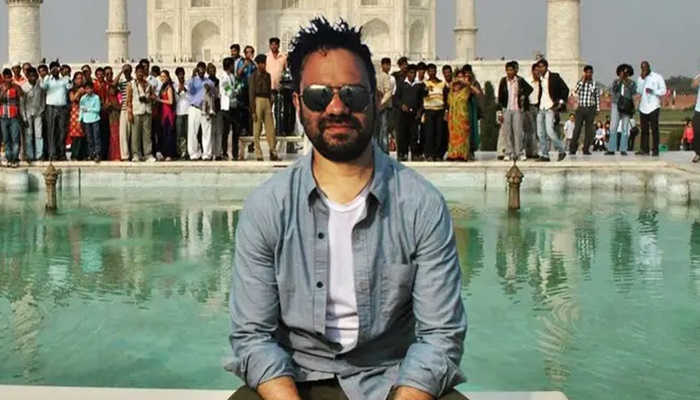
Harpreet Singh Anand, Chief Human Resources Officer at Protean eGov Technologies Ltd, sees the problem less as a lack of intent and more as a reluctance to confront discomfort. Reflecting on recent organisational shifts, he points to a familiar tension: “balancing workplace flexibility with performance discipline, along with the growing role of AI at work.”
Many organisations, he says, struggled to reset expectations after prolonged hybrid working. Redefining roles or reskilling employees affected by automation felt risky. “Fearing morale and attrition issues,” leaders delayed decisions—often at the cost of clarity.
At Protean, Anand says the response was to move early rather than wait for certainty. AI was integrated into daily work and framed “as a productivity support rather than a job replacement.” Roles were redesigned to combine human effort and AI enablement, with accountability made explicit rather than implied. The company also launched a new office space designed around “collaboration, inclusion, well-being, and a healthy work–life balance.”
Where leaders hesitate—and employees notice
One of the behaviours employees are least forgiving of, Anand suggests, is leadership avoidance dressed up as empathy. In hybrid environments, leaders frequently chose comfort over consistency. “It was easier to avoid difficult conversations or delay decisions,” he says.
Protean took a different route. Expectations were clarified, even as employees were given time to adapt to AI-enabled ways of working. “By avoiding knee-jerk reactions and focusing on steady change strengthening trust, leadership credibility, and long-term cultural alignment,” the organisation aimed to remove ambiguity rather than manage around it.
For employees, the message matters. Delayed decisions and uneven standards are rarely read as kindness. More often, they are seen as tolerance for poor leadership behaviour.
The uncomfortable moves that paid off
Some of the cultural shifts that mattered most, Anand says, were the ones that initially caused friction. “Cultural decisions that carried short-term risk but built long-term strength were those that confronted difficult yet necessary shifts in how we work and lead.”
Across organisations, this included strengthening performance management and moving away from informal feedback to more structured conversations—despite resistance. At Protean, accelerating digital and AI-enabled workforce transformation early meant disruption, but it also delivered “agility, clarity of expectations, and sustained employee trust.”
Employees, Anand implies, are less concerned about change itself than about leaders who postpone it indefinitely.
Old assumptions that no longer hold
As organisations move forward, Anand believes several leadership beliefs need to be actively unlearned. Stability, he argues, no longer comes from preserving familiar roles. “Adaptability and continuous learning are core to resilience, not comfort in the status quo.”
He also challenges the idea that culture can be shaped by intent alone. “It must be reinforced through everyday actions and systems,” he says, cautioning leaders against leaning too heavily on technology “as a surrogate for human judgment” in AI-augmented workplaces without transparency, employee involvement and empathy.
These gaps—between what leaders say and what they do—are precisely where employees expect HR to intervene.
HR’s line in the sand
For Anand, HR’s role is no longer about messaging culture; it is about enforcing it. “HR leaders play a pivotal role in managing the culture ensuring culture is lived through actions, not just rules or communications.”
That means embedding values into performance conversations, leadership development, policy decisions and feedback loops. “By embedding culture in decision-making, behaviour modelling, and feedback loops,” HR can move culture from posters to practice.
When regulation raises the stakes
In high-accountability environments, Anand says speed, inclusion and governance must be designed together, not traded off. Clear decision rights, structured processes and early involvement of legal, compliance and people teams help organisations move faster without diluting standards. Data-led decisions, rather than ad-hoc judgment, keep trust intact.
What employees won’t tolerate anymore
Looking ahead, Anand is blunt about where compromise is no longer viable. “Employers are not nonchalant about trust, clarity, and accountability,” he says. Inconsistent leadership behaviour, unclear expectations and uneven standards now translate directly into lost confidence and weaker performance.
Organisations, he adds, must stop treating culture as a set of statements and start living it daily. At Protean, that has meant aligning values with action through “clear roles, transparent communication, and continuous process of learning, un-learning, and re-learning” to build an organisation that is resilient, credible and growth-oriented.
For employees watching leadership behaviour closely, the tolerance threshold is shrinking. And HR, increasingly, is expected to enforce the boundary—not explain it away.