



















Until recently, the average employee was a free-range creature. LinkedIn feeds overflowed with resignation letters written like liberation poetry. “I’m choosing myself,” they said, as they cartwheeled from one job to another, buoyed by remote work, job opportunities and recruiters who replied within minutes. Job-hopping wasn’t a red flag; it was a personality trait. Staying too long in one role was a sign of poor ambition or, worse, weak Wi-Fi.
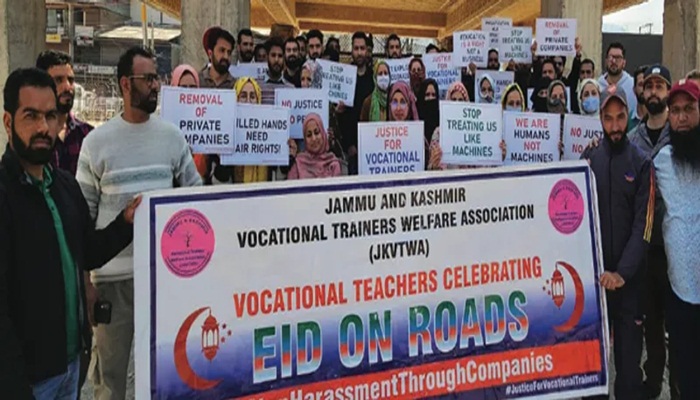
Fast forward to today, and that swagger has vanished. The Great Resignation has quietly been replaced by its anxious cousin, the Great Embrace. Or, as the global consulting firm Korn Ferry has delicately put it, “job hugging”—employees clinging to their jobs the way toddlers cling to parents in crowded airports. Even when the workplace is toxic. Especially when the workplace is toxic. Because at least it’s familiar toxicity. This reversal is not anecdotal; it is statistical. In the US, the quit rate—a reliable proxy for worker confidence—has been stuck near 2%, its lowest sustained level since 2016 (pandemic chaos excluded). According to ZipRecruiter, 38% of workers believe there aren’t “plenty of jobs” available, up sharply from 26% three years ago. Hiring has slowed, and CEOs— those eternal optimists—are now more likely to forecast layoffs than expansions. Nothing kills wanderlust like a CFO with a cost-cutting spreadsheet.
PROFESSIONAL MONOGAMY
Behind this sudden outbreak of professional monogamy lies a potent cocktail: higher interest rates, geopolitical whiplash and a labour market that has cooled from its post-pandemic sugar rush. The ratio of job openings to unemployed workers has halved since the 2022 levels. The job market no longer feels like a buffet; it feels like airline food—limited choices, all suspicious, and best consumed quietly.
Uncertainty is a powerful sedative for risk-taking. When the world feels unstable, ambition develops a limp. Workers who once treated careers like startups—start fast, fail often—now behave like bond investors. Capital preservation matters more than returns. Better the devil you know, preferably one who already has your PAN card and payroll details.
And this is a global affliction—not confined to just India or US.
India’s labour market has always been a paradox: young, restless and ambitious, yet perpetually short of enough good jobs. Post-Covid, India briefly tasted its own version of the Great Resignation. Tech professionals hopped roles with Olympic agility. Attrition in IT firms touched 25-30% in 2021-22. Recruiters begged. Employees ghosted. HR departments developed trust issues.
Then came the tech winter. As US monetary policy tightened and venture capital dried up, Indian IT firms froze hiring. Startups changed from “growth at all costs” to “survive at all costs”. Over 30,000 startup employees were laid off in 2023. Edtech collapsed like a badly proctored exam. Suddenly, job offers stopped flowing, and resignation letters stayed in drafts.
Today, attrition in the IT sector has fallen below 15%, the lowest in a decade. LinkedIn surveys show Indian professionals ranking “job security” above “career advancement” for the first time ever in decades. In the informal economy—where over 80% of Indians still work—job hugging isn’t a trend; it’s a survival strategy. You don’t quit a job when there is no safety net below, only gravity.
FEAR FACTOR
At first glance, this mass clinging may look like loyalty. Employers, understandably, are enjoying the calm. Fewer exits, fewer counter offers, fewer tearful farewell lunches. But job hugging is not a love story; it’s a hostage situation. When people stay because they’re afraid to leave, innovation suffers. Wages stagnate. Productivity flatlines. A workforce driven by fear doesn’t experiment; it complies.
The psychology is revealing. The Great Resignation was fuelled by hope—a belief that something better awaited beyond the next interview. Job hugging, by contrast, is fuelled by anxiety. Inflation, geopolitical tension, AI anxiety and constant layoff headlines have taught workers a brutal lesson: optionality is fragile. Careers are no longer ladders; they are insurance policies.
This is where employers must be careful. Lower attrition can feel like validation, but immobility is not engagement. A workforce that hugs jobs too tightly eventually suffocates them. Quiet quitting flourishes in these conditions, that passive-aggressive art form where employees do exactly what is asked, and not one ounce more.
Smart organisations will read the moment correctly. If employees are scared of the external market, build credible internal mobility. Make growth possible without exit interviews. Invest aggressively in reskilling, especially when AI threatens to make roles obsolete faster than résumés can be updated. Redefine security—not just as a salary, but as employability. Above all, communicate clearly. In uncertain times, clarity is the rarest benefit of all.
The pendulum will swing again. Labour markets always do. Confidence will return and résumés will once more sprout wings. But this era of job hugging should worry us. It reveals a workforce that is staying not because it is inspired, but because it is afraid. The great stay does not have to become the great stagnation. For that, employers must give people something stronger than fear to hold onto. Because hugging a job too tightly, like hugging a life raft in calm waters, may feel safe—but it won’t get you anywhere.