















India’s information technology firms are well placed to deliver artificial intelligence services despite concerns around job losses, IT minister Ashwini Vaishnaw has said, adding the sector is pivoting towards an AI-led services model.
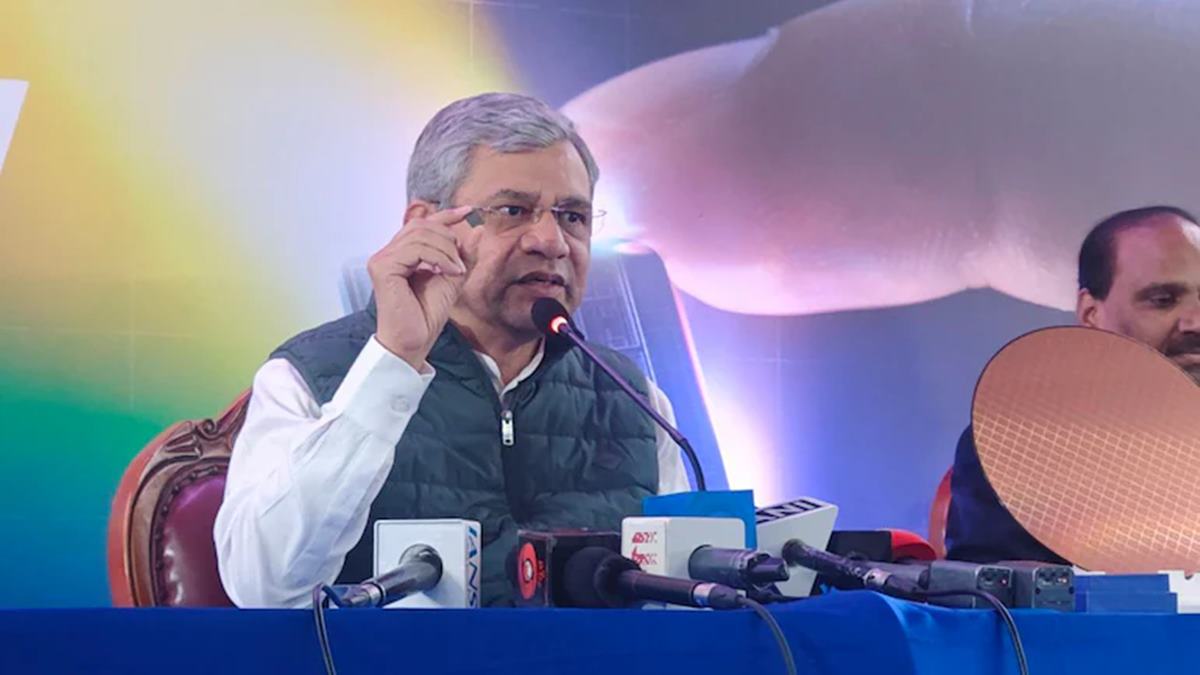
Speaking to Moneycontrol on the sidelines of the week-long India AI Impact Summit in New Delhi on February 18, Vaishnaw said global enterprises are sitting on hundreds and thousands of legacy IT systems that need to be upgraded to harness the capabilities of modern AI models.
“IT companies are pivoting towards AI services model, working on providing the AI services,” Vaishnaw said.
The comments come at a time when IT stocks have faced pressure amid worries over automation-led efficiency gains and slower discretionary spending.
The recent rout in global IT stocks wiped out over $20 billion in market value amid concerns that the pace of AI adoption is accelerating. One trigger was AI firm Anthropic ‘s rollout of new Claude plugins, which unsettled investors about the future demand for traditional IT services.
Indian IT services companies, the minister said, are uniquely positioned to take on this work at scale.
The global transition to AI is not incremental but a tectonic shift that will reshape industries and workflows, he said.
Addressing fears that AI adoption could lead to large-scale job displacement, the minister said the most critical element in this transition is upskilling and reskilling of the workforce. “Upskilling and reskilling are already underway through coordinated efforts by industry, academia, and the government.”
The focus on AI-driven modernisation of legacy systems creates a significant opportunity for Indian IT firms even as the industry navigates workforce transitions.
The minister also said there is a growing global consensus on AI as a transformative force, while stressing the need for collective international efforts to manage risks such as cyber threats and misuse, given the technology’s far-reaching impact.
IT Industry Views
On February 17, Infosys co-founder and chairman Nandan Nilekani sought to allay fears around AI-led disruption, saying the technology should be seen as an amplifier of productivity rather than a direct threat to jobs.
Nilekani had said AI will require large-scale adoption across enterprises, creating fresh demand for skills and services even as roles evolve.
CEO Ravi Kumar S said earlier that while AI will change how work gets done, it is unlikely to eliminate the need for IT services at scale.
He had pointed to sustained enterprise demand for modernising systems and managing complex technology environments.
Together, these comments, along with many other AI voices, highlight that AI is reshaping delivery models, not hollowing out the sector.