
















Artificial intelligence (AI) is everywhere. In your inbox, your spreadsheet, your search bar — and increasingly, in your workplace. The real question isn’t whether AI will change your job. It’s whether you’ll change with it.
Whether it makes you unemployed, forces you to upskill, or pushes you into an entirely new field is the real question. And on that, there is no single answer.
Three years after ChatGPT’s debut jolted the white-collar world, the global conversation has matured from breathless speculation to boardroom planning. Executives are redrawing organisation charts. Governments are recalibrating policy. Research firms are crunching data. The future of work in the AI era, it turns out, is not a binary of doom or boom. It is a messy, uneven restructuring.
Here’s how the people building, regulating, and studying AI see it playing out.
The “stay calm and upskill” camp
At the India AI Impact Summit, the dominant message from Indian industry leaders is not to panic. It is preparation.
Sanjeev Bikhchandani, founder of Info Edge (which owns Naukri.com), framed AI as both “a threat and an opportunity.” Some jobs will be lost, he acknowledged, but many will be created. His advice to young workers was direct: “Don’t worry about policy. Just think what you should do so that AI does not make you lose your job and instead help you get a job.”
Learn the tools. Experiment. Set a target of mastering three AI platforms in three months. “If you don’t do AI, AI will be done to you,” he said.
Sateesh Seetharamiah, CEO of EdgeVerve, called AI a “capability multiplier.” Productivity gains are real, he said, but “ultimately there has to be a human being to take accountability.” Jobs are not going anywhere, he argued. “Nature of jobs will change.”
Vineet Nayar, Founder-Chairman of Sampark Foundation and former CEO of HCLTech, offered a stark but symmetrical forecast, saying that 50% of current jobs may disappear due to automation, but 50% more could be created. The catch? Workers must identify and acquire the right skills.
Microsoft India and South Asia President Puneet Chandok described AI as “unbundling” jobs rather than eliminating them. Coding is currently the biggest use case, he said, but AI is rapidly embedding itself into enterprise workflows. “If you are not learning AI today, you are not learning anything.”
The subtext across these remarks is that disruption is inevitable, but survivable.
The Data: Churn, not collapse
Zoom out, and global institutions paint a picture of large-scale churn rather than outright collapse.
The World Economic Forum’s 2025 Future of Jobs report projects that 170 million new roles will be created between 2025 and 2030, while 92 million will be displaced, resulting in a net gain of 78 million jobs. Yet nearly 40% of employers expect workforce reductions where AI can automate tasks, and two-thirds plan to hire talent with AI-specific skills.
The fastest-growing skills? Analytical thinking, resilience, leadership, and social influence, which are deeply human capabilities.
The International Labour Organization estimates one in four workers globally is in an occupation with some exposure to generative AI. But because human input remains essential, most jobs are expected to be transformed rather than made redundant.
PwC’s 2025 Global AI Jobs Barometer goes further, saying that industries most exposed to AI are seeing nearly quadrupled productivity growth since 2022. Workers with AI skills command a 56% wage premium. Contrary to popular fears, job numbers and wages are growing in virtually every AI-exposed occupation, PwC finds.
But there’s a caveat.
The International Monetary Fund (IMF) warns that AI could deepen labour-market polarisation. Vacancies demanding AI skills post higher wages, but employment may decline in occupations with high exposure and low complementarity with AI, posing risks particularly for youth and middle-skill workers. What this means is that while AI may expand the pie, it may also slice it unevenly.
The alarm bells
Not all leaders are optimistic.
Speaking at the World Economic Forum’s annual meeting in Davos, IMF Managing Director Kristalina Georgieva said that AI will be like a “tsunami hitting the labour market”.
“We expect over the next few years, in advanced economies, 60% of jobs to be affected by AI, either enhanced or eliminated or transformed – 40% globally,” she added, saying that it will affect younger workers and entry-level jobs the most.
Mustafa Suleyman, CEO of Microsoft AI, earlier in February, predicted that “human-level performance on most, if not all professional tasks” being done by AI within the next year or 18 months. Accounting, legal, marketing, and project management — anything involving “sitting down at a computer” — could be automated, he said.
In early 2025, Microsoft CEO Satya Nadella, while speaking at Meta’s inaugural LlamaCon AI developer event, said that about 30% of the company’s code is now written by AI.
Speaking with Nadella, at the same event, Meta CEO Mark Zuckerberg added, “Our bet is sort of that in the next year probably … maybe half the development is going to be done by AI, as opposed to people, and then that will just kind of increase from there.”
Anthropic head Dario Amodei believes highly advanced AI systems, which are capable of outperforming humans at most tasks and even exceeding Nobel laureates in certain forms of intelligence, could arrive as early as 2026.
In his 2024 essay Machines of Loving Grace, Amodei wrote: “Many people are skeptical that powerful AI will be built soon, and some are skeptical that it will ever be built at all. I think it could come as early as 2026, though there are also ways it could take much longer.”
Later last year, Amodei told Axios that AI could wipe out half of all entry-level white-collar jobs.
Amazon CEO Andy Jassy has been candid that extensive AI adoption will likely reduce parts of Amazon’s corporate workforce over the next few years, despite the company building thousands of generative AI services and agents.
At IBM, CEO Arvind Krishna acknowledged that AI eliminated a few hundred HR roles, but said overall employment remained constant as the company hired more programmers and sales staff. He dismissed extreme forecasts as a “reality distortion field.”
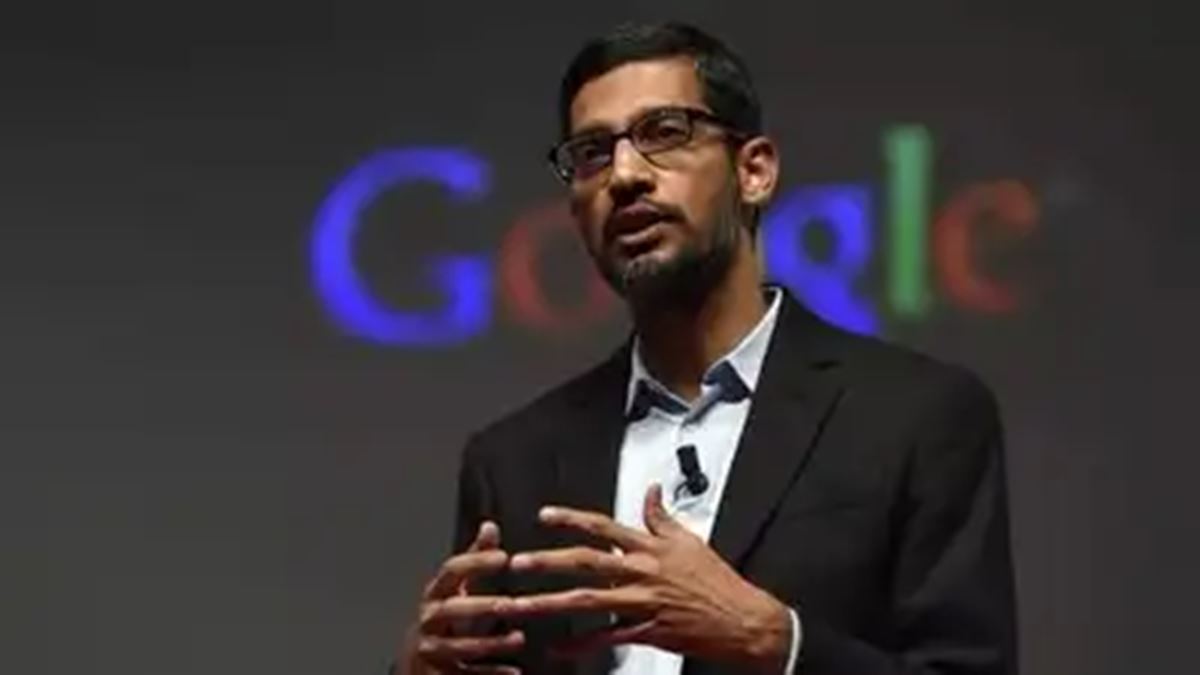
Alphabet’s CEO Sundar Pichai, in an interview with BBC in late 2025, said AI will eliminate some jobs but evolve and transition others, meaning “people will need to adapt” rather than be replaced outright. He frames the shift not as destruction but as reconfiguration — workloads will be redistributed, skills re-weighted, and career paths rewritten.
But he also noted AI’s broader role in everyday decisions: from healthcare choices to financial planning. This reflects a future where AI augments human judgment as much as it transforms jobs.
Meanwhile, OpenAI’s Sam Altman, during a live-streamed town hall event in January, said that the company plans to slow headcount growth because AI enables the company to “do so much more with fewer people.” The goal, he suggested, is to avoid aggressive hiring followed by painful AI-driven layoffs.
The radical abundance vision
And then there are the futurists.
Tesla and xAI CEO Elon Musk envisions a world of “universal high income,” where AI and robotics eliminate scarcity and work becomes optional. He also noted that AI can become smarter than any human by the end of this year, adding that within five years, AI could surpass humanity’s collective intelligence.
Microsoft co-founder Bill Gates has suggested AI could enable shorter workweeks — two or three days instead of five. In the next 10 years, advances in AI would mean that humans will no longer be needed “for most things” in the world, he told late-night host Jimmy Fallon in February.
Google DeepMind CEO Demis Hassabis speaks of “radical abundance,” provided wealth is distributed fairly.
So, will AI take your job?
The honest answer? It depends.
It depends on your sector. Knowledge workers — translators, writers, analysts, customer service representatives — are among the most exposed, according to research from Microsoft. Frontline roles in healthcare, construction, and logistics may grow as office jobs get automated.
It depends on your skill set. AI skills command wage premiums. Analytical thinking and adaptability are increasingly prized.
It depends on geography. The European Commission has warned gains may accrue mainly to high-skilled workers and certain regions without targeted support.
And it depends on speed. Some CEOs like Suleyman foresee 18-month transformations. Most companies, according to McKinsey, are still in pilot mode.
What is certain is this: AI will not leave the labour market untouched. “Every job will be affected, and immediately. It is unquestionable,” Nvidia CEO Jensen Huang said at a conference in 2025. “You’re not going to lose your job to an AI, but you’re going to lose your job to someone who uses AI.”
The future of work in the AI era is unlikely to be a single dramatic collapse. It will look more like constant reconfiguration where roles are unbundled, workflows redesigned, skills rewritten in real time.