









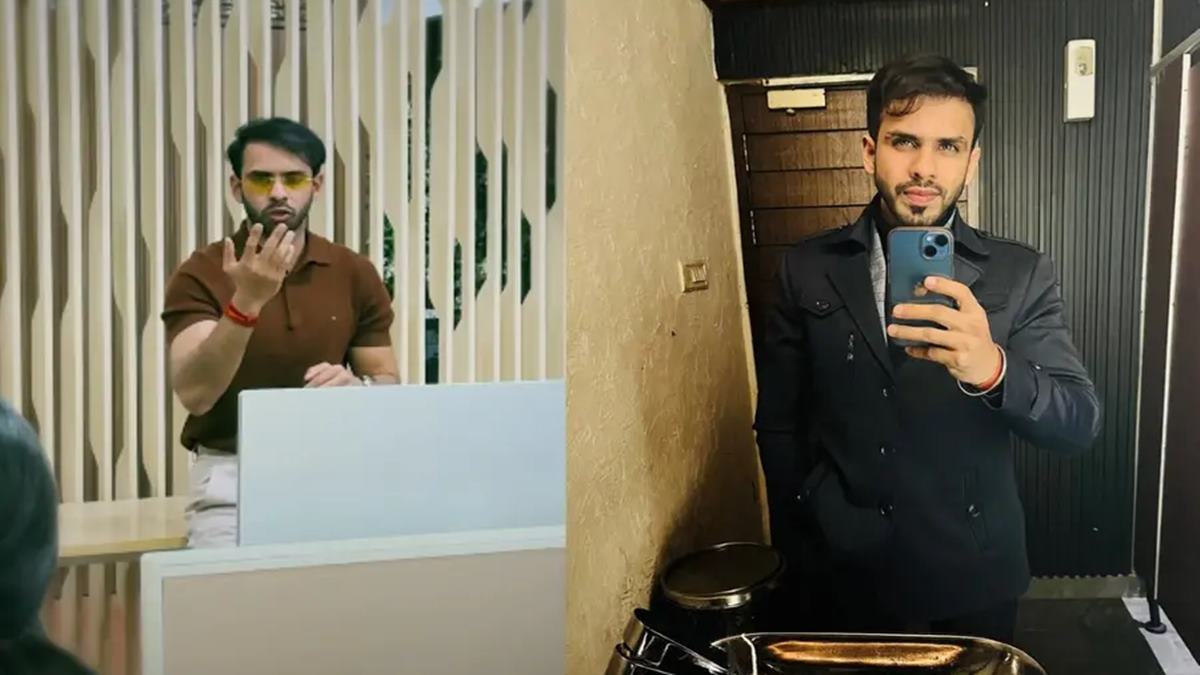

When Pune-based Vidyut Sharma decided to take a shot at freelance photography at 19, in 2016, he had no inkling he was headed for a debt trap. What began as small loans to buy or repair photography equipment snowballed into a nearly Rs.40 lakh debt spread across 54 loan accounts over 4-5 years. Most of these were small-ticket, unsecured loans taken through fintech apps, non-banking financial companies (NBFCs), credit card issuers and banks.
“It began around 2021, when I realised I didn’t need my own money to buy expensive gear. I was getting so many offers for personal, instant loans with no collateral or tedious procedures. What I didn’t foresee was the distressing consequences of missing EMIs,” says the entrepreneur. After being bombarded by 15-20 calls every day and harassed by a barrage of visits to his and his relatives’ homes by lenders, he decided to approach a debt counselling firm, Expert Panel, last year. “They not only helped end the harassment, but have also brought down my debt to nearly Rs.5 lakh,” says Sharma.
Sharma is not an outlier. Every month hundreds of youngsters in the 25-35 age group are enrolling in debt resolution firms to escape severe financial crises, and several more who are not reaching out for help, but are being sucked into debt traps. Born between 1997 and 2012, Zoomers are the first generation to have amassed such large volumes of debt, a stark contrast to the previous generations for whom loans were taboo. They are racking up debts of Rs.30-40 lakh on monthly salaries as low as Rs.30,000-40,000. At the heart of each debt trap is the effort to bridge the gap between income and expenses with loans that quickly spiral out of control.
For most, the cycle starts not with secured loans taken to buy bigger assets like houses or vehicles, but with small, unsecured loans for essentials, lifestyle upgrades, gadgets, travel or career enhancement. These are easily available, seemingly harmless, simply processed, digital loans on mobile apps that pile up unknowingly. When income fails to cover the rising EMIs, the situation is exacerbated by taking on more loans to repay existing loans or missed instalments.
According to a CIBIL report, Gen Z comprises 41% of new-to-credit consumers. Over 65% of borrowers from NBFC fintechs are in the 26-35 age group, as of June 2025, according to another report by CRIF High Mark and the Unified Fintech Forum (UFF).
Even though this generation is fuelling consumption, it is falling behind with loan repayments, especially for small loans below Rs.50,000. Nearly 26% of these loans have been delinquent for more than 90 days, according to the CRIF-UFF data. This is a reaffirmation of the Reserve Bank of India’s (RBI) Financial Stability Report 2025, which claimed that stressed assets (31-180 days past due) in the microfinance sector had risen from 4.3% in September 2024 to 6.2% in March 2025. Is Gen Z truly struggling with loan management and on the brink of a large-scale crisis, or are these claims exaggerated? “No, I don’t think these are exaggerated,” says Anurag Mehra, Founder, Expert Panel. “Most youngsters in this age group are stretching finances beyond their means, and even if they don’t fall into a debt trap, they are always on the brink, living from pay cheque to pay cheque, with nothing left at the end of the month,” he says.
Shreyas Kumar, 30 Hyderabad
Monthly salary
Rs.58,000
Monthly expenses
Rs.81,350
Monthly saving/investment
Rs.2,000
Loan EMIs
Rs.50,700
Why is Gen Z in a debt trap?
One reason for the exceedingly high number of youth caught in this trap is the unique blend of social, economic, technological and psychological forces that have been at play in recent years. “Debt is no longer stigmatised, and we have become used to it as a society,” says Ritesh Srivastava, Founder & CEO, FREED, a Gurugram-based loan settlement and debt relief company.
TECHNOLOGICAL
Easy access to credit
Technological advancement has made instant credit easily available through multiple channels at the click of a phone tab. “With the rise of fintech and digital lending, it is easier to live off credit now than ever before and falling into an unending cycle of debt,” says Harsh Vardhan Masta, Head of Payments, Policybazaar.
“There has been rampant growth in the avenues of credit, be it credit card EMIs, mobile app loans, credit on UPI, buy now pay later (BNPL) loans, or pay day loans,” says Srivastava. These are being pushed as pre-approved personal loans on phones, as advertisements for ‘no-cost EMIs on cards’, and BNPL offers on small daily purchases. NBFCs, MFIs and fintech apps have mushroomed in the past few years, making it easy to take small-ticket unsecured loans of Rs.10,000 to Rs.2 lakh without collateral or paperwork.
However, no one talks about the high annual percentage rate (APR, or the annual cost of borrowing), which can typically range from 18-48%, or the consequences of missing EMIs. “Consumerism is growing on the back of credit, but India has among the highest interest rates globally. So short tenures of small loans and high rates are acting as a perfect storm situation, challenging the debt servicing ratio of individuals and leading to delinquencies,” says Srivstava.
Paying the minimum due amount on credit cards means you pay 3-4% per month on the unpaid amount, which increases the debt faster than you can repay it. Missing an EMI brings debt collectors to your house, office, or even relatives’ houses though it’s illegal to harass the defaulter.
“For a lot of younger salaried clients in the 25-30 age group with very high outstanding debts, a common reason is easy access to credit cards. They have 8-9 cards with which they keep rotating the debt,” says Shilpa Bhaskar Gole, Principal Officer and Designated Partner at NerdyBird Wealth Advisory.
“People in a debt trap keep rotating loans or take multiple loans. The banking and financial services industries should stop giving them credit at an early stage, but they don’t because they are focused on increasing revenue. So loans are given beyond the repayment ability of the individuals,” says Mehra.
ECONOMIC
Income vs expense
The high inflation and rising cost of living, combined with surging lifestyle expenses, have stretched the monthly salaries thin, leaving the youngsters with no balance in their accounts at month-end, no savings, and no scope for aspirational spends. They plug this gap with small, highinterest loans.
As per a 2025 study by Deel, a global payroll and human resources platform, two in five (41%) Gen Z whitecollar workers are unhappy with their salaries due to the growing financial strain, with 14% dissatisfied because the salaries are insufficient to cover their needs beyond basic expenses, and 21% citing a lack of inflation-adjusted hikes.
“Gen Z aspirations are not in tandem with the wage growth, which is stagnant at 10-11%, while inflation is at 7-8%. How will they pay the EMI at an APR of 20-30%?” asks Srivastava.
Saurabh Singh, 27, from Bengaluru, knows it well as he amassed a debt of Rs.5 lakh on a monthly salary of Rs.42,000. “Nothing felt extravagant—rent, food, transport, subscriptions, the occasional weekend getaway— but I was stretching myself thinner every month,” says the professional who started taking short-term app loans and maximising credit cards to plug the gaps. Over time, he ended up with 12 loan accounts across eight app loans and four credit cards, and his EMI swelled to Rs.50,000, higher than his income.
SOCIAL
Social media, peer pressure
The flurry of consumption and leisure spending among Zoomers triggered by social media is another reason for the rapid spiralling of debt. “Social media brings peer comparisons that didn’t exist for the previous generations. These nudge you into leading a certain type of lifestyle, and the brands of gadgets, mobiles, laptops and cars you own become very important. Travel reels and goals also result in a lot of spending,” says Gole.
According to a 2025 survey by Paisabazaar among 5,700 respondents, 27% of personal loans were taken for travel, driven by Gen Z and millennials, especially in tier 2/3 cities (71%), with most taking loans of Rs.50,000-5 lakh.
Take 28-year-old Shikha Verma from Delhi, who spent nearly Rs.15,000-20,000 every month on shopping, salons and dining because she was a part of a circle where the outward display of wealth was very important. She, along with her brother, ended up amassing a debt of nearly Rs.1 crore.
“The idea that you only live once has fuelled the experiential spending, wherein people are not wary of spending on experiences under peer pressure,” agrees Masta.
PSYCHOLOGICAL
milieu & mindset
Some experts also attribute the debt crisis to Gen Z’s attitude stemming from a lack of financial struggle. “Due to the basic financial comfort level in the middle class, Gen Z has a casual approach towards jobs and the same attitude filters down to money and spending habits,” says Mehra. They seek instant gratification and live for the moment, believing they can earn quickly and repay the debt, but the debt piles up faster than they can repay.
How to avoid the trap
While it may not be easy to ignore the lure of instant loans, it’s crucial to do so for the sake of Zoomers’ financial health.
Good debt vs bad debt
“The biggest cause of concern is that 55% of our household debt is concentrated in unsecured loans. We are not taking debt to build assets,” says Srivastava. A good debt is one that allows you to build assets or career, or grow your wealth in the future, while a bad debt simply drains your hard-earned wealth. Learn to distinguish between the two and avoid small, unsecured loans, using these only as a last resort.
Build a buffer
While the artificial intelligence (AI) threat to jobs hangs heavy, any financial emergency or loss of income can upset your budget, especially if you are living hand to mouth, straining your debt repayment. It’s best to have a contingency corpus to help cover any financial shortfalls or bridge debt repayment gaps. “Building an emergency fund to help you deal with contingencies can help avoid taking on further debt,” says Masta.
Look out for these red flags
You know you’re headed for a debt trap if…
You pay the minimum due amount on credit card
This means your principal remains unpaid and interest compounds. As you pay a high interest of 3-4% a month on the unpaid amount, your debt accumulates faster than your ability to repay it.
You miss loan EMIs
This results in high penalties, drastic fall in credit score, or worse, a tendency to take another high-interest loan to pay the EMI.
You take a loan to pay a loan
This is the start of a vicious cycle that results in you taking higher interest loans to pay the existing loans, which eventually becomes unsustainable.
Your debt-toincome ratio is over 50%
If your EMIs take up more than half of your income, you will have little left to cover basic needs and will eventually borrow or use credit card to bridge the gap.
Your FOIR is higher than 70%
A high fixed obligation to income ratio (FOIR) means you have less than 30% left for essentials, which will lead to more debt and become unsustainable.
You borrow for basic needs
If you end up using buy now pay later or quick fintech loans for your rent, groceries or utility bill payments, your income will not be able to take the repayment strain.
You have high credit utilisation
If you’re maxing out your credit cards or using 80-90% of the available credit limit, it’s likely that you’re paying the minimum due amount or defaulting on payments, resulting in higher debt.
Opt for safe ratios
Stick to a debt-to-income ratio of less than 30% which means that not more than 30-40% of your income should go towards servicing loans. Similarly, make sure your credit card utilisation is less than 30%, meaning you should use less than 30% of the credit limit available to you.
Lender curbs, regulatory intervention
In a bid to meet their financial targets, the NBFCs and fintechs ignore checks and balances while giving credit. “Most of the loans are being disbursed to Gen Z without proper underwriting checks because of the high APR being offered, which leads to repayment stress,” says Srivastava. In the absence of growth in per capita income, fintechs are deepening credit rather than widening it by giving multiple loans to the same individual, resulting in overleveraging.
Agrees Mehra: “Regulatory intervention is needed at the stage of loan disbursal. AI tools and data science should be used to improve credit checks so that people with poor records are not given multiple loans. Credit reports should be a live score rather than an offline score updated once a month.”
SHIKHA & SAHIL
VERMA, 28 & 31(siblings), Delhi
Monthly salary
Rs.1.65 lakh + Rs.63,000 (mother’s pension)
Monthly expenses
Rs.3.43 lakh
Monthly saving/investment
Rs.3,000
Loan EMIs
Rs..37 lakh
VIDYUT SHARMA
29 Pune
Monthly expenses
Rs.60,000
Monthly saving/investment
Nil
Loan EMIs
Rs.90,000
Choose your debt wisely
Not all debt is bad. Stick to these dos & don’ts to avoid risk.
DOs
- Opt for secured loans, such as home, car, education or gold loans.
- Take loans only to build assets, enhance career, or grow your wealth.
- Use credit cards only to benefit from reward points, or in an emergency, and if you can repay in full every time.
- Debt-to-income (DTI) ratio is best kept below 20%, but 30-40% is also acceptable.
- Keep your credit utilisation ratio below 30%.
DON’Ts
- Avoid unsecured loans, such as credit card, personal, instant app, buy now pay later, microfinance or pay day loans.
- Don’t take on debt for wants or discretionary items and services like travel or gadgets.
- Do not use credit cards to pay for essentials or upgrade lifestyle, and if you can only pay the minimum amount due.
- Exceeding the DTI ratio of 40-50% is a red flag.
- Don’t cross the credit utilisation ratio of 50% to avoid impacting your credit score.
If you’re trapped…
“If you want to get out of the trap, start with the intention to change because otherwise you will go back to the same behaviour patterns,” says Gole. While you could attempt to reduce the debt yourself, if the situation is completely out of hand, it’s best to approach a financial adviser or a debt resolution firm.
The latter can help stop the lender harassment and negotiate with lenders or banks to settle the loan. “With secured loans, we don’t have any leverage and banks take possession of the asset. So we work only with unsecured loans, where we can negotiate with the lender, and based on the payment capacity of the individual, we structure a plan where they can resolve it over a period of time at lower amounts,” says Mehra. It usually takes 3-8 months for the lender to arrive at a settlement.
Start small or high
It’s important to make a start, with either the smallest debt or one with the highest interest rate, which bleeds one the fastest. Pay off one loan and you’ll feel motivated enough to continue.
Consolidate debt
Take a personal loan at a lower interest rate than your existing debts. Combine all your high-interest loans, especially credit card debt, and pay them off at one go. You’ll now have only one debt to deal with and the highrate loans will not snowball exponentially.
Cut costs, augment income
If your expenses have bloated due to lifestyle purchases, strip these down to basics till you’re debt-free. It will also help if you find other sources of income to ease the repayment burden—rent a room, take tuitions, consult, or cook.
Seek therapy
If the reason for your mounting debt is behavioural or psychological, such as work stress, relationship anxiety, family trauma, or financial traits and habits inherited from your parents, seek a behavioural counsellor or a psychotherapist. If not, you will lapse into the same behaviour even if you manage to come out of the trap.