


















For decades, manufacturing has operated under a simple assumption: productivity is tied to physical presence. Shop floor workers are inherently on-site, and office teams are often judged by their visibility rather than their output. Yet today’s world of work—reshaped by digital transformation and changing employee expectations—demands a rethink of employee experience (EX), especially in hybrid models that balance remote and onsite work.Breaking the “Presence Equals Productivity” Myth
In many manufacturing setups, stakeholders at the head office still equate visibility with effectiveness. However, research increasingly shows that hybrid work does not negatively impact productivity and can significantly improve retention and engagement. For example, a large randomized trial of hybrid work involving over 1,600 employees found that a hybrid schedule (two days remote per week) did not affect performance ratings or promotion likelihood, while reducing turnover by 33%—a win for both employees and employers. (Nature)
Similarly, industry statistics indicate that 58% of manufacturing companies have adopted hybrid work models and 42% of managers believe remote work improves productivity—with remote/hybrid arrangements also boosting project agility and satisfaction. (worldmetrics.org)Lessons from the Floor: Applying Hybrid Thoughtfully
Hybrid work in manufacturing must be designed with operational realities, technology enablement, and people engagement in mind.
1. Tailored Role-Based Flexibility
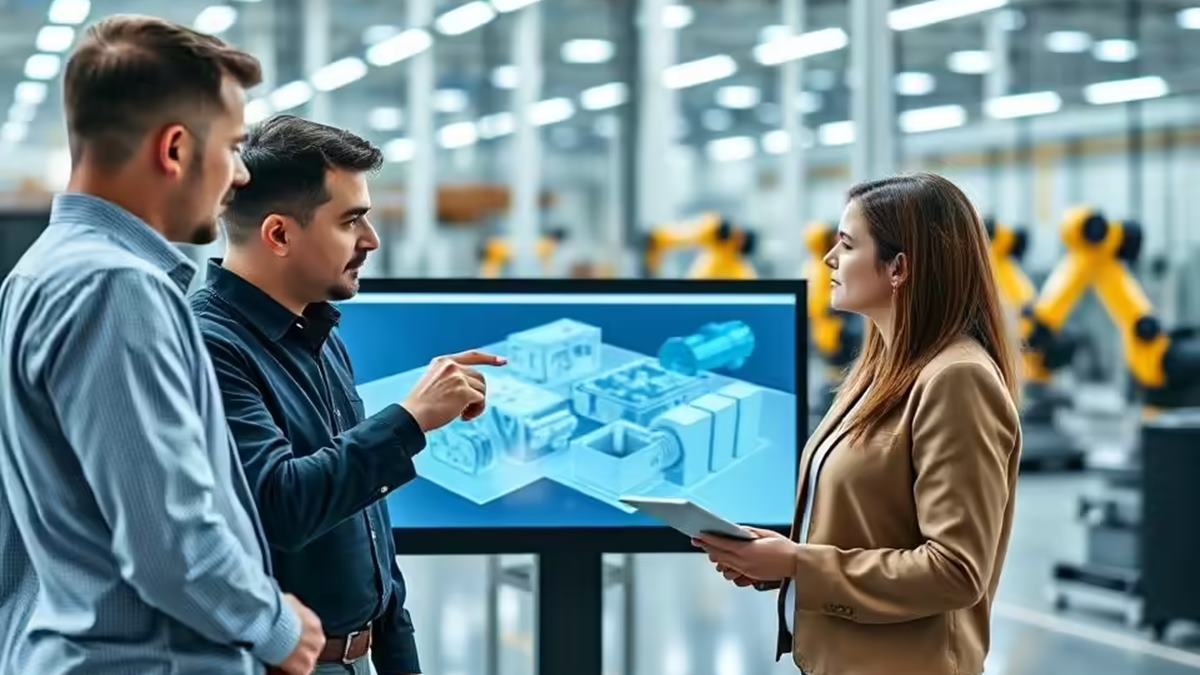
Not all roles are the same. Production, logistics, and quality teams require on-site presence, but strategic functions—HR, planning, engineering, design—can be optimized through hybrid schedules. At one auto components firm, engineering design teams working a mix of on-site and remote days reported measurable improvements in ideation and throughput, as focused remote work was complemented by collaborative onsite problem-solving.
2. Tech and Digital Enablement
Adoption of digital collaboration tools (project platforms, cloud ERP/HR systems, virtual whiteboards) is essential. Recent industry data shows 47% of manufacturing companies increased investment in digital collaboration tools as part of hybrid work transitions, enabling distributed teams to stay synchronized. (worldmetrics.org)
3. Maintaining Inclusive Culture
A hybrid model should never create a two-tier workforce. Initiatives such as regular virtual town halls, rotational site visits, and cross-functional team rituals strengthen connections between remote and on-site groups. Inclusive leadership builds a culture where performance is judged by impact, not by desk hours.
Real-World Case Insights
While hybrid adoption in manufacturing is still evolving, emerging trends highlight the potential:
• Work-Life Balance & Productivity Gains: A broader industry report notes that 65% of manufacturing workers prefer hybrid work, and 70% report improved work-life balance with such arrangements. (ZipDo)
• Role Expansion in Metal & Automation Sectors: In the metal industry, 45% of firms reported that hybrid options enhance productivity, while in automation, 45% of firms observed a 20% productivity increase after enabling remote work policies for eligible roles. (WifiTalents)
These trends—though varied by industry segment—reflect a growing acceptance that flexibility, supported with strong governance and digital tools, can drive business outcomes even in traditionally location-centric sectors.Key Takeaways for Stakeholders
• Evolve Mindsets: Leaders must shift from equating physical presence with performance. Empirical evidence shows hybrid work can preserve productivity while enhancing retention and satisfaction.
• Strategy over Assumption: Hybrid work is not “work from home” by default—it’s about outcome-based performance metrics and trust-driven management.
• Inclusive, Technology-Enabled Frameworks: Put structured collaboration, training, and digital platforms at the core of hybrid policies.
Conclusion
Manufacturing organizations that redefine employee experience for the hybrid era gain a strategic advantage. By prioritizing impact over presence, companies can build an adaptable, resilient workforce—one that not only meets operational demands but thrives in the future of work.