













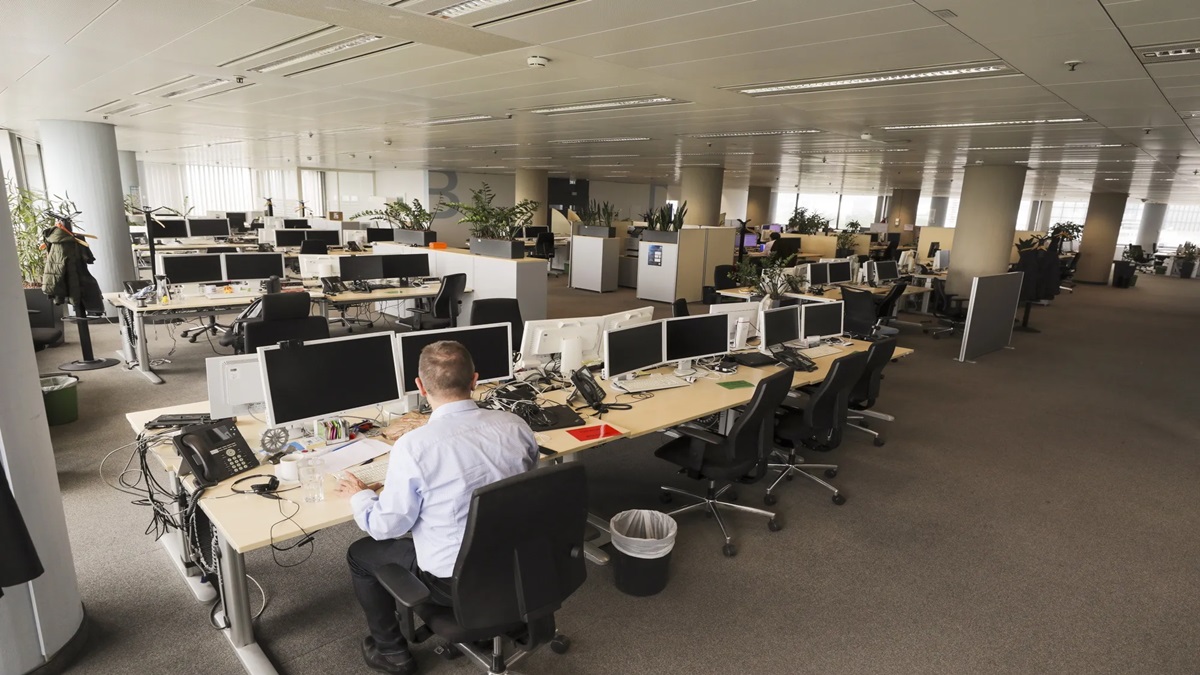


More organizations are looking to improve their work environments through design. Oftentimes, leaders hope to create a future defined by stronger collaboration, higher performance, better employee well-being and, of course, reduced operating costs. But these ambitions almost always depend on something deeper than changing the space itself. They depend on encouraging new habits and new ways of doing things. For example, a collaborative atmosphere can’t exist in office spaces that are solitary, undersized, overly formal or ambiguous in purpose.
This is why behavioral science can be a powerful workplace design partner. At its core, this discipline examines how people make decisions and what influences their actions. When applied to the design of workplaces, behavioral science becomes a lever for accommodating and encouraging desired habits and outcomes.
How Design And Incentives Can Guide Behavior
Consider an organization that’s building a new headquarters and wants to promote employee wellness through office design. The company might decide to include a centrally located, highly visible fitness center in the floor plan. Employees can access the gym by paying a modest membership fee—small enough to feel manageable but large enough to create a sense of commitment.
Then, to encourage use, the company can provide incentive: Those who use the facility at least twice per week are reimbursed the fee. Though nothing about the gym itself has changed, participation dynamics can shift almost immediately. Employees are less likely to see the gym as a passive amenity and, instead, view it as part of the everyday workplace experience.
This works because people are more responsive to small, immediate incentives than abstract benefits. The long-term health advantages of exercise often compete with very real short-term barriers like workload or fatigue. Offering a reimbursement policy introduces a near-term reward that can offset those barriers. Paired with the convenience of the fitness center, employees may find the desired behavior is easier to adopt and sustain.
Applying The Principles Of Behavioral Design
Behavioral science provides a framework for intentional workplace design that extends far beyond amenities or isolated moments of choice. Examining concepts like default effect or reward sensitivity can fundamentally shape how we think about the structure of the workplace itself. For example, improving a workplace is rarely about adding more square footage. In many cases, it’s about making meaningful changes to what we already have.
In our own offices at Blue Cottage of CannonDesign, we wanted to encourage movement and socialization. By right-sizing individual work spaces with a focus on functional comfort, we created subtle signals that people should step away from their desks and spend time in shared settings. Our communal spaces, designed for interaction and informal exchange, are now the center of gravity. They feel dynamic and alive because of their comfort, access to beverage stations, varied seating, visible activity and social energy. People feel a natural pull to them that individual workstations rarely achieve on their own because activity attracts activity.
4 Ways To Start Designing With Intention
For organizations hoping to revamp their office space and create an environment that supports desired behaviors, here are four vital steps in the process.
Look For Opportunities
When it comes to behavioral workplace design, I always tell people to start with visibility. What cultural norms and behaviors are you actually trying to encourage? It could be anything from collaboration to experimentation to social connection. Then, you must consider where those behaviors currently live and if that’s the best place for them.
Make Things Flow
Placing shared resources, moments of activity or collaborative zones along natural circulation paths subtly reshapes behavior. People engage more readily with what they repeatedly see. Equally important is reducing behavioral friction. If collaboration requires booking a room, relocating floors, interrupting workflow or navigating unclear expectations (e.g., is the space meant for meetings or focused work?), people will unconsciously avoid it.
Signal Intent To Reinforce Behavior
People are influenced by their environment, whether it’s the grocery store or the office. Design elements like furniture scale, lighting, acoustics, posture options and even adjacency patterns communicate what behaviors are expected in a given place. So a pristine conference room may signal formality and performance, while a lounge-like collaboration zone signals experimentation and dialogue.
Focus On Intrinsic Rewards
When it comes to behavior encouragement, many organizations jump quickly to financial or policy-based behavior incentives. But I advise caution. Extrinsic motivators drive short-term compliance but rarely sustain cultural behavior. More durable shifts emerge when the desired action feels easier or more intrinsically rewarding.
The environments we inhabit are never neutral; they actively shape our decisions, routines and interactions. So the most reliable path to change is aligning the physical workspace with the actions you hope to see. Combining design with behavioral science ensures that desired outcomes become the easiest, most appealing choices to make.