
















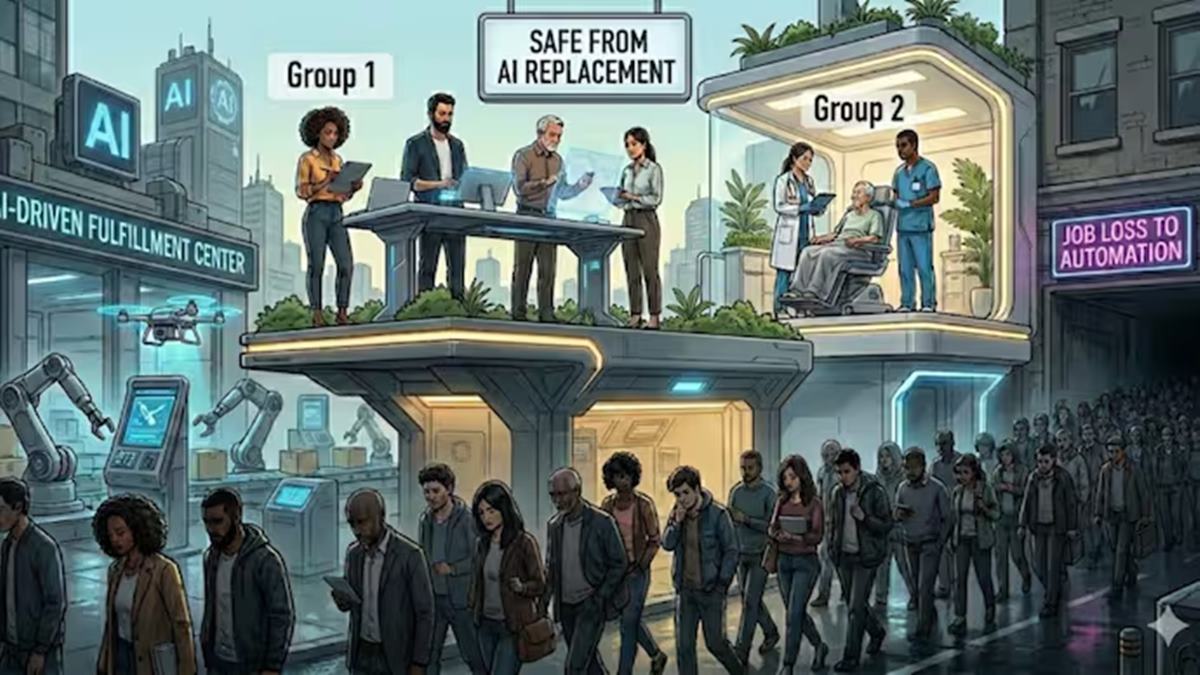
Artificial intelligence is changing the workforce. Thousands of people are losing jobs across various sectors, be it SaaS, consultancy, or even game development. This has sparked fears over the future of the job market, with many being concerned about job security. At this time, Palantir CEO Alex Karp has reckoned that your job may be safe if you fall in one of two groups – either your job requires vocational training, or if you are neurodivergent.
Alex Karp discussed the future of the job market as AI becomes increasingly more integrated in the workplace. On the Technology Business Programming Network (TBPN) podcast, Karp said, “There are basically two ways to know you have a future. One, you have some vocational training. Or two, you’re neurodivergent.”
Vocational training jobs usually include roles of plumbers, technicians and mechanics. These vocations are considered difficult to automate and are increasingly in demand, especially with the expansion of data centres and AI infrastructure globally. Vocational jobs were also considered safer in a recent report by Anthropic over potentially being replaced by AI.
Why are neurodivergent people safer from AI?
On the other hand, Neurodiversity is a term that typically encompasses conditions such as ADHD, autism, dyslexia and other conditions. Karp, who has spoken openly about his own dyslexia, believes that neurodivergent individuals will be able to gain an edge in the future as they could come up with more creative solutions.. He said success will favour those who can “be more of an artist, look at things from a different direction, be able to build something unique.”
He joked that Odin, the chief god in Norse mythology, did this just to make things right for dyslexic individuals. Karp said, “I feel like Odin came down and was like I’m gonna make the world just right for [people who are] dyslexic.”
While other people may be in a worse position. He added, “It’s really an inversion, everybody with normal shape skills are dyslexics because the thing they can do that used to be valuable is not so valuable.”
Previously, tech leaders such as Elon Musk and PayPal co-founder Peter Thiel have admitted that their own neurodivergent conditions played a key role in their success.
Palantir chief runs fellowship for neurodivergent individuals
Palantir has incorporated Alex Karp’s views into its hiring strategy by launching a dedicated “Neurodivergent Fellowship” in December last year.
The programme recruits talent that may think differently from traditional candidates, with Karp personally involved in the final interview stage. The company’s job posting stated that “neurodivergent individuals will play a disproportionate role in shaping the future of America and the West.”