




















A new joint working paper by the International Labour Organization (ILO) and the World Bank finds Generative artificial intelligence (GenAI) is set to reshape global labour markets—but its impact will be far from uniform, with stark differences emerging between advanced and developing economies, according to a new cross-country study covering 135 nations.
While wealthier economies are seeing higher exposure to AI across jobs, developing countries face a more complex reality—limited digital infrastructure could delay productivity gains even as certain roles remain vulnerable to automation.
The research highlights a clear link between economic development and AI exposure. In high-income countries, nearly 30–32 per cent of jobs are exposed to generative AI, compared to around 15 per cent in low-income economies.
Globally, the largest segment—about 17 per cent of jobs—falls into a moderate exposure category, where AI is more likely to augment human work rather than replace it. However, nearly 8 per cent of roles are at high risk of automation.
Clerical, administrative, and certain professional roles emerge as the most exposed, particularly as GenAI tools increasingly automate routine cognitive tasks.
A key constraint identified in the study is the lack of digital access. While millions of jobs could benefit from AI augmentation, a significant portion of the workforce is unable to leverage these tools due to limited internet connectivity.
Out of 441.8 million jobs globally that could benefit from AI, around 66.9 million lack internet access—effectively excluding them from potential productivity gains.
The gap is particularly stark in low-income countries. For instance, in Mali, only a small fraction of workers are both exposed to AI and able to use it, highlighting how infrastructure gaps can limit the real-world impact of emerging technologies.
In contrast, advanced economies such as Switzerland and Singapore show high levels of both exposure and access, enabling faster integration of AI into the workforce.
The study points to a disproportionate impact on middle-income, white-collar jobs—especially clerical and administrative roles that have historically supported middle-class growth and career mobility.
Researchers warn of a potential “white-collar bypass” in developing economies, where these roles may not expand at the same pace due to early-stage automation, potentially altering traditional employment pathways.
The findings also indicate that women and younger workers are more exposed to AI-driven disruption.
In higher-income economies, approximately 17 per cent of female workers face automation risks, compared to around 11 per cent of male workers. Younger employees, particularly those aged 16–35, are also more likely to be in roles affected by automation.
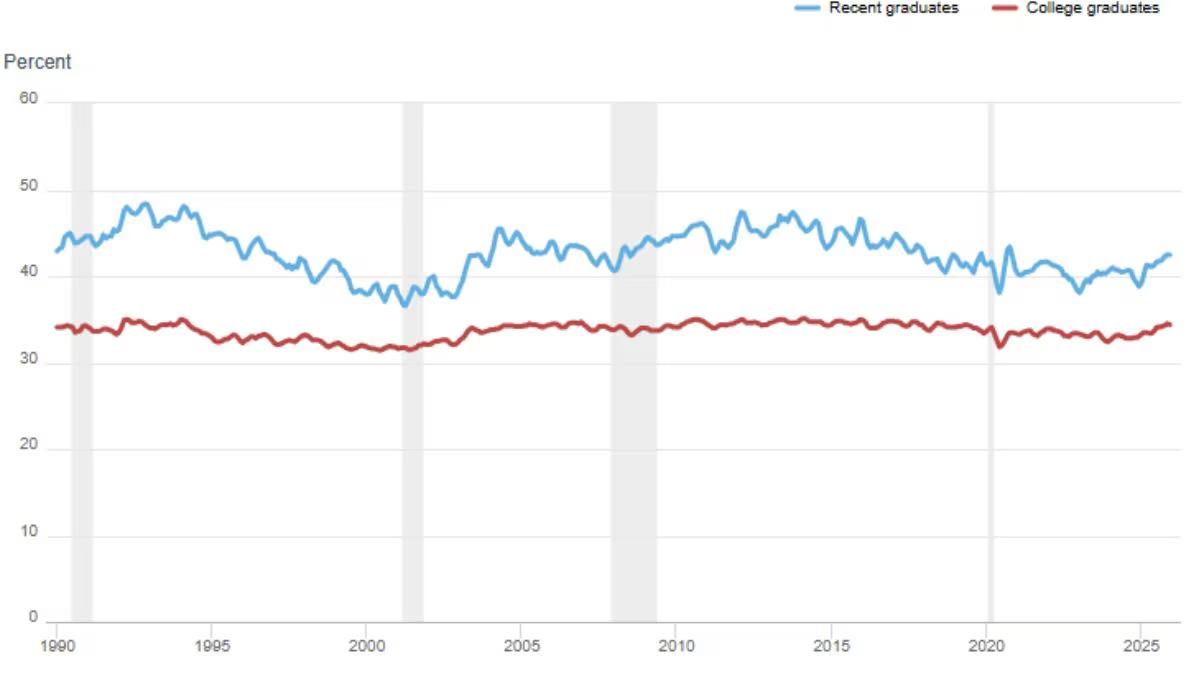
Interestingly, exposure increases with education levels, with college graduates facing exposure rates of up to 38 per cent, underscoring that GenAI is reshaping knowledge-based and white-collar work.
A critical insight from the research is that AI exposure depends less on job titles and more on the tasks performed within roles.
In developing countries, jobs often involve more manual and routine work, which reduces immediate exposure to AI. When adjusted for actual tasks rather than job categories, AI exposure in these economies appears significantly lower than previously estimated.
Overall, the study concludes that while generative AI will transform labour markets worldwide, its impact will be uneven.
Advanced economies are likely to realise faster productivity gains due to stronger digital ecosystems, while developing countries may experience slower adoption, uneven benefits, and targeted disruptions in specific job categories.
Source – https://www.bwpeople.in/article/genai-to-reshape-global-jobs-but-impact-will-be-uneven-ilo-600087