



















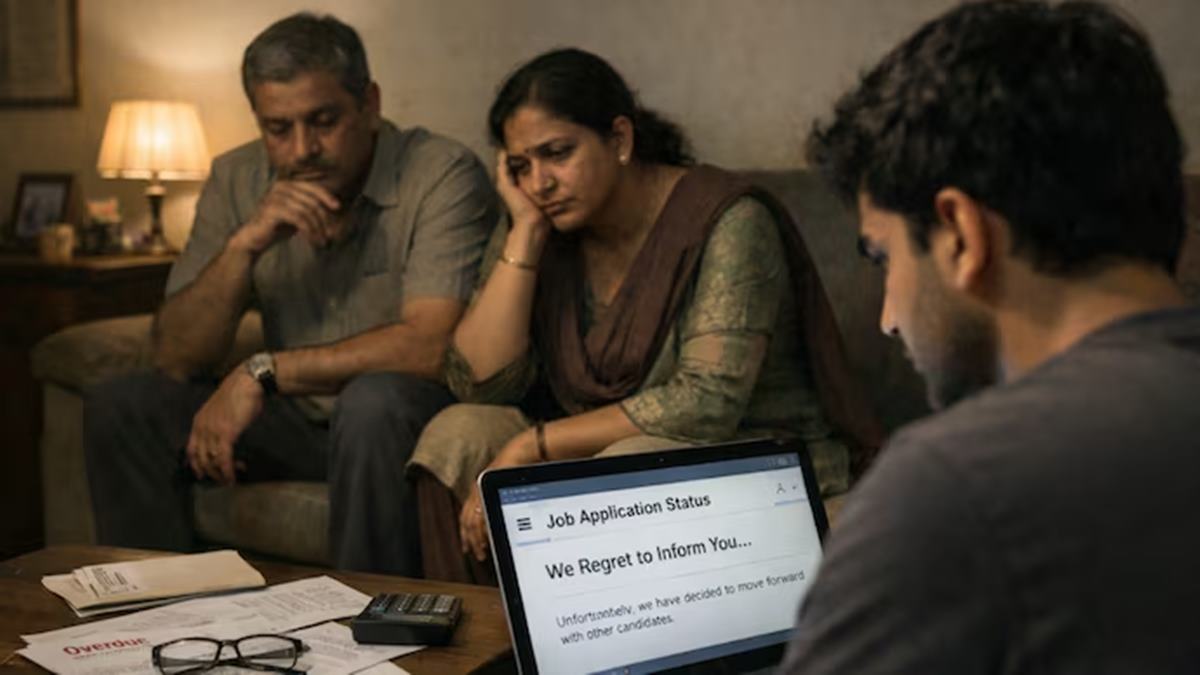
At a time when job insecurity is rising, a new study suggests the impact of unemployment in India does not stop with the individual. It extends deep into families, affecting the mental health of parents.
The analysis, based on data from the Longitudinal Ageing Survey of India (LASI), found that older adults face around a 12 per cent higher risk of depression when their adult children are unemployed.
The study looked at over 73,000 individuals aged 45 and above, making it one of the most detailed snapshots of ageing and family life in India.
WHY THE IMPACT IS SO STRONG
In India, family structures are closely linked across generations. Many older adults depend on their children for financial support, healthcare access and daily stability.
Also, many Indian parents tend to link their children’s financial stability with their own success in raising them, which means unemployment in kids can feel like a personal failure.
When that support is disrupted due to unemployment, the stress is not just economic. It often turns emotional, affecting parents’ sense of security and well-being.
The study also found that unemployment of first-born sons is more strongly linked to higher depression risk among parents. This reflects long-standing social expectations where sons, especially the eldest, are seen as primary providers.
NOT ALL FAMILIES ARE EQUALLY AFFECTED
One of the most important findings is that social connections can make a significant difference.
Older adults who remain socially active, through community groups, friends or regular interactions, show much lower risk of depression even when their children are unemployed.
On the other hand, those who are socially isolated face a sharper rise in mental health risks.
A BIGGER POLICY QUESTION
The findings point to a larger issue. Unemployment is often seen as an economic problem, but its effects spill over into family well-being, especially in countries with limited social security systems.
As India continues to deal with youth unemployment and an ageing population, the study highlights a gap that policymakers may need to address: supporting jobs for the young may also be critical for protecting the mental health of older generations.