




















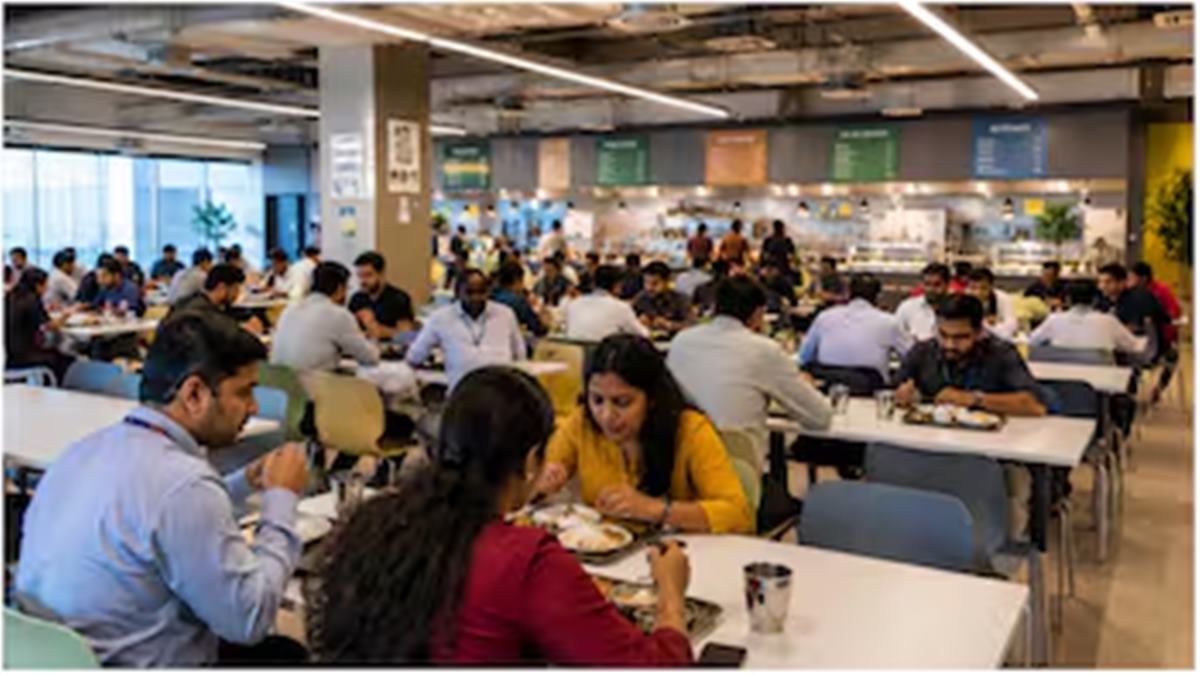
A LinkedIn post by entrepreneur Dr Yashawant Kumar has triggered widespread discussion online after he argued that unhealthy food served in corporate cafeterias may be quietly contributing to the rise of lifestyle diseases among office workers in India.
In the post, Kumar questioned the way people often judge food safety and nutrition, claiming many employees are conditioned to distrust roadside food because of visible hygiene concerns while automatically considering professionally packaged or office cafeteria meals to be healthier.
“We have been trained to worry about hygiene,” Kumar wrote. “The roadside pani puri looks dangerous. The chaat stall has flies. So we avoid it. We feel smart for avoiding it.”
He contrasted that with the perception of office cafeterias, writing: “The office canteen looks clean. The packaging is sealed. The cafeteria has air conditioning and a printed menu. So we eat there. Every single day. Without a second thought.”
Kumar argued that while roadside food might occasionally lead to short-term stomach illness, daily office meals high in refined carbohydrates, processed ingredients and oil could contribute to long-term health conditions.
“The pani puri might give you a stomach upset for two days. The office lunch is giving you metabolic disease for 20 years,” he wrote.
Describing what he called a typical corporate meal, Kumar referred to “refined white rice with no fibre”, “overcooked dal stripped of half its protein”, oily vegetables and fried snacks consumed hurriedly during work hours.
“Deep-fried samosas from the 4pm canteen run because you skipped breakfast and lunch left you hungry by 3,” he wrote. “Eaten at a desk. In 8 minutes. While scrolling through email. Without tasting a single bite.”
The entrepreneur claimed the issue becomes more serious when repeated over years.
“Now multiply that. 250 working days a year. For 10 years. For 20 years,” he wrote. “That is not a meal. That is a slow, sealed, air-conditioned prescription for Type 2 diabetes, hypertension, and a fatty liver — delivered with a smile and a receipt.”
Kumar argued that chronic illnesses often develop gradually and therefore fail to attract immediate attention.
“And we never connected the dots. Because nothing happened today. Or this week. Or this year,” he said. “Chronic disease doesn’t announce itself. It accumulates.”
According to Kumar, the problem goes beyond individual discipline and reflects a larger workplace culture issue.
“This is not a willpower problem. This is a workplace problem,” he wrote, adding that many companies may unknowingly be contributing to the same illnesses they later spend heavily to manage through insurance policies and employee wellness programmes.
“Indian companies spend crores every year on health insurance for diseases they are quietly manufacturing in their own cafeterias,” he added.
Kumar also criticised what he described as performative corporate wellness initiatives that prioritise meditation sessions, fitness workshops and wellness apps while ignoring the nutritional quality of food employees consume every day.
“Unpopular take: corporate wellness programmes are a distraction. The canteen is where employee health is actually won or lost,” he wrote.
As part of his suggestions, Kumar proposed that every corporate cafeteria should offer at least one nutritious, affordable and filling meal option instead of symbolic “healthy” items that employees rarely choose.
“Mandate one genuinely nutritious option at every corporate canteen. Not a token salad nobody eats. A real, affordable, filling meal that competes with the biryani,” he wrote.
He further argued that investing in healthier food choices could reduce long-term healthcare costs and improve employee wellbeing.
“Companies that invest in what their employees eat will spend less on what their employees suffer from,” Kumar said. “The ROI on a better canteen is a healthier workforce. It is that simple. And that ignored.”
The post quickly gained traction on social media platforms, with many professionals sharing their own experiences of rushed lunch breaks, unhealthy office meals and sedentary work routines linked to long hours in corporate environments.
Several users agreed that workplace food habits often receive less attention than productivity or performance targets, despite growing concerns around obesity, diabetes, hypertension and other metabolic illnesses in urban India.
“It’s less about the food and more about the culture that makes people delay or skip lunch. A small shift in meeting scheduling and workload planning can make a big difference,” a user wrote.
Another user commented, “This really resonated. We are conditioned to fear what causes immediate illness, but far less aware of what creates slow metabolic damage over years. A stomach infection announces itself. Insulin resistance and chronic inflammation accumulate quietly.”