

















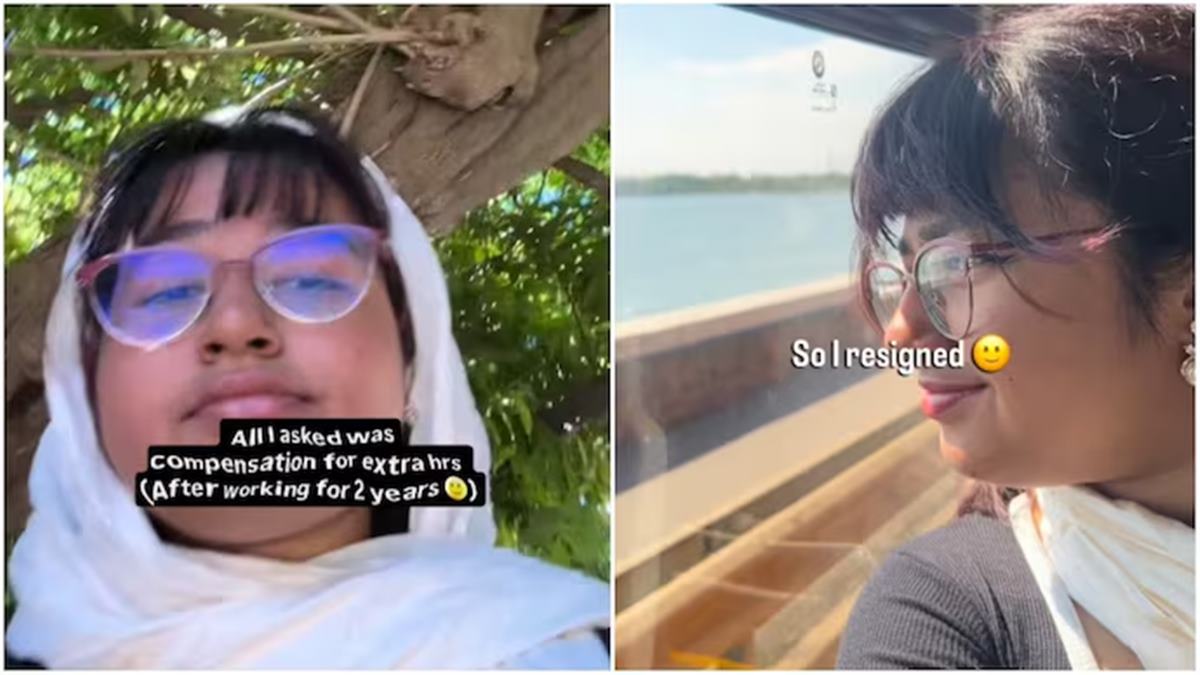
“Low pay? Survivable. Disrespect? Nope.” With those words, a GenZ woman’s resignation story exploded online and quickly became a rallying point for exhausted young professionals.
The now-viral post by Dhrupadi began with a blunt line that immediately caught attention: “Low pay? Survivable. Disrespect? Nope.”
In her detailed caption, Dhrupadi explained that she had worked at the company for two years and seven months and had built what she described as a strong reputation in her role. According to her, things escalated when she asked to be compensated for extra hours she had been working beyond her official schedule.
Instead of a discussion, the Mumbai resident alleged she was shouted at publicly “in front of hundreds of people.”
Dhrupadi said she later raised her concerns professionally and sought accountability along with a formal apology. But when that did not happen, she decided to resign.
“And honestly? I’m glad I did,” she wrote.
Her post quickly evolved from a personal resignation story into a broader commentary on changing workplace culture and how younger employees are approaching dignity, burnout and public accountability differently from older generations.
“I think one of the biggest reasons Gen Z creators are growing so rapidly right now is because people are exhausted by performative perfection,” she wrote, adding that audiences today want “honesty, personality, opinions and humanity.”
Dhrupadi also reflected on how her generation is becoming less willing to tolerate disrespect simply to maintain approval or stability.
“This generation is not perfect. But we are becoming less willing to trade dignity for approval,” she added.
The post triggered intense reactions online.
Many users praised the woman for standing up for herself, arguing that toxic workplace behaviour is often normalised in Indian offices under the guise of discipline or “professionalism.” Others related to the pressure of unpaid overtime and public scolding culture in corporate environments.
Some commenters, however, questioned whether publicly discussing resignations online helps resolve workplace issues or simply fuels internet outrage.