

















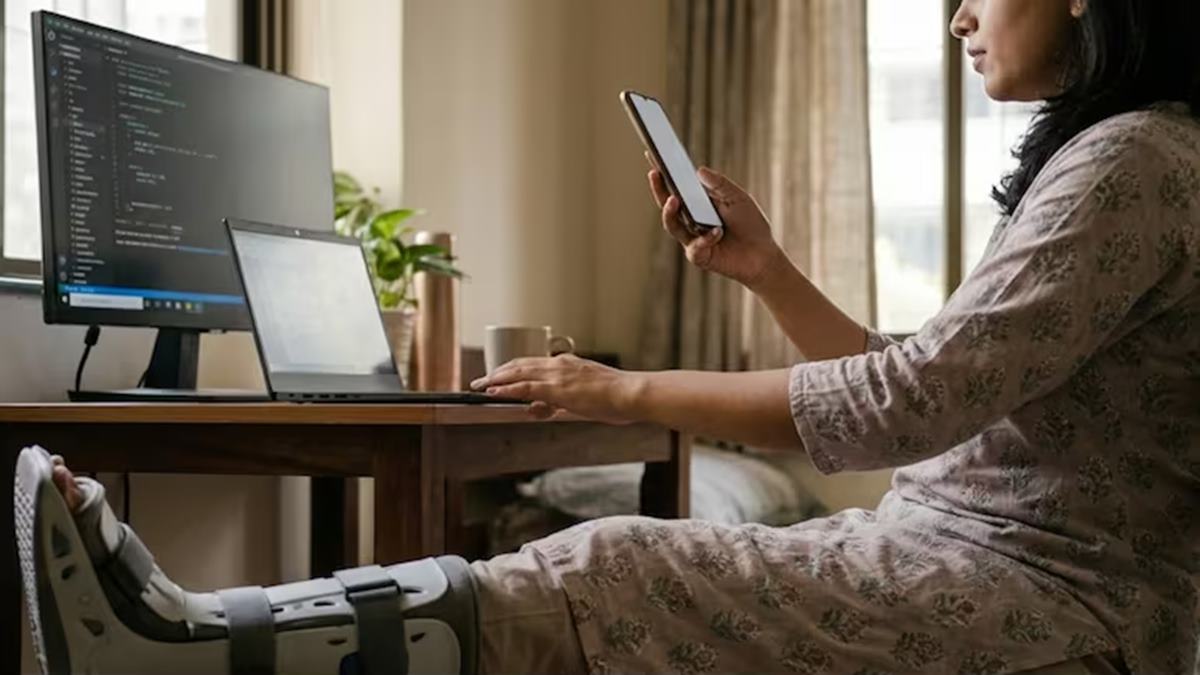
A Mumbai-based tech professional has triggered a fresh debate on work from home culture after sharing her experience of working remotely following an injury. The woman, Dharani, said she was allowed to work from home for 20 days after suffering a hairline fracture. However, within a week, she began wondering why flexible work arrangements are still not widely accepted in the technology sector.
In a video shared on Instagram, Dharani explained that working from home helped her feel more focused and less exhausted. She said avoiding Mumbai’s long and stressful daily commute gave her more energy and improved her overall work-life balance. Her comments quickly gained attention online, with many professionals agreeing that daily office travel in cities like Mumbai and Bengaluru can be physically and mentally draining.
Social media Users strongly backed work-from-home (WFH) and hybrid models, calling them the most productive options. One user wrote, “I swear! WFH or hybrid is the best for maximum productivity-if only micromanagement wasn’t the norm.”
Another highlighted the broader benefits, saying, “Hybrid work is great for mental, financial, and physical health-I said what I said.”
A third user shared a detailed experience, agreeing that WFH boosts productivity. They noted that commuting alone takes up to three hours daily, along with a one-hour lunch break and additional tea breaks-time that could be saved while working from home. However, they expressed frustration that companies prioritise micromanagement over employee efficiency. The user added that, in the future, IT jobs may decline, and people could return to their hometowns for a less stressful, pollution-free life, even if it means earning less.
Others argued that office environments encourage teamwork and communication, which some companies still value highly.
The discussion has once again highlighted the growing demand for flexible work policies in India’s major cities, especially in sectors where remote work is possible.