
















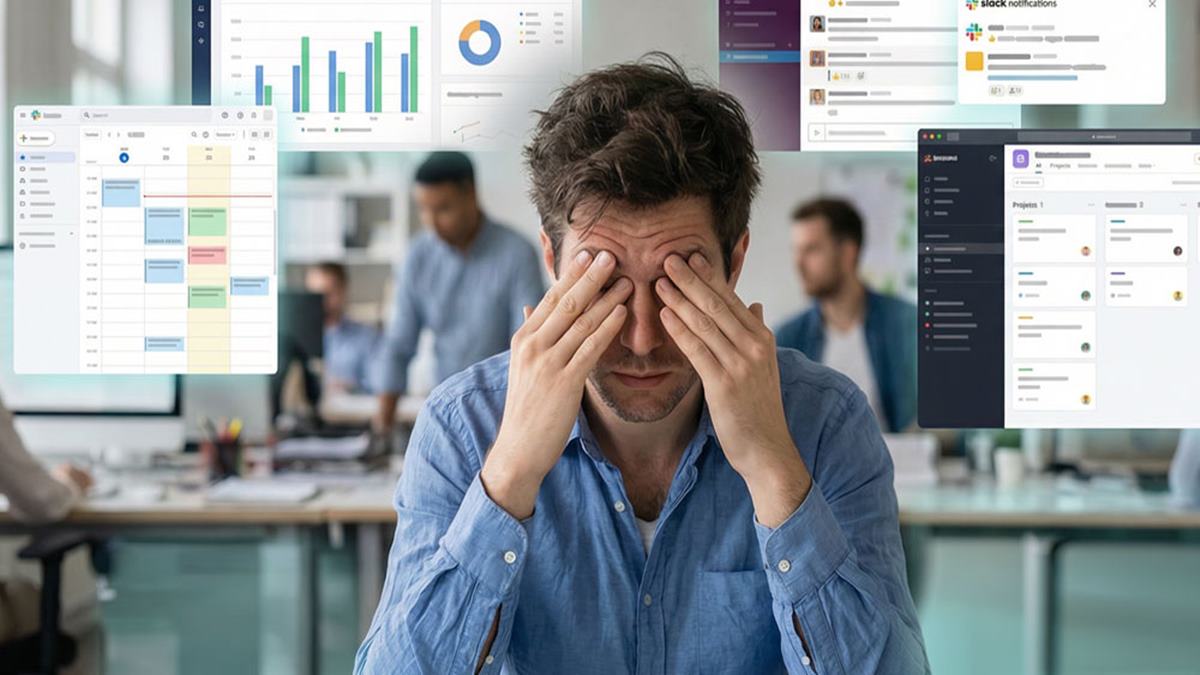
Companies have tried to improve the employee experience by layering new digital tools onto outdated workplace systems. Instead of simplifying work, the result has often been more apps, more notifications, and more digital friction.
Many organizations are now turning to artificial intelligence to rethink the employee experience (EX) from the ground up — with the goal of improving engagement, streamlining workflows, and building a healthier workplace culture.
Kaz Hassan, principal, community, and market insights expert at employee experience platform Unily, said many employees are struggling with the digital friction created by fragmented workplace systems. Navigating messy workflows and unclear rules now stands between workers and their actual jobs.
Hassan’s perspective carries weight given Unily’s high-profile client list, which includes Shell, CVS Health, and American Airlines. He sees a full reset of employee experience as a necessity, not a luxury.
“Work has fundamentally changed, but most digital workplaces haven’t kept up. What I see across enterprises is a pattern of layering new tools onto outdated, fragmented systems. Every new app or plugin is supposed to fix something, but in practice, it only adds another tab, another login, another place employees have to remember to check,” he told CRM Buyer.
Digital Tools Create More Friction
Employees spend time navigating disconnected systems instead of doing their actual jobs, he suggested. According to Gallup, only 23% of the global workforce is engaged.
“That number hasn’t moved meaningfully in years, despite billions spent on point solutions,” Hassan observed.
A reset means leaders stepping back to evaluate what their employees actually need to get work done, feel connected, and stay informed. Then companies can build from those needs rather than patching over problems.
“With AI-native platforms now available, you can do that in minutes rather than months,” he added.
According to Hassan, organizations that reset now will set the pace and have the opportunity to leapfrog their competitors through EX with AI at the core. Those that do not risk ending up with a workforce frustrated and slowed down by its tech stack.
Inside the Push to Improve EX
To understand how companies are rethinking employee experience, we asked Hassan how AI is reshaping the digital workplace.
CRM Buyer: What hidden costs do companies face when they rely on fragmented communication systems?
Kaz Hassan: Three key areas get impacted: lost productivity, reduced engagement, and turnover risk. When employees can’t find what they need, they waste hours searching across systems or give up and ask a colleague, who then also loses time.
When communications feel irrelevant or inconsistent, people tune out. They stop reading leadership updates. They miss policy changes. They are not aligned with the company’s direction. Not because they don’t care, but because the signal-to-noise ratio is terrible.
Poor communication erodes trust and a sense of belonging, especially for remote workers who already feel disconnected. If your best people can’t find what they need to do their jobs, they’ll find an employer who makes it easier.
How can an AI-powered platform move beyond automation to connect employees to the company’s mission?
Hassan: It shifts from efficiency to relevance. When AI is designed not just to automate tasks but to prioritize and personalize the experience, it’s more impactful for employees’ day-to-day.
Most AI implementations I see are still focused on efficiency — auto-translating content, summarizing long documents, and speeding up search. Those are useful, but they don’t change how an employee feels about their workplace.
Could you provide an example of this in action?
Hassan: Digital transformation firm Wipro is a good example of what these hidden costs look like at scale. With over 230,000 employees across 65 countries, many of them embedded deep within customer organizations, the challenge was to keep people aligned with Wipro’s strategy and culture.
As their chief employee EX officer put it, they needed one source of truth for employees. After consolidating onto a unified platform, Wipro captured $20 million in annual value from time savings and productivity improvements alone. That’s the cost that was hiding in their fragmented systems.
How can companies make the shift more meaningful?
Hassan: The shift happens when AI moves from efficiency to relevance. Instead of blasting the same all-company email to 80,000 people, AI surfaces the right content to the right person based on their role, location, and what they’re actually working on.
A warehouse operative in Ohio and a marketing manager in London shouldn’t see the same homepage. When the experience feels designed specifically for you, you pay attention. And when you pay attention, you start to see how your work connects to what the business is trying to achieve.
What do you see as the ideal EX platform?
Hassan: The best employee experience platforms are becoming intelligent digital front doors. Employees land on a surface that knows what they need and gets them there.
There is no need to hunt through four pages, three platforms, and two logins to submit a single request. That’s what actually drives connection, when the technology gets out of the way and lets people focus on the work that matters.
How can AI tailor EX so that both frontline workers and executives feel the platform is built for them?
Hassan: With organizations like Shell, CVS, and British Airways, you’re talking about incredibly diverse workforces involving different roles, shifts, devices, and countries. A one-size-fits-all experience doesn’t work at that scale. It never has, but now there’s technology that can actually address it.
AI personalizes the experience by role, shift pattern, location, and device. A frontline worker on a mobile device might see safety updates, shift scheduling, and quick-access training modules. An executive on a laptop sees strategic dashboards and leadership communications.
The platform adapts automatically so employees get an experience that feels built for them, not mass-produced and forced on the entire company.
Which of the major companies you mentioned best shows that in action?
Hassan: British Airways is a strong example. They have 40,000 employees, 80% of whom are frontline: cabin crew, pilots, engineers, airport workers.
Before their reset, they did not have tools built for mobile, shift-based workers. After moving to a unified platform with role-based hyper-personalization, they reached 91% monthly active usage, and 85% of employees now understand the company’s vision.
That tells you frontline workers aren’t just logging in because they’re told to. They’re going there because the experience is relevant to them.
The bigger transformation was in crisis communications. During a major Heathrow outage that shut down the airport, the airline’s comms team used the platform’s no-code tools to launch targeted crisis communications within minutes, reaching the right people at speed without IT support.
Leadership Still Determines AI Success
Hassan also shared his views on the biggest mistakes companies make when rolling out AI rules. They lead with restrictions rather than enablement.
When employees see the potential of AI but don’t have access to approved tools, they improvise, often pasting confidential documents into consumer chatbots and using free transcription tools for sensitive meetings.
“They create workarounds that sit completely outside your security perimeter. If AI policies are unclear or overly rigid, employees will continue to seek unapproved tools to get work done faster,” he suggested.
He has also seen brilliant platforms fail because leaders did not model the behaviors they were asking employees to adopt. AI can personalize and streamline processes, but human leadership creates trust. Without trust, even the most advanced platform won’t drive adoption.
“Traditional engagement metrics are being reimagined, and honestly, it’s overdue. Annual engagement surveys tell you how people felt three months ago. That’s not good enough when the business is moving at the pace it is today,” he concluded.
Source – https://www.crmbuyer.com/story/ai-is-forcing-companies-to-rethink-employee-experience-177608.html