









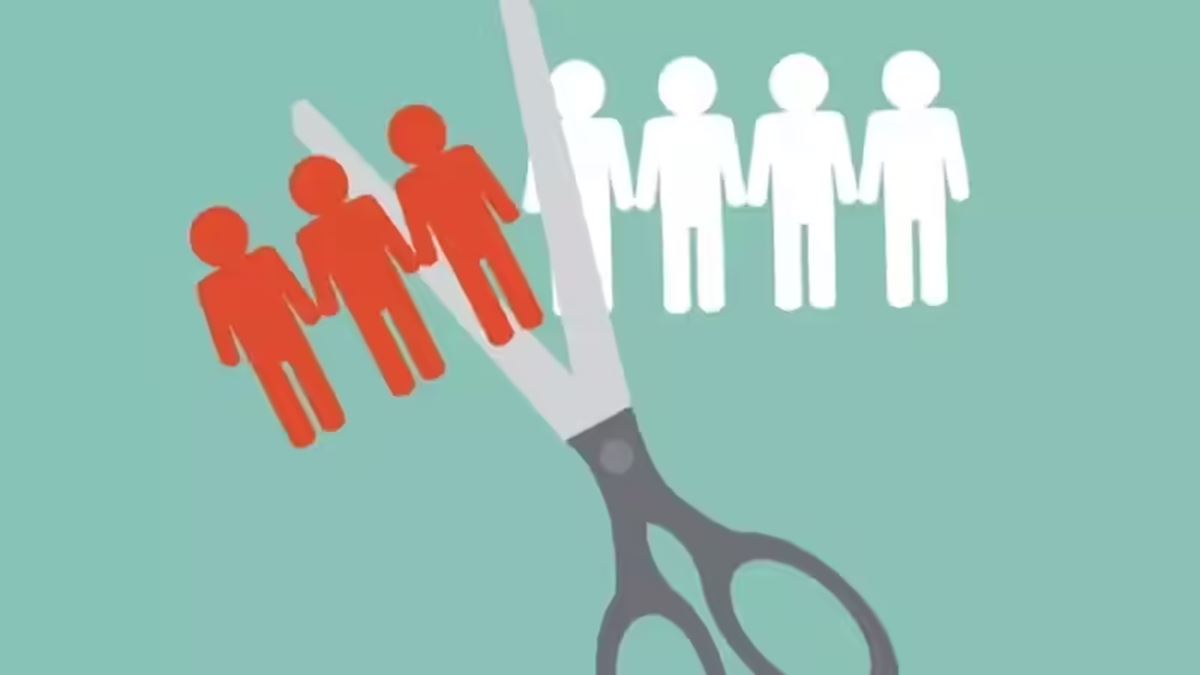









It is happening behind the curtains. Jobs across Britain are being substituted by algorithms, task by task, and role by role. What might seem to be a technological upgrade on the surface is a problem with deep roots. In the UK, fewer job postings appear, and the entry-level jobs seem to vanish.New research from investment bank Morgan Stanley suggests the shift is already well underway. Over the past 12 months, the UK recorded a net job loss of 8 percent directly linked to AI adoption, twice the international average. Among the five major economies included in the study, only the United States posted net job gains tied to artificial intelligence.
British companies surveyed said AI had lifted productivity and output, even as staff numbers declined. The message from boardrooms is efficiency.
The message from the labour market is contraction.One of the authors of the Morgan Stanley report described the findings as an “early warning sign” of AI’s impact on employment. For Britain, that warning is becoming increasingly hard to ignore.
A weakening job market meets rapid automation
The timing could scarcely be worse. According to the Office for National Statistics (ONS), unemployment in the UK has climbed to a five-year high, with retail and hospitality hit particularly hard.These sectors have traditionally absorbed young workers and career switchers. Now they are among the first to feel the pressure of automation and slowing consumer demand.At the same time, the entry point into work is narrowing. Job platform Adzuna found last year that entry-level roles, including apprenticeships, junior positions, and graduate jobs, have fallen by nearly a third since ChatGPT entered public use in 2022. For many young people, the first step into employment is no longer guaranteed.This is not simply about layoffs. It is about opportunity evaporating.Graduate programmes are pared back. Junior analyst roles are folded into AI workflows. Apprenticeships are redesigned around software instead of supervision. The losses are spread across industries, making them harder to see but no less real.
Even knowledge workers are feeling the squeeze
Automation was once associated with factory floors and call centres. That boundary has disappeared. The threat now stretches deep into professional and creative work.Britain’s economy makes it especially vulnerable. With its heavy reliance on services, finance, and professional sectors, the UK sits directly in the path of generative AI. There is little manufacturing cushion to absorb displaced workers. Efficiency gains translate rapidly into fewer jobs.What emerges is a labour market being reshaped from the inside out.
Productivity rises, people disappear.
From the corporate perspective, AI delivers clear returns. It drafts documents, summarises meetings, handles customer queries, and analyses data. Teams move faster. Costs fall.But nationally, the pattern is troubling.Each productivity gain removes another layer of junior roles. Fewer assistants. Fewer trainees. Fewer pathways into stable careers. What remains is a slimmer workforce managed by senior professionals overseeing automated systems.
This is how a job market becomes dangerous—not through dramatic collapses, but through quiet erosion.Morgan Stanley’s figures show Britain leading major economies in AI-related job losses. Combined with rising unemployment and shrinking entry-level hiring, the trend points to a widening gap between those who design AI and those displaced by it.
Change—or warning?
Supporters argue this is simply transition: technology replacing old roles while creating new ones. History offers some comfort. Yet today’s pace is different, and so is the concentration of impact.Workers displaced from retail or administration cannot easily pivot into AI engineering. Graduates face fewer openings. Mid-career professionals compete not only with peers but with software that never clocks out.The Morgan Stanley report calls it an early warning. The real question is whether Britain treats it as such.
Because if AI continues to be deployed mainly as a cost-cutting tool rather than a platform for building new industries, the UK risks drifting into a labour market defined by fewer opportunities, narrower pathways, and deeper inequality.What is unfolding may look like technological change. But for many across Britain, it already feels like something more unsettling: the early signs of a job market being rewritten, faster than the country is prepared for.