
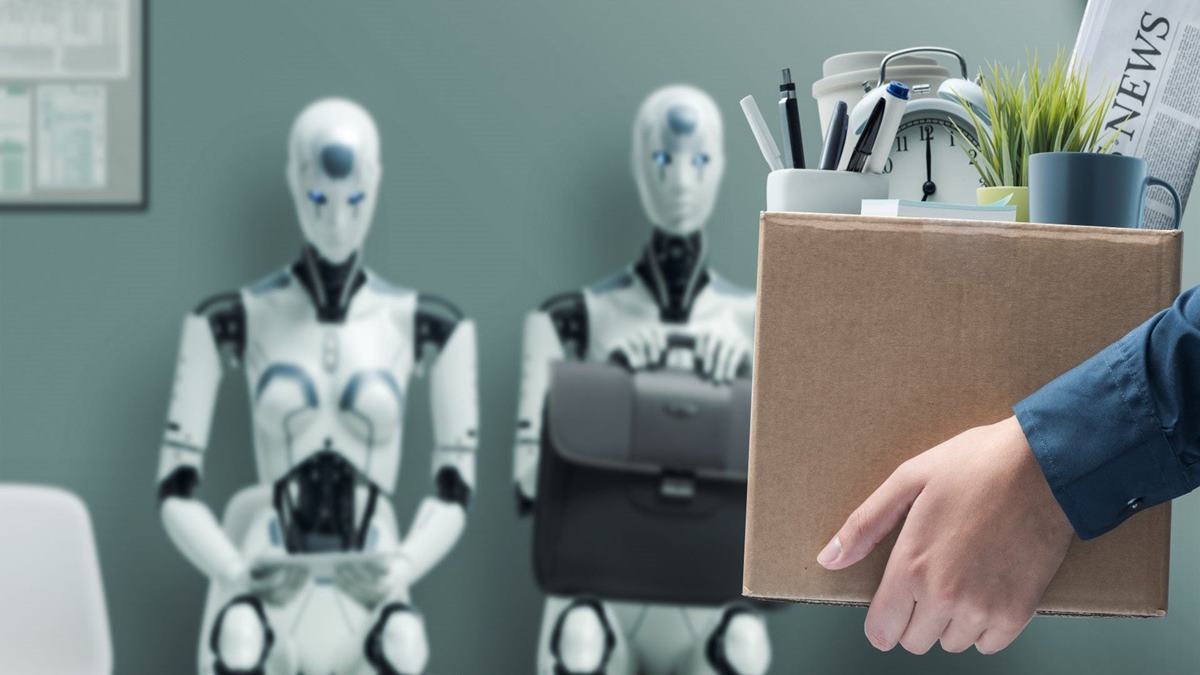













If you’re looking for a job and sometimes wonder if you’re the lead character of a science-fiction story set in the not-so distant future, where nothing makes sense, you’re not wrong to be feeling that way. There may be no flying cars yet, but the future is here ― and largely due to artificial intelligence, it’s discouraging, dystopian and plain old weird.
“Today, we are in the most challenging hiring and job search environment in two decades,” says Christina Martin, based out of Wilmington, Delaware, and the founder of Resume Services by Christina Martin.
AI has transformed the job market. It isn’t enough that searching for a job can be a lonely, soul-sucking existence, but nowadays, you may not even be interviewed by a human.
More companies are using AI for recruiting and screening — and the economy is partly to blame.
In the old days, if you were in the market for a job, you might be contacted by an executive recruiter, a professional who works with companies to find talent to hire. You still may hear from an executive recruiter, but there’s also a good chance that they will be a virtual recruiter. That is, an AI agent, possibly one with a human name, emailing, texting and even calling you to set up an interview.
It can be a help for companies looking to scale up quickly and cheaply to rely on AI recruiters to sift through resumes and cover letters, looking for the right people for a job.
But if that isn’t weird enough, you might also be interviewed by an AI agent.
“Some companies use AI avatars that ask the questions, interact with candidates in real time, adjust follow-up questions based on their responses and even assign interview scores,” said Keith Spencer, a certified professional resume writer with Resume Now, an AI resume builder.
Spencer said that it can feel impersonal and unsettling, especially if you haven’t been forewarned that an AI program will be interviewing you. But anyone in the job market might want to get used to it ― it’s becoming more commonplace.
Some people have even posted on media sites like TikTok instances of being interviewed by an AI program, only to have an AI assistant jump in on the interview.
There have also been numerous anecdotes of job applicants using AI to help them craft answers on the spot during video interviews. Because of that, some media outlets, like The Wall Street Journal, have suggested that in-person interviews may soon make a comeback. While lots of employers want their employees to use AI or at least be comfortable with it, they apparently don’t want employees to feel so at ease with it that they can use AI to help them exaggerate their skills and talents.
As Spencer said, “One-way interviews, where you record your responses to pre-set questions for the hiring team to review later, have been around for years.”
But as everything becomes automated with the popularity of AI, we’re finally starting to see some of the downsides of removing humans from the hiring process.
“The amount of automation systems doing first rounds of interviews, etc., has skyrocketed over the last two-ish years, and it’s making it really hard for all sides,” said Shelby Garrison, co-founder of Career Sandwich, a career-building app.
“Candidates are slogging through the process trying to just get as much as a conversation, and recruiters and hiring managers are being drowned in resumes and applications by the hundreds,” Garrison said. “All this AI stuff has felt like a way to try to get unstuck out of the mud, because without it, there’s no way that recruiters could meaningfully sift through the number of applications they’re getting.”
The economy isn’t helping either: With unemployment at 4.35%, low but slightly and steadily increasing, more people are looking for work.
“What we’re seeing in the job market right now is a lot of competition for too few openings. Employers are dialing back on hiring because they, like many of us, are uncertain about the state of the economy,” said Lisa Countryman-Quiroz, CEO of JVS Bay Area, a San Francisco nonprofit that helps people with career training and finding good jobs. “They’re waiting to see what the full impacts of things like tariffs, immigration crackdowns and now the government shutdown will be on their business. That’s why it’s taking many job-seekers a year or more to secure employment.”
But if AI is helping recruiters sift through a glut of resumes, it’s also hurting recruiters, since AI is creating that glut, making it easier than ever for more people to churn out cover letters and to revamp their resume so it can be more targeted for varied jobs.
“There’s a boatload of great talent out there right now who are hungry for work. There are also a boatload of recruiters who are overwhelmed with the sheer quantity of applications they need to manage,” Garrison said.
Another downside? AI is helping scammers compete with you for jobs.
While you’re searching for work, and a human being to interview you, you also have to contend with con artists who are chasing jobs as well.
“Scammers are sometimes using AI to create fake resumes and applications, often including real information to make them look legitimate,” Spencer said. “Their goal isn’t to actually work but to exploit the hiring process for financial reasons, like collecting sign-on bonuses, or to gain access to a company’s internal systems.”
It is rare, Spencer said, so no need to spend a lot of time worrying about it, and it’s more an issue for employers to be concerned with than prospective employees. Still, it’s another component that can make the job search feel bizarre and dystopian.
AI may even decide how much you get paid.
You can be forgiven for wondering if any humans work at the company you’re applying to because even how much you get paid may be determined by AI, according to Spencer.
But that may not be so bad.
“Companies are leveraging AI to analyze market data, recommend pay adjustments, conduct equity audits, detect bias to help reduce pay gaps and integrate with performance systems to better align pay with results,” Spencer said. “Proponents argue that AI can promote fairness and equity while strengthening data-driven decision-making and improving scalability.”
And it isn’t as if humans aren’t having the final say on pay, Spencer added. He said the goal behind using AI to determine pay “isn’t to replace decision-makers but to combine AI’s analytical precision with human judgment and accountability to create a more trustworthy compensation process.”
The best way to get hired these days may still be to try being as human as possible.
While AI is increasingly removing humans from the hiring process, a lot of career experts argue that AI gives you an opening to get noticed.
“The most effective way to break through the noise is through networking and personal connections,” Garrison said.
Sure, it’s career advice that has been around for ages, but as AI makes the hiring process feel more impersonal than ever, being personal could give you even more of an edge over your competitors.
Garrison isn’t a fan of making online job applications a big part of your job search strategy. That’s because if you see an intriguing job opening posted on a job site, you’re going to be competing with all of the other applicants who also saw it and are intrigued.
“I compare it to being on a basketball court with 200 other people who are all shooting towards the basket at the same time. Chaos will inevitably ensue, and the chances of you making that shot are slim, even if you’re a stellar basketball player,” Garrison said. “AI isn’t going anywhere soon, but you’ve got to work around it if you want to break through.”
So for starters, she recommended being as personable as possible in cover letters ― if you’re using AI to write a generic cover letter, well, so is everyone else. Garrison said that you want to tell a story in your cover letter, one that makes it clear why you’re a good fit for the job.
Martin is also a fan of telling a story about yourself and said that job applicants need to think of their personal brand with the same attention companies lavish on their own corporate brands. And if you’re going to use AI to craft your resume or cover letter, Martin cautions against being complacent about it. Martin says that “the rise of AI-generated content has created not just sameness, but a significant risk of fabrication.”
In other words, if you use AI to knock out a quick resume or cover letter and barely read through it before sending it off, you could end up later discovering that you completely misrepresented yourself. Not a great look if an employer discovers that.
But however you use AI, it’s probably best to use it sparingly ― and try as much as possible to stand out. The person ultimately calling the hiring shots may just notice.
“For genuine job-seekers, the best approach is to focus on authenticity, highlighting your real skills, achievements and experience,” Spencer said. “Even in an AI-driven hiring world, human decision-makers are still in charge.”
Source – https://www.huffpost.com/entry/ai-screener-interviews-jobs_l_6908f3ace4b0ad5446e1157e