


















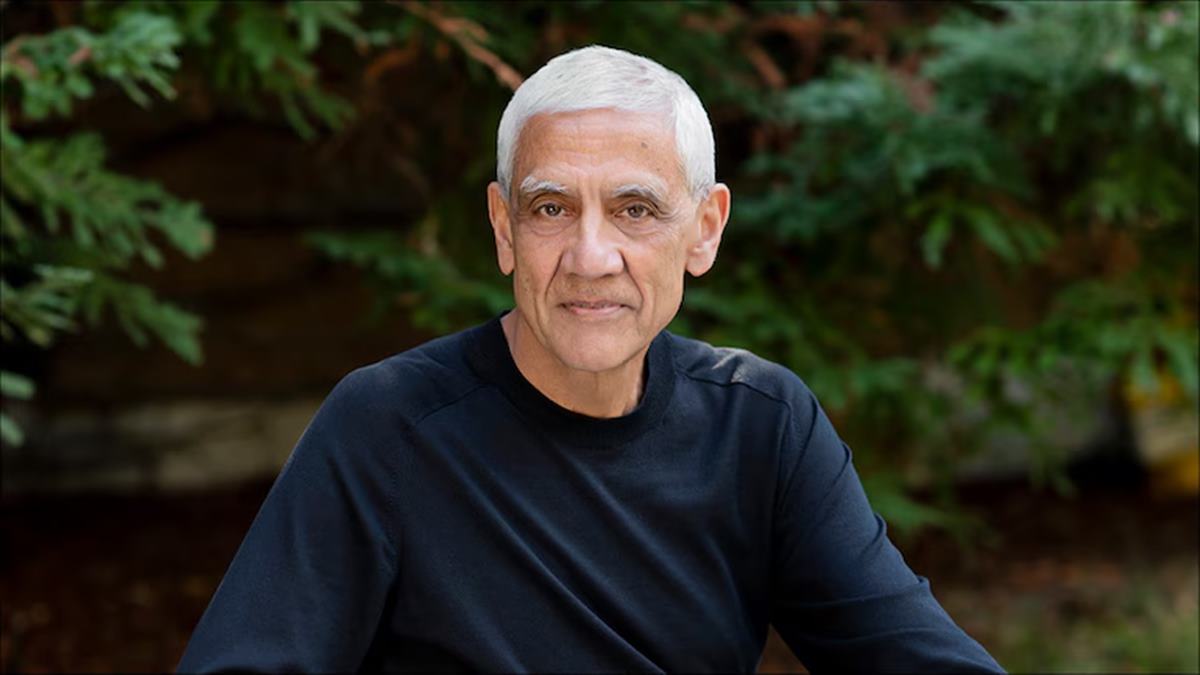
Tech billionaire and venture capitalist Vinod Khosla has warned that artificial intelligence could eliminate large sections of white-collar employment, predicting that IT services and business process outsourcing (BPO) firms may “almost completely disappear” within five years.
Khosla said AI systems are rapidly nearing a point where they can outperform humans in most economically valuable tasks. As AI evolves from digital assistants to autonomous “AI workers,” he argued, expertise-driven professions, including accounting, law, medicine and chip design, face deep disruption within the next decade or two.
The co-founder of Sun Microsystems and founder of Khosla Ventures was speaking to the Hindustan Times ahead of the India AI Summit.
Khosla describes the current AI wave as fundamentally different from earlier technology shifts such as the internet or smartphones. Unlike past platforms that enabled new business models, AI replicates cognitive labour itself, he noted, calling it a transformation that could unlock dramatic productivity gains over the next five years.
For India, the implications are significant.
The country’s IT and BPO sectors, long engines of white-collar employment, are particularly exposed. Khosla urged a pivot away from traditional outsourcing toward building and exporting AI-native products and services. He said India’s large young workforce should focus on developing AI-driven solutions for global markets rather than relying on labour-arbitrage models.
At the same time, Khosla also highlighted AI’s potential to sharply reduce the cost of essential services. High-quality healthcare, tutoring, legal support, and other knowledge services could become widely accessible at minimal cost. Robotics, trailing cognitive AI by a few years, could further automate physical work across industries.
He, however, cautioned that the economic impact will depend on policy choices.
Large-scale job displacement could widen inequality and fuel political backlash if productivity gains are not broadly shared. Countries that move quickly to build sovereign AI capabilities, including foundational models tailored to national needs, will be better positioned in a landscape likely to be dominated by the US and China.
Calling AI a once-in-a-generation shift, Khosla said the technology will reshape global competition and labour markets far faster than most governments and businesses expect.