




















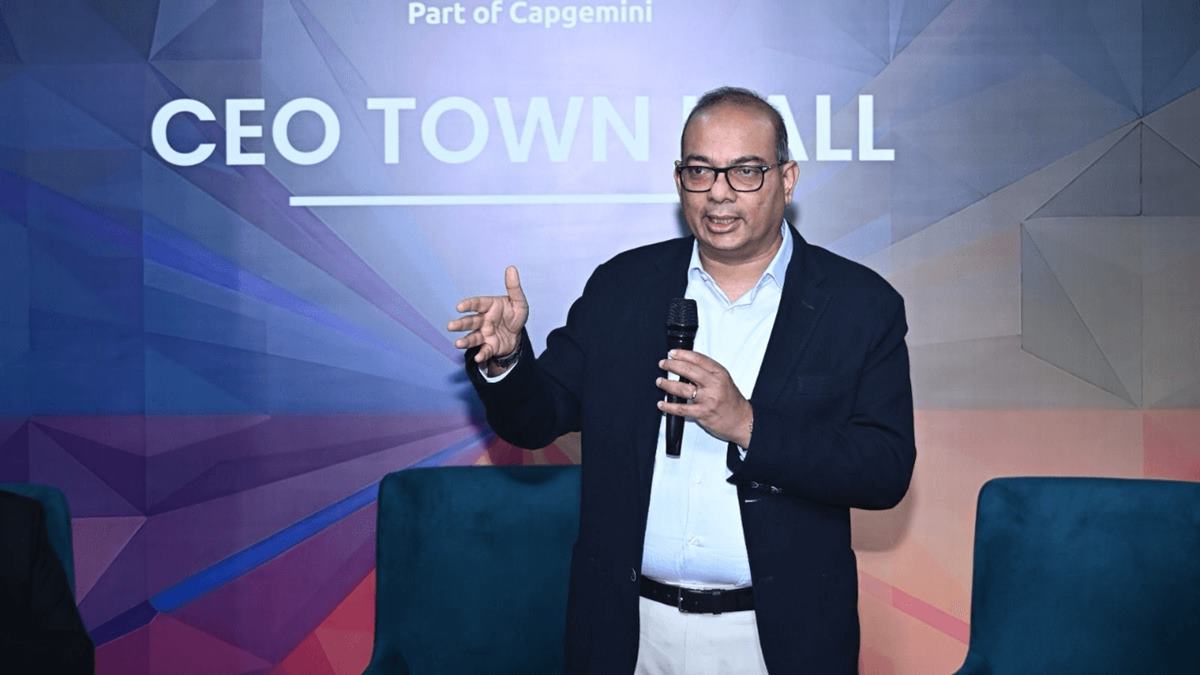
Artificial intelligence (AI) is unlikely to eliminate jobs in India’s business process outsourcing (BPO) sector, according to Keshav Murugesh, chief executive of WNS, part of Capgemini.
In an interview with the Financial Times, Murugesh said agentic AI will instead transform the industry and create new opportunities for employees, reinforcing India’s position as a global outsourcing hub.
Evolution of India’s BPO industry: Call centers to AI
India’s outsourcing industry began in the 1990s as a cost-efficient alternative for Western companies, leveraging the country’s large pool of English-speaking workers.
“Employees in the sector contributed significantly to the growth of retail banking in India, urban housing demand etc.,” Murugesh noted, highlighting the sector’s socioeconomic impact.
Over the years, BPO services evolved through phases of data analytics, robotic process automation (RPA), and now AI.
Murugesh explained that clients seek “a safe pair of hands” when outsourcing operations. Beyond cost savings, they value reliability and the ability to scale from fixed-cost to variable models.
The sector experienced multiple disruptions through technological advances that started with Y2K and continued until the COVID-19 pandemic. The sector used each disruption as a chance to develop and expand its operations.
How agentic AI will create jobs in the outsourcing sector
While AI adoption is growing across industries, WNS has long leveraged the technology internally.
Murugesh explained that agentic AI represents the upcoming technological wave that integrates domain knowledge together with data analysis and innovative business models to achieve results that surpass standard cost leadership benefits.
Far from the general fear of AI that it might lead to a decrease in employment, Murugesh believes it will lead to more job opportunities.
“No, I think it will potentially lead to more job creation. The technology will create a model that is different from the one we run today,” Murugesh said.
He added that AI will enable WNS to take over larger components of clients’ operations, allowing employees to focus on higher-value work and driving long-term opportunities for staff.
Murugesh also addressed the rise of global capability centers (GCCs), noting that while larger, innovative GCCs may succeed, smaller ones could struggle to compete with AI-powered outsourcing models.
He pointed out that geopolitical and political issues in the United States do not matter to chief executive officers (CEOs) as they focus on their main business operations. The CEOs will continue their outsourcing partnerships when they achieve successful business outcomes.
Looking ahead, Murugesh highlighted talent development as the sector’s key challenge.
“Are we producing people who understand technology better, who understand a business domain in great depth, who are articulate and have commercial acumen? These are the kind of people we have to generate in the future,” he said.
The Indian outsourcing sector will likely shift its operational model as it will start using AI technologies instead of maintaining its current system that depends on low-cost labor.
Companies that use AI for their operations will protect their workforce while helping India maintain its position as the leading country for outsourced services.
Source – https://news.outsourceaccelerator.com/ai-wont-kill-indias-outsourcing/