
















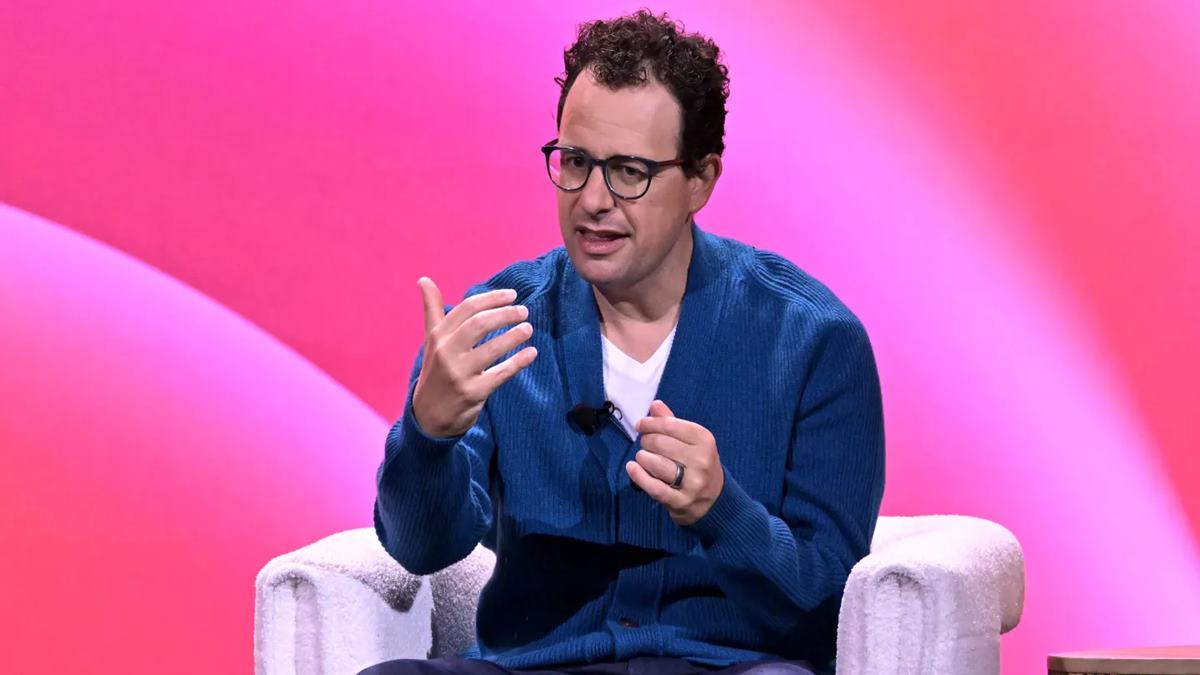
Anthropic CEO Dario Amodei AI warning : Anthropic CEO Dario Amodei is sounding the alarm about the future of work as artificial intelligence advances at an unprecedented pace. In his January 2026 essay ‘The Adolescence of Technology’, Amodei lays out why AI may affect jobs far more deeply and quickly than previous technological revolutions.
Anthropic CEO Warns About AI Job Disruption: How Fast Will Workplaces Change
Amodei, who co-founded Anthropic in 2021 with his sister Daniela Amodei and is the maker of the AI chatbot Claude, describes the current moment as a kind of technological “adolescence,” in which humanity is handed transformative power without yet having mature systems to manage its consequences, as shared by him in the essay published on Darioamodei.com.
Claude’s Maker Says Entry-Level and White-Collar Roles at Risk From AI
He warned in his essay that, “My prediction for 50% of entry level white collar jobs being disrupted is 1–5 years, even though I suspect we’ll have powerful AI (which would be, technologically speaking, enough to do most or all jobs, not just entry level) in much less than 5 years.”
Anthropic CEO Dario Amodei Explains: Why AI Is Different From Past Automation Waves
Amodei explained that past waves of automation, such as mechanized farming, displaced workers in specific sectors but ultimately created new opportunities when displaced workers found roles in other industries. However, he cautions that AI may disrupt jobs across many fields at once, making it harder for workers to find similar roles elsewhere.
He points to three features of AI that distinguish it from earlier technology, as per his essay:
Speed: AI progress is unfolding much faster than past disruptions, giving workers and labor markets little time to adapt.
Cognitive Breadth: Unlike past tools that augmented specific tasks, AI systems are beginning to match humans across a broad range of mental work, from coding to analysis, blurring the line between different kinds of jobs.
General Labor Substitution: Because AI may be capable of many cognitive tasks, it could also perform the new jobs that would traditionally arise after old ones are automated, potentially compressing the labor market more than ever before.
Which Jobs Are Most at Risk From AI
Amodei highlighted that if AI becomes capable of a wide range of cognitive tasks, the usual safety net of retraining, where displaced workers learn new skills and transition to emerging jobs, may not function as it has in the past.
This raises concerns about entry‑level and white‑collar positions alike, as AI systems continue to advance beyond simple specific tasks into more generalized capabilities.
Rapid AI Adoption Across Industries
Could Accelerate Job Losses Amodei also noted that AI is being adopted more rapidly across industries than previous technologies typically were. Even in sectors far from the AI core, new startups and tools are accelerating adoption, meaning the potential for labor disruption may spread quickly throughout the broader economy. While some enterprises may adopt new technologies slowly, Amodei stresses that this may not provide long‑term protection, because startups and innovators can disrupt incumbents and bring AI tools to markets faster than expected.
How AI Could Reshape the Future of Work:
Insights from Anthropic CEO Dario Amodei He wrote in the essay that, “Every few months, public sentiment either becomes convinced that AI is “hitting a wall” or becomes excited about some new breakthrough that will “fundamentally change the game,” but the truth is that behind the volatility and public speculation, there has been a smooth, unyielding increase in AI’s cognitive capabilities.”
The essay suggests a future in which AI systems operate like a rapidly scaling workforce, potentially able to perform many of the jobs humans do today with greater speed and efficiency. These systems could function as a kind of cognitive infrastructure capable of running tasks autonomously, a shift that could reshape how labor and employment are structured. Amodei’s analysis underscores the idea that AI’s impact on jobs may not be limited to routine or manual work, it could extend into many areas of human labor traditionally thought to require uniquely human skills.
He said, “AI is increasingly matching the general cognitive profile of humans, which means it will also be good at the new jobs that would ordinarily be created in response to the old ones being automated. Another way to say it is that AI isn’t a substitute for specific human jobs but rather a general labor substitute for humans,” as written in his essay. Layoffs in the US Because of AI Meanwhile, artificial intelligence has been in the spotlight for its potential impact on employment. In the US, AI was cited as a reason for nearly 55,000 layoffs in 2025, according to Challenger, Gray & Christmas.
How AI Could Save Trillions in Wages Across Sectors Even a Massachusetts Institute of Technology study last year found AI can already perform the work of 11.7% of the US labor market, potentially saving $1.2 trillion in wages across finance, healthcare, and professional services, as per a CNBC report.
Anthropic CEO’s Solutions to Reduce AI Risks
However, ‘The Adolescence of Technology’ essay outlines several ideas aimed at addressing the risks of advanced AI.
1. Discuss Risks Realistically and Avoid Extremes
Amodei stresses that the first step in addressing AI risk is to change how we talk about it. He argues against “doomerism”, thinking that disaster is inevitable, and instead calls for a sober, fact-based approach that avoids hype and ideology.
2. Acknowledge Uncertainty While Planning Ahead
He explained that, because no one can predict the future with certainty, society should acknowledge uncertainty and plan in ways that are flexible and pragmatic. This means preparing for risks without assuming they will definitely occur, but also without ignoring them.
3. Intervene Surgically and Judiciously
Amodei believes that responses to AI risk should be targeted and precise (“surgical”) rather than broad or extreme. He suggested a combination of voluntary actions by companies and limited government actions that bind everyone, but done in ways that avoid unnecessary burden or backlash.
4. Encourage Voluntary Company Actions and Industry Standards
He notes that private companies can take voluntary steps to reduce risk, such as investing in safer training methods, preventative measures, and better internal practices that guide AI behavior in positive directions.
5.Government Action When Appropriate
Amodei pointed out that government regulation will eventually be needed, but it should be judicious and evidence-based. Laws and regulations should be as simple and targeted as possible to be effective without causing undue harm or resistance.
6. Build a “Battle Plan” to Guide Progress
Rather than resisting technological progress, Amodei argues that society needs to map out a plan to confront risks head-on. This involves identifying dangers early and preparing responses, rather than being reactive or polarized.