



















For months, a steady narrative has taken hold among students, parents and fresh graduates: if artificial intelligence can write, analyse, code and summarise faster than a human, what will be left for someone applying for their very first job?
Yet executives working at the centre of AI adoption insist the reality inside companies is far more complex. While certain tasks traditionally handed to junior employees are indeed fading, organisations are discovering that removing early-career roles altogether risks damaging their own long-term survival.
Technology leaders told Gulf News that the employment ladder is not vanishing, but it is being rebuilt, with higher expectations about judgment, responsibility and problem-solving from day one.
Data shows transformation more than job loss
Jayney Howson, Senior Vice President for Global Workforce Skills and Talent Readiness at ServiceNow, points to research suggesting that direct redundancies linked purely to AI remain limited.
“Only a small percentage of organisations report actual job loss from AI, mainly in narrow roles like transcription,” she said, adding that many more expect work to be reorganised rather than eliminated.
In practice, she explained, this means routine tasks that once filled much of a junior employee’s day can drop sharply, while time spent on problem-solving and interaction rises.
“Jobs transform rather than disappear,” Howson said.
A pause in hiring is fuelling anxiety
That reassurance, however, runs counter to what many graduates believe they are seeing in the market right now.
Zane Ulhaq, Head of MENA at Endava, acknowledges that companies experimenting with AI have sometimes slowed recruitment, postponed graduate intakes or chosen not to refill vacant roles, creating the impression that opportunities are drying up.
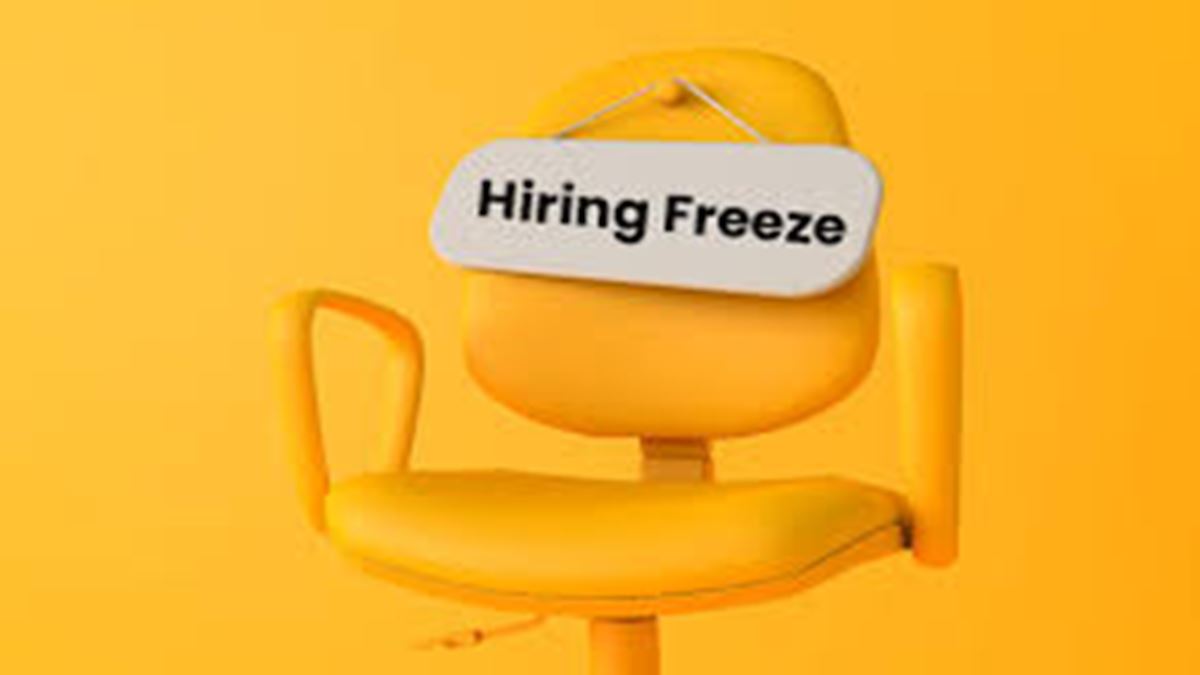
“It’s completely understandable that many feel uneasy,” he said. “In the short term, that uncertainty shows up as slowed hiring cycles, frozen graduate schemes and fewer junior roles that look like those of the past.”
But Ulhaq argues that this is a period of adjustment rather than permanent retreat. As operating models settle and businesses understand where humans add the most value, confidence tends to return.
“The bigger disruption is not job elimination, but the nature of work changing,” he said.
Why firms cannot afford to remove juniors
Behind boardroom doors, another fear is taking shape: cutting entry routes today could create severe capability gaps tomorrow.
Ulhaq warns that without young recruits learning the basics, organisations lose the people who will later grow into specialists, leaders and mentors.
“When too many entry-level roles disappear, organisations create a skills vacuum,” he said. “With no future experts in the pipeline, there will be no resilience when complexity increases or opportunities arise.”
The real threat: low-value tasks
Sid Bhatia, Area Vice President at Dataiku, believes much of the alarm comes from confusing tasks with careers.
AI, he said, is exceptionally good at repetitive, rules-based work and basic production. Positions built primarily around those activities are bound to shrink.
“What’s really at risk isn’t junior talent itself, but junior roles that were designed around low-value manual work rather than learning and judgment,” Bhatia said.
History, he added, shows technology tends to reshape jobs rather than remove the need for people entirely.
Simply using AI will not set candidates apart
As AI becomes standard in offices, familiarity with the tools will increasingly be assumed rather than celebrated.
What will distinguish high performers, executives say, is the ability to question outputs, understand context and take ownership of decisions made with machine support.
“One of the biggest challenges with AI is accountability,” Ulhaq said. “Value shifts towards people who can frame problems, review outputs, spot errors and explain trade-offs.”
Young workers fear losing their own skills
Interestingly, Howson says many in Gen Z are not only worried about employment prospects but about becoming overly dependent on automation before they develop core abilities.
“They fear AI will erode foundational skills like critical thinking and writing before they build them,” she said.
For employers, this raises a different challenge: designing early careers that strengthen human capability while still benefiting from speed and efficiency.
Opportunity still exists — but the bar is higher
Taken together, the message from industry leaders is blunt but not bleak.
Entry-level opportunities remain, and businesses continue to need a steady flow of new talent. What is disappearing is the expectation that beginners will spend years on mechanical work before being trusted with meaningful responsibility.
AI is accelerating exposure to harder tasks, demanding faster learning and rewarding those who can combine technical assistance with human judgment.