
















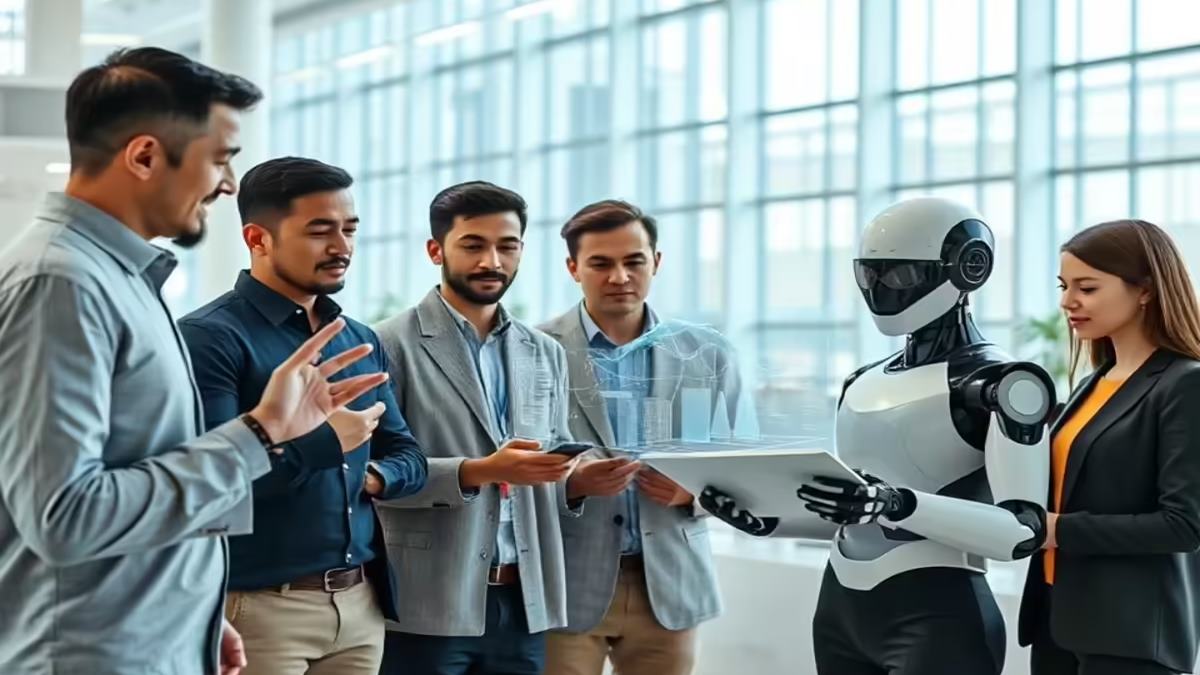
The traditional method of hiring based on fixed job descriptions and only degrees is gradually disappearing as automation, Artificial Intelligence (AI), robotics, and smart systems transform how businesses operate. As automation, AI, robotics, and smart systems change how businesses work, the old way of hiring people based on fixed job descriptions and degrees is slowly going away. Businesses’ needs for talent have also changed a lot. Hiring is no longer just about finding people to fill open positions. It’s also about building a strong mix of people skills and technology that can work well together.
From degrees to capabilities: The rise of skills-first hiring
Today’s professional doesn’t fit the old, rigid archetype. The field now demands people with a blend of skills, those who can merge AI expertise with strong engineering prowess and a broad understanding of the entire system. The era of the specialist seems to be fading, giving way to the technology integrator and problem solver, someone who can navigate multiple domains and link different areas of knowledge.
The process of hiring talents itself is undergoing transformation. As technology progresses, the ability to learn quickly and adapt has become a key factor, alongside digital fluency encompassing data, algorithms, and automation. Design thinking is also gaining prominence, as the creation of automation solutions requires a focus on user experience and system efficiency.
Addressing talent scarcity through a build–buy–borrow model
One of the most significant challenges organizations will face in 2026 and beyond is a shortage of job-ready automation talent. Even though the demand for AI engineers, robotics experts, IoT experts, and digital project managers is rapidly increasing, the number of such experts available for hire is limited. To deal with the talent shortage, organizations are increasingly adopting a balanced build-buy-borrow strategy for managing talent requirements.
Organizations are developing talent by improving the skills of current employees, upskilling the existing workforce, and developing employees’ leadership skills for the future. Organizations are also purchasing talent by hiring experienced individuals from the market to meet the current needs of the business. Furthermore, organizations are borrowing talent by hiring market experts for specific projects such as automation.
Campus hiring is becoming more important, except with a different focus. Companies are establishing robust pipelines with engineering colleges and technical institutes. Partnerships between industry and academia, apprenticeships, and internship programmes are all contributing to a steady supply of talent. Rather than waiting for fully prepared professionals, businesses are investing early in young talent and shaping them to meet industry demands.Headcounts are the traditional metric for measuring success. However, in today’s world, this measurement is already out of date. The new paradigm is shifting towards a capability-based workforce design, which means that complex automation projects are broken down into smaller project-specific teams. Productivity is now measured per capability rather than by role. This is due to the flexible allocation of resources, which allow them to flow to areas of need rather than being constrained within a single department.
Continuous reskilling as a business imperative
With the rise of artificial intelligence, the Internet of Things, and robotics, the shelf-life of skill sets is rapidly decreasing. Reskilling has evolved. It’s not simply a matter of attending a single training session or workshop anymore. Businesses now need to cultivate learning ecosystems, providing both role-based and technology-specific learning paths. The key is creating an ecosystem where individual professional growth and overall business success can be co-related. When an employee acquires a new skill in digital engineering, this should directly impact and result in business benefit. This means new opportunities and challenges should arise, fostering a positive feedback loop of learning and retention must co-exist.
HR as a strategic workforce designer
The future of the workforce is best viewed as an evolutionary process and there is no denying that human resources will need to change into a workforce designer in the future. This calls for a strong focus on skills intelligence, which uses data to make sure that current skill sets are in line with the organization’s strategy.
By collaborating closely with business leaders, HR can ensure that, rather than being an afterthought to the organization’s strategy, the talent strategy becomes the primary driver. To succeed in this new era of growth, businesses must adopt a skills-centric, multidisciplinary, and capability-centric approach. At a time when machines are increasingly taking over, the true source of competitive advantage is the strategic management of human potential.