



















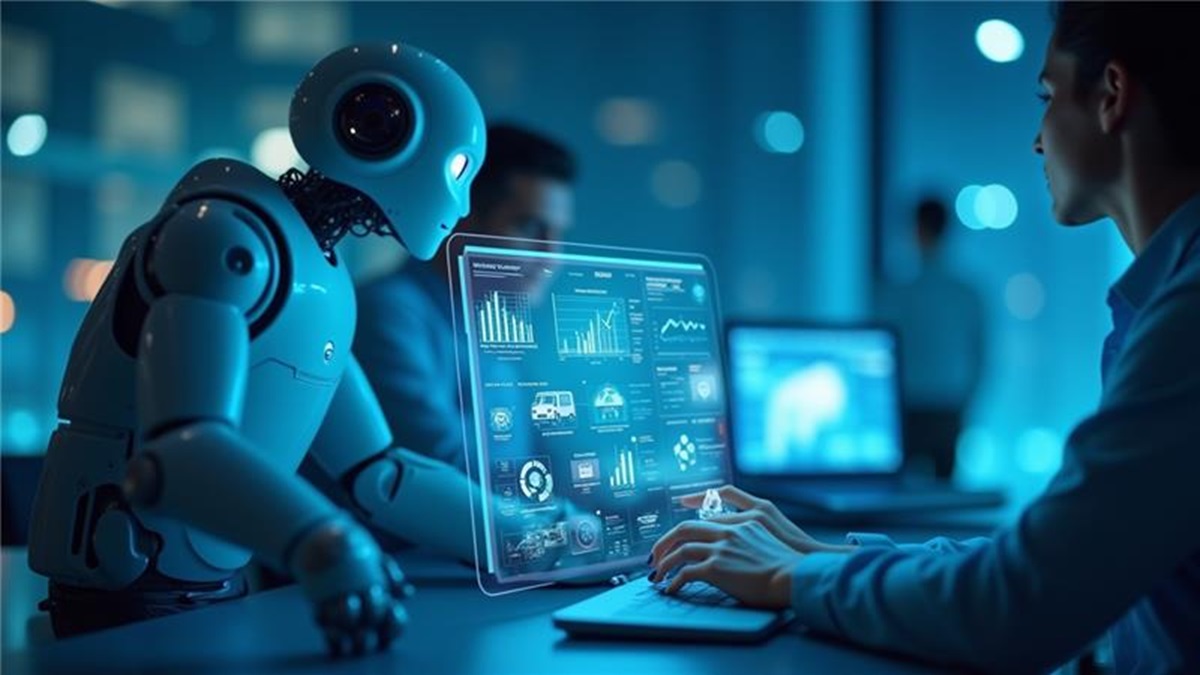
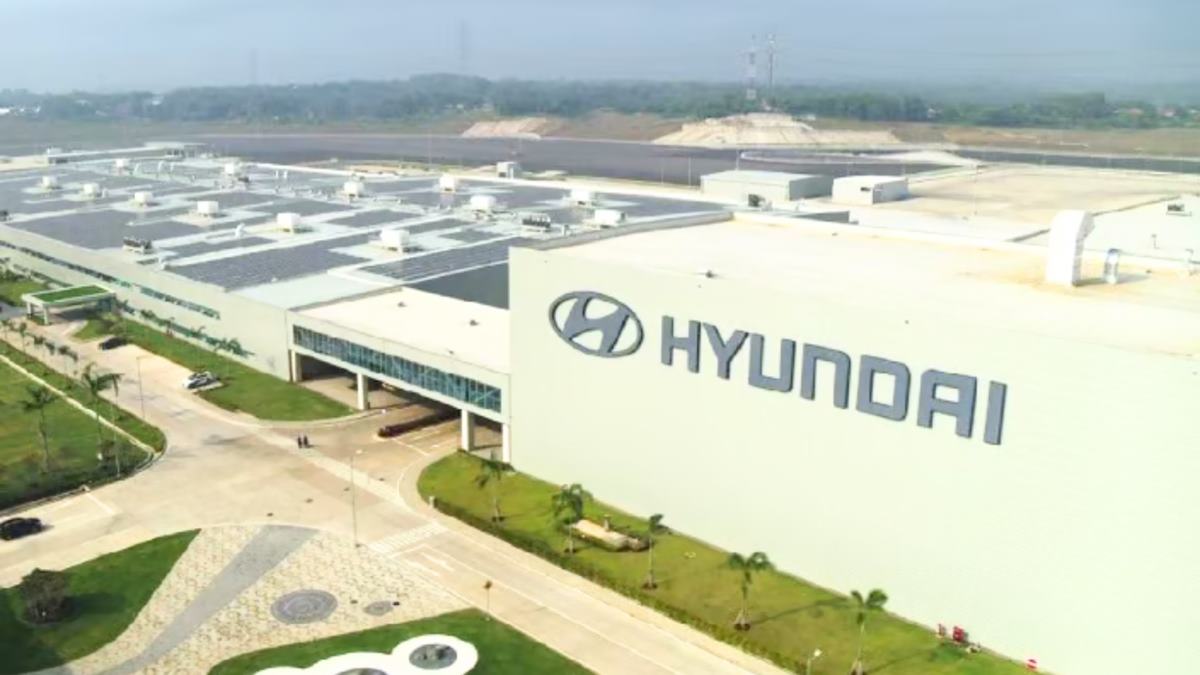
Leading carmaker Hyundai Motor Group is gearing up to deploy humanoid robots across its global manufacturing network from 2028, beginning with its upcoming plant in Georgia, U.S., in a move the company says is aimed at improving safety, efficiency, and handling ‘higher-risk industrial tasks’.
The South Korean automaker unveiled the production version of its Atlas humanoid robot, developed by Hyundai-owned Boston Dynamics, at the Consumer Electronics Show (CES) in Las Vegas. Built for general industrial use, Atlas is equipped with human-scale hands, tactile sensing, and the capability to lift up to 50kg, while operating autonomously in temperatures ranging from –20°C to 40°C.
In a statement on Tuesday, the company said, “Group’s AI Robotics Strategy is underpinned by three foundational partnerships to drive progress and unlock entirely new possibilities for industry and society:
- Partnering humans with co-working robots: Robots designed to assist people in manufacturing, handling hazardous, dangerous, and repetitive tasks.
- Partnering with Boston Dynamics: Leveraging Boston Dynamics’ AI Robotics expertise and Hyundai’s global scale to create safe training grounds and a full End-to-End AI Robotics value chain.
- Partnering with AI leaders: Collaborating with global AI pioneers to advance innovation and drive the vision of “Progress for Humanity.”
When will humanoids take over?
Starting 2028, Atlas robots will initially support parts sequencing and logistics tasks, gradually expanding into more complex roles once their safety and quality impact is validated.
“As the Group secures essential data for Physical AI implementation across the entire value chain, from manufacturing and logistics to sales, it will establish a cycle of continuous improvement by digitizing real-world data for AI learning, applying this to products. This approach will enable the expansion of industries from mobility to robotics,” the company shared.
By 2030, Hyundai expects the robots to progress into component assembly and eventually take on heavy-load, repetitive, and precision-based operations across production lines.
The company describes this strategy as part of its “physical AI” roadmap, integrating AI-powered robotics with real-world industrial environments. Hyundai is collaborating with Nvidia and Google to accelerate development, improve autonomous decision-making, and enhance workplace safety.
What happens to human workers now?
While, the carmaker emphasizes that humanoid robots are intended to reduce physical strain and risk for human workers, rather than replace them entirely, concerns about automation’s impact on jobs persist.
“By combining the Group’s manufacturing data, and proven manufacturing expertise and capabilities with Boston Dynamics’ world-class R&D leadership, the Group aims to establish a safe and collaborative relationship between humans and robots, starting with manufacturing environments,” the company stated in the annoucement.
Hyundai executive Jaehoon Chang acknowledged fears of potential job losses but said new roles will emerge, including positions focused on training and managing robots.
“In the long term, AI Robotics will naturally integrate into everyday life, generating new value and enriching human experiences. This approach establishes a foundation for large-scale robot commercialization and creates a future where humans and robots coexist and collaborate seamlessly,” the company statement added.
These anxieties aren’t unfounded. Kia Corp’s labor union has already called for frameworks to address future labor rights challenges as AI-driven automation expands.
A charged U.S. backdrop
Hyundai’s Georgia plant, which is one of its flagship U.S. investments, has previously been in the spotlight. The facility faced controversy following a massive U.S. immigration raid in 2025 that saw hundreds of foreign workers detained, sparking outcry in South Korea and diplomatic tensions before a settlement was reached.
Despite past turbulence, the carmaker has committed to strengthening its U.S. presence, previously announcing more than $20 billion in investments in manufacturing, autonomous driving, and AI initiatives.
The company plans to set up the Robot Metaplant Application Center (RMAC), the engine of its AI Robotics business, where robots learn human collaboration by converting movements like lifts, turns, and recoveries into precise training for complex and repetitive tasks.
“RMAC anchors the Group’s AI Robotics roadmap, with the facility set to open in 2026, in the U.S. By 2028, RMAC-trained Atlas robots will be deployed for highly repetitive sequencing tasks, progressing to complex assembly work by 2030,” it said.
Hyundai shared, “By 2028, the Group aims to establish a scalable production system capable of manufacturing 30,000 robot units annually.” As part of this plan, a new robotics facility will be built in the U.S., serving as a key hub for the growing robotics ecosystem.
The Group expects these investments to strengthen economic cooperation between South Korea and the U.S., drive growth in both countries, create new business opportunities across sectors, and reinforce Hyundai’s competitiveness in mobility and future technologies.
A broader industry shift and the road ahead
Hyundai joins global giants including Tesla, Amazon, and BYD, all pushing humanoid robotics into manufacturing and logistics. The company believes humanoid robots will eventually become the largest segment in the physical AI market, spanning smart factories, robotics, and autonomous systems.
If this rollout goes as planned, 2028 could mark one of the most significant turning points in modern auto manufacturing, one where humans and humanoids share the factory floor.
Will humanoid robots completely replace Hyundai’s factory workers by 2030?
Hyundai’s plan to deploy Atlas humanoid robots from 2028 doesn’t translate to an immediate replacement of human workers. Instead, the company says the robots will first take over “dangerous, dull, and physically tough” tasks such as parts sequencing, before gradually expanding into assembly roles once safety and performance are proven.
Officials insist humans will continue to play critical roles in supervision, training, quality control, programming, and operations management. However, the introduction of humanoids will inevitably reshape factory jobs over time, with some manual roles likely to shrink while more technical and robotics-support roles emerge. Labour unions have already begun calling for safeguards and retraining frameworks to protect workers as automation accelerates.
In short, the carmaker says it’s augmentation, not replacement, for now. But in the long term, automation is likely to reduce certain manual jobs while creating new tech-driven roles, provided companies invest in reskilling and worker readiness.