


















Studying abroad is often seen as a step towards a secure and successful future. But the reality can be very different, especially for international students trying to find work in a new country. Deadlines, loans and uncertainty can quickly replace excitement. What happens when a degree from one of the world’s top colleges does not lead to a job?
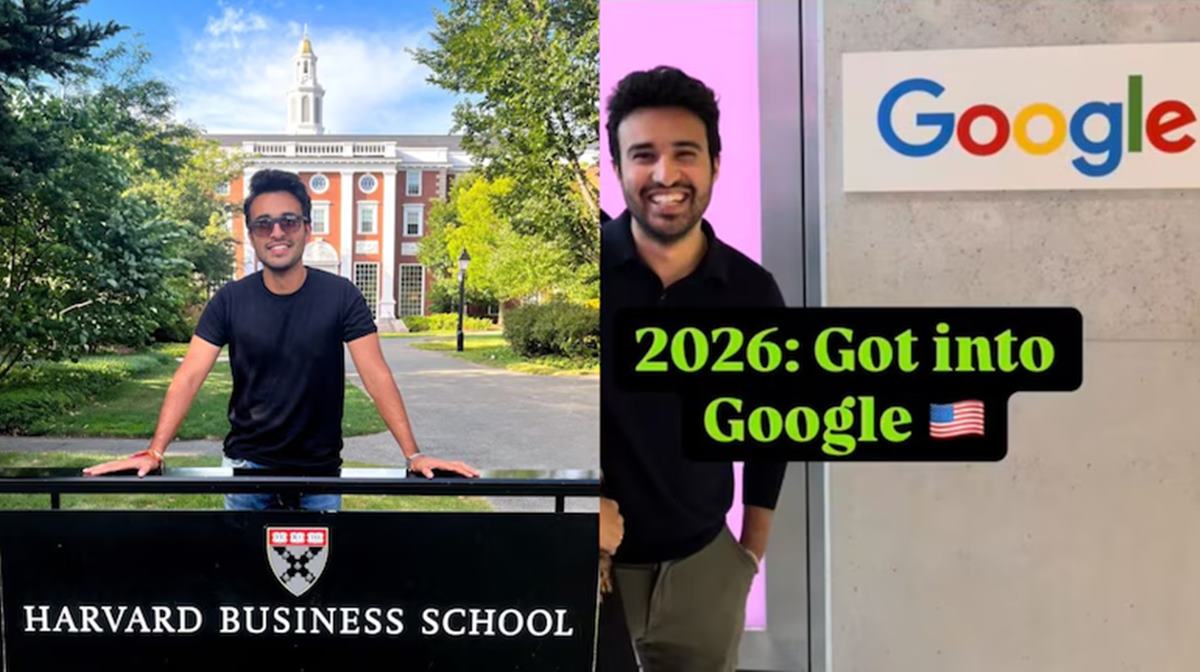
For Abhijay Arora Vuyyuru, this became a real challenge after completing his MBA at Harvard. He had taken a loan of nearly Rs 1 crore to study. But when he graduated in 2024, he had no job offer and was running out of time to secure one.
“Nobody told me that job hunting in the US after your Masters would be brutal,” he admitted in an emotional Instagram post, documenting his journey.
As an international student, he had only about 90 days under the Optional Practical Training (OPT) rules to find a job or leave the United States. At the same time, he had to think about loan repayments and living costs. The pressure was both financial and emotional.
He shared how difficult that phase was, “Honestly, it felt strange to invite my mother for my graduation when I didn’t have a full-time job. The 90-day timer to find a job or exit the country made it only harder. Imagine having to pay the loan installments without a full-time job. There were moments where I thought, Is this journey worth it?”
Abhijay’s journey had not been easy even before Harvard. In 2012, he failed the IIT entrance exam, which was a major setback at the time. By 2017, he was working at a small firm, far from the large companies many students aim for. Harvard was his turning point.
After finishing his MBA, he focused fully on job applications. At one point, he sent over 100 applications in a single week. However, he did not receive any interview calls. Instead of giving up, he tried to understand what was going wrong.
He realised that many companies use Applicant Tracking Systems (ATS) to filter resumes. These systems scan for keywords and often reject applications before a recruiter even sees them. This meant that even good candidates could be missed. “Every interview I landed? I customised my resume with the right keywords first,” he explained.
But doing this manually for every application was not practical. So, he decided to build a solution. He created an AI-based resume tool that matches a resume with a job description and adds the right keywords automatically. He also built a system using n8n that finds hiring managers’ email addresses and drafts personalised emails. This helped him reach out directly instead of waiting for responses. “The best way to get an interview is to connect with a hiring manager,” he said.
These tools started to make a difference. His applications improved, and he began getting interview calls. Within a few months, he secured a role as a Product Manager at YouTube, part of Google, in San Francisco.
One of the most important moments for him came later, when he shared his success with his mother. After landing the job, he flew his mother to Google’s San Francisco office and showed her around. He expressed, “I can never forget this day. I showed my mom my office! I took her to Google San Francisco. She sacrificed everything for me. My support system, those who unconditionally stood with me through thick and thin, my mom!”