



















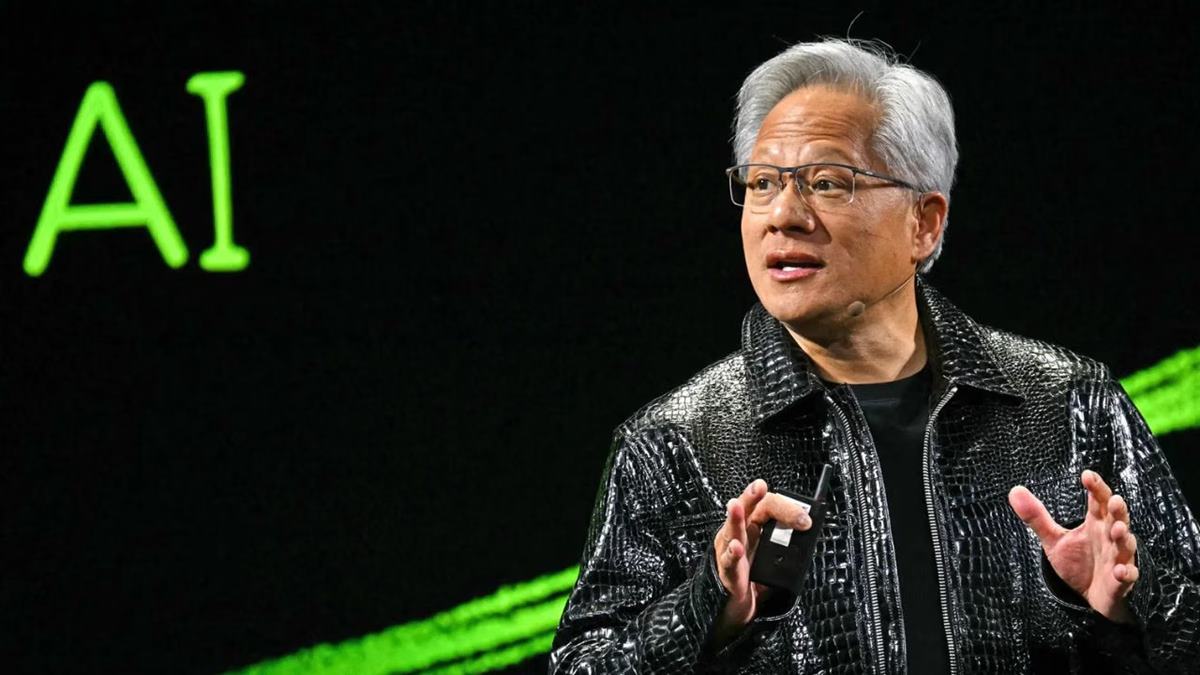
Nvidia chief executive Jensen Huang has pushed back against fears of widespread job losses from artificial intelligence, arguing that AI will expand employment as companies scale operations and address labour shortages.
Speaking at an event in San Jose, Huang said concerns that AI would eliminate work were misplaced. “A lot of people say AI’s coming, we’re going to run out of our work, our jobs. It’s exactly the opposite,” he said, according to Reuters.
He compared the current shift to earlier technological waves such as personal computing, the internet and mobile devices, which increased productivity but also expanded workloads and demand for labour.
Automation to fill labour gaps
Huang pointed to structural labour shortages across industries, particularly in logistics and manufacturing. “We are millions of truck drivers short. We are tens of millions of manufacturing workers short,” he said.
He argued that robots and AI systems would primarily fill these gaps rather than displace existing workers, enabling companies to grow output and, in turn, hire more employees.
“When the economy grows, most companies tend to hire more people,” Huang said, adding that businesses would need workers to manage automated systems and oversee AI-driven operations.
Rise of AI agents and new roles
The Nvidia chief outlined a future in which human workers operate alongside large numbers of AI systems and autonomous agents.
According to Reuters, Huang said companies would increasingly hire people to manage, supervise and optimise these systems, creating new categories of jobs tied to AI deployment.
This view contrasts with ongoing concerns in the technology sector, where layoffs have continued into 2026 amid efficiency drives and automation. Industry data shows tens of thousands of job cuts this year alone, as companies restructure and invest in AI-led capabilities.
Geopolitics and workforce footprint
Huang also addressed geopolitical risks affecting Nvidia’s global workforce, particularly in Israel and Taiwan, where the company employs thousands of people.
“We have 6,000 families in Israel… I’m 100% committed,” he said, adding that the company would continue to support employees in both regions.
The comments come at a time when global technology companies are navigating geopolitical tensions alongside rapid advances in AI infrastructure and deployment.
A shift in how work is structured
Huang’s remarks reflect a broader debate within the industry over whether AI will replace jobs or reshape them. While automation is expected to reduce demand for certain routine tasks, new roles are emerging in areas such as AI operations, safety, training and human-machine collaboration.
Analysts note that the net impact remains uncertain and will depend on how quickly companies adopt AI and how effectively workers adapt to new skill requirements.
For Nvidia, which sits at the centre of the AI hardware ecosystem, the argument is clear: automation will not shrink the workforce but reconfigure it around new forms of work.
As businesses integrate AI into core operations, the challenge will be balancing efficiency gains with workforce transition — ensuring that job creation keeps pace with technological change.