




















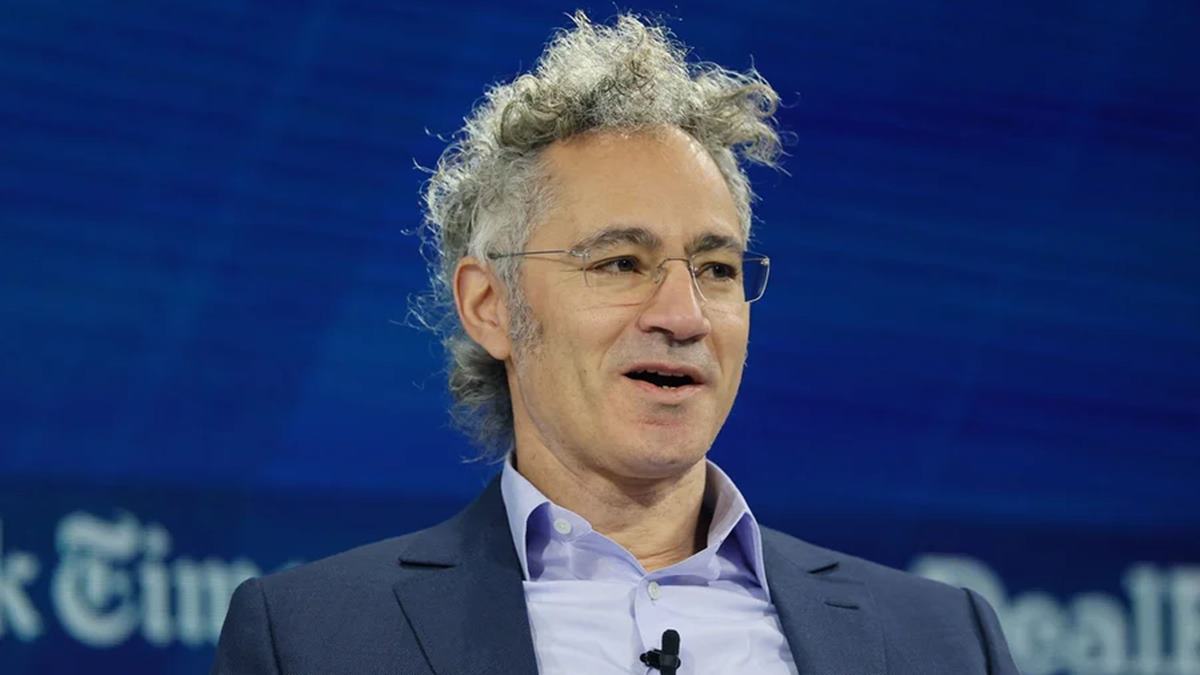
Alex Karp, CEO of AI defence organisation Palantir, has given an honest assessment: AI will “destroy humanities jobs”, suggesting that humanities-based learning will be “hard to market”.
This is not the first time Palantir has challenged conventional approaches to talent acquisition in the AI era.
In 2025, the company introduced its ‘Meritocracy Fellowship’ – a paid engineering programme for high school graduates to study philosophy and history and then work on real-world projects.
Palantir describes the fellowship on its website as a way “to cultivate exceptional talent, increasingly overlooked, regardless of background”. The site continues: “We believe those with the highest aptitude deserve challenges, not a set curriculum; agency, not merely a credential; and responsibility, not busy work.”
This practical approach to hiring stems from Alex’s own views on the role of university education in preparing talent for AI-driven industries.
At the World Economic Forum in Davos, he shared that, after completing his PhD in philosophy, he struggled to find work, adding that he remembered thinking: “I’m not sure who’s going to give me my first job.”
Since founding Palantir, Alex has been outwardly vocal on his cynical views of higher education’s relevance to the modern AI workforce. In an interview with Axios held in November 2025, he explained his views on the modern career path, saying: “If you are the kind of person that would’ve gone to Yale, classically high IQ, and you have generalised knowledge but it’s not specific, you’re effed”.
He added: “There’s some schools you should maybe go to, otherwise, go to the cheapest school and come to Palantir – or just come here.”
Skills-based hiring in AI organisations
In Davos, Alex explained that today’s AI-enabled workforce requires “different ways of testing aptitude”.
He added: “In the past, the way we tested for aptitude would not have fully exposed how irreplaceable that person’s talents are.” This perspective could reflect a broader shift in how organisations are evaluating talent as AI transforms operational requirements.
The emphasis on practical capability over credentials may signal changing priorities for technology leaders seeking teams capable of working alongside AI systems.
Traditional markers of competence, such as university degrees and institutional pedigree, are being reassessed in light of the specific demands of AI-driven work environments.
Palantir’s fellowship programme exemplifies this new approach to talent identification and development. This strategy may also reflect a recognition that the skills needed to work effectively with AI systems are not necessarily those taught in traditional academic settings.
The move towards skills-based hiring in the AI sector could have significant implications for how other organisations approach recruitment and talent development.
As more companies adopt similar strategies, the traditional pathways into technology careers may continue to evolve, potentially opening opportunities for individuals from non-traditional backgrounds while challenging the value proposition of conventional higher education.
Workforce transformation and AI collaboration
While Alex’s verdict that AI will “destroy” jobs may not be widely shared and could oversimplify its implications, many business leaders believe that it is likely to fundamentally reshape workforce structures.
According to Forbes’ 2025 AI survey, 44% of Chief Human Resources Officers have already transitioned employees into AI-related positions. Leaders are keen to retain their existing workforce, however. Of those surveyed, 68% revealed that their organisations have a strategy in place to focus on human-AI collaboration rather than job replacement.
Furthermore, 94% predicted that less than 5% of jobs will be eliminated over 2026 and 2027. These figures suggest a more nuanced approach to AI integration than the stark predictions of widespread job losses might imply.
Many leaders also believe that the key determinant of business success in an AI-enabled workforce will be human collaboration.
According to a 2026 Deloitte survey, high-performing organisations tend to focus on building human skills – such as divergent thinking and curiosity. These skills help create agile teams capable of implementing new technologies in the most impactful way possible.
In a press conference held in September 2025, Doug McMillon, CEO at Walmart, shared that he believes “AI is going to change literally every job”.
On navigating human-AI collaboration, Doug says: “I think the way for us all to approach it, especially here at Walmart, is just in a very transparent, honest, straightforward way, talking to people in real time about what we’re learning and what we’re doing and why we’re doing this.”
This approach to workforce communication could prove essential as organisations navigate the complexities of integrating AI technologies whilst maintaining employee confidence and engagement.
Source – https://aimagazine.com/news/why-palantir-ceo-alex-karp-thinks-ai-will-destroy-jobs