


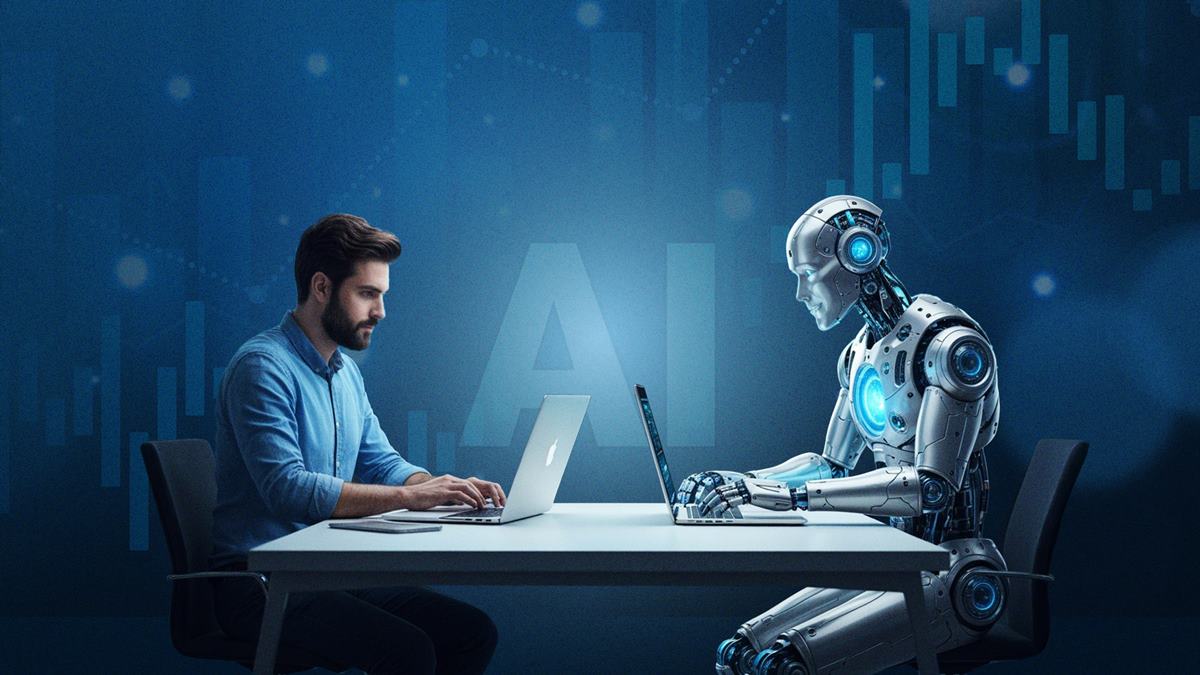












Artificial intelligence has been shaping global businesses for over a decade, but its true impact on the workforce accelerated dramatically after 2022 with the rise of generative AI. What began as automation of routine tasks has evolved into a deep, organization-wide transformation—reshaping roles, redefining skills, and, in some cases, eliminating traditional job boundaries altogether. Today, AI isn’t confined to IT or analytics; it permeates every function, from HR to marketing to finance. As technology takes on more cognitive work, HR leaders face a defining challenge: how to design a workforce and culture where humans and machines collaborate effectively—ensuring that innovation enhances, rather than replaces, human potential.
Today’s workforce increasingly views AI and its tools as a professional ally — a kind of digital work buddy that lightens daily demands, helps manage stress, and clears routine roadblocks with speed and precision. But this newfound ease comes with a growing concern: At what cost is this efficiency achieved? The technology has spread through organizations at a breakneck speed, often outpacing the ability to set adequate frameworks and governance structures around security, ethics, and responsible use. As a result, many HR strategists and business leaders now find themselves in catch-up mode—trying to balance acceleration with accountability, and progress with psychological safety, to ensure growth remains both manageable and human-centered.
Historically, HR leadership has balanced two priorities: nurturing employee well-being and enabling organizational growth. Yet, in today’s AI-driven landscape, that balance is under unprecedented strain. The pressure to perform faster, smarter, and continuously has become the unspoken price of technological progress. While AI promises efficiency, it has also quietly amplified employee fatigue, blurred work-life boundaries, and heightened the demand for constant adaptability.
For HR leaders, this moment calls for a recalibration. The challenge is no longer just how to integrate AI into workflows, but how to ensure that human capability and well-being evolve in tandem with technological acceleration.
Navigating the Human Wave in the AI Tide: HR Interventions That Matter
- Build a culture of curiosity, not fear. AI is not a force to resist — it is one to understand, embrace, and leverage. While certain tasks may shift to automation, human judgement, empathy, and creativity remain central to organizational success. HR leaders must help employees shift from anxiety to confidence by encouraging open dialogue about AI’s role, offering hands-on exposure and training, lending an ear to their concerns fuelled by the AI takeover and reinforcing that technology is here to amplify human strengths, not replace them. It is also critical to involve all teams in the AI workflow integration. When employees feel supported and informed, curiosity begins to outweigh concern.
- Upskill, reskill, and cross-skill. AI has blurred traditional role boundaries, making adaptability a core competency. The advantage now lies not in theoretical knowledge, but in skills such as critical thinking, collaboration, creativity, analytical reasoning, and emotional intelligence. Redefining roles and creating a skill- based role architecture that is more fluid and adaptive, ensures the organization is future-ready. HR must support continuous learning through practical AI-readiness programs and human-skills development, enabling employees to pair digital talent with uniquely human capabilities. This dual skillset builds confidence, agility, and long-term employability.
- Build an AI-enabled HR operating model with human experience at the center. AI can be a powerful tool to streamline recruitment, learning, talent analytics, attrition risks, and performance insights — but it must not dilute humanity. HR should position AI as a tool that frees time for deeper employee support, not as a replacement for human connection. By using AI to automate routine processes and redirect energy into coaching, listening, and supporting employees, HR preserves trust and ensures that technology elevates— rather than erodes —the employee experience.
- Institutionalize change management and continuous learning. AI is not a one-time disruption; it is an ongoing evolution. Employees who once trained for a role must now learn continuously to stay relevant. HR must create structured change programs, transparent communication routines, and easy access to learning pathways so employees can grow without burnout. A culture that values curiosity, resilience, and continuous improvement will adapt faster and stay motivated through transformation.
- Strengthen responsible AI governance and transparency. With AI comes ethical responsibility. Without clear boundaries, bias, mistrust, and misinformation can grow quickly. HR must collaborate with technology and compliance teams to define transparent policies around AI usage in hiring, evaluation, and development. Employees should know when and how AI influences decisions and trust that fairness, privacy, and dignity remain protected. Strong governance builds confidence—and a confident workforce adopts change more willingly.
A Shared Future of Humans and Machines
AI is here to stay. The role of the HR leader is not simply to adapt to this evolution, but to champion it with clarity, empathy, and strategic foresight. When leaders empower employees with the right mindset, skills, and support, HR becomes the defining force that seamlessly transitions today’s workforce into one where technology accelerates progress and human values remain at the core.
As automation handles routine tasks and systems outperform humans in speed and accuracy, there is real risk of employees feeling overshadowed or uncertain. This is where HR’s influence is most critical—not in managing technology, but in inspiring people. HR leaders must help employees see that their value now lies in qualities AI cannot replicate like creativity, curiosity, empathy, and judgement. The future workplace belongs to those who can partner with technology using strong human values and people skills to elevate ideas, solve new-age challenges, and build better organizations.
With thoughtful governance, continuous learning, and human-centered leadership, the blended human-AI workforce will not be a threat; it will be a competitive advantage. The opportunity ahead is not to compete with AI, but to collaborate with it and unlock a workplace that is more innovative, more inclusive, and more human than ever before.
Source – https://www.hrotoday.com/news/current-features/reinventing-workforce-ai-era/