



















India’s workforce is going through a structural change. Artificial Intelligence (AI) is no longer a future-facing conversation. It is already embedded in how businesses operate — from customer engagement and risk management to supply chains and product development. As this shift deepens, it is quietly redefining what makes someone employable.
For years, degrees served as the primary signal of readiness. Today, that signal is weakening. Capability is replacing credential as the real differentiator.
Only 42.6 per cent of graduates are currently job-ready. At the same time, professionals with AI, cloud, and data capabilities are seeing 18–22 per cent annual salary growth. The market is making its priorities clear. Skills translate into value. Value translates into mobility.
The Talent Gap Is Real — And Growing
The scale of India’s AI talent expansion is significant. Annual hiring growth is estimated at roughly 33 per cent, and AI talent concentration has more than tripled over the past decade. However, demand is accelerating faster than supply.
Current AI talent demand is estimated between 600,000 and 650,000 roles. By 2027, that number is expected to exceed 1.25 million. Compensation trends reflect the imbalance. AI and MLOps professionals across experiesnce bands are now commanding Rs 30–60 lakh packages, with senior specialists moving well beyond that. These are not inflated salaries. They reflect scarcity.
The roles in demand are increasingly specialised — GenAI and LLM engineers, MLOps professionals, AI platform architects, data engineers, AI product leaders, governance specialists. What is notable is that this demand is no longer confined to technology firms. BFSI, healthcare, retail, manufacturing — every sector is building AI capability.
Adoption Is Scaling — Capability Must Follow
More than 40 per cent of India’s workforce already uses AI tools in some capacity. At the enterprise level, experimentation with Agentic AI systems is moving rapidly from pilots to structured deployment.
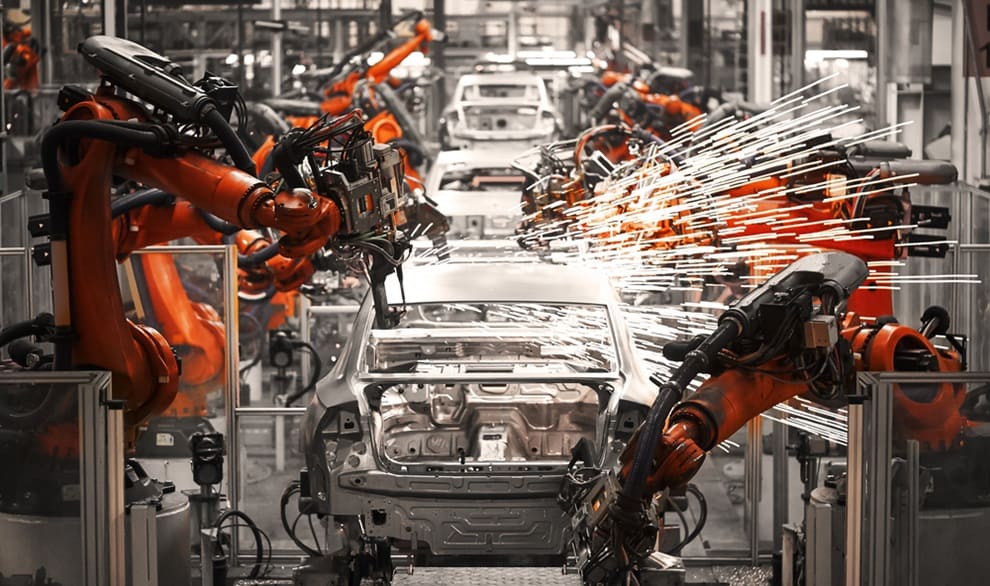
AI is now embedded across risk assessment, fraud detection, clinical workflows, supply chain planning, predictive maintenance and core operational processes. It is no longer experimental — it is operational.
However, deployment alone does not translate into productivity. Real impact comes when teams know how to work with AI systems — how to interpret outputs, challenge assumptions, apply context, and make informed decisions. That is where capability becomes the differentiator.
Productivity Will Reflect Workforce Readiness
AI could reshape 38 million jobs and contribute an estimated 2.61 per cent productivity boost to the Indian economy. But those gains will not materialise through adoption alone. They will depend on how deliberately organisations redesign roles, reskill talent, and integrate human capability with AI systems. As automation absorbs repetitive tasks, work is shifting toward analysis, cross-functional decision-making, and strategic oversight. Human judgment is not diminishing — it is becoming more critical.
There are encouraging signs of progress. Employability improved to 56.35 per cent in 2025, up from 54.81 per cent in 2024. Notably, women surpassed men in job readiness for the first time, particularly in digital and technology-aligned roles. This demonstrates that focused skilling interventions can deliver measurable impact.
Yet the scale of transformation required is far greater. At the current pace of AI deployment, incremental improvement will not be enough. Workforce transformation must move in lockstep with technology adoption.
Reshaping Jobs, Not Eliminating Them
The narrative around AI often comes with the misconception that the rise of AI means the loss of jobs. However, the reality is more complex. In India alone, Agentic AI could reshape 10.35 million jobs by 2030. Agent-based systems automate repetitive activities while expanding analytical and supervisory work. An increasing number of roles are becoming AI-complementary, where human judgment and AI capability combine to drive productivity.
The Way Forward
The upcoming India AI Impact Summit 2026 brings this conversation into sharper focus. At its core lies a simple but critical recognition: human capital sits at the centre of AI-led growth. The question is not whether AI will scale, but whether our workforce can deploy, govern, and meaningfully leverage these systems.
Addressing this will require coordinated effort across enterprises, academia, and policymakers. It calls for scalable skilling models, stronger alignment between industry and education, and human-centric approaches to AI adoption. Most importantly, it requires shifting the narrative — from fear of disruption to preparedness for transition.