














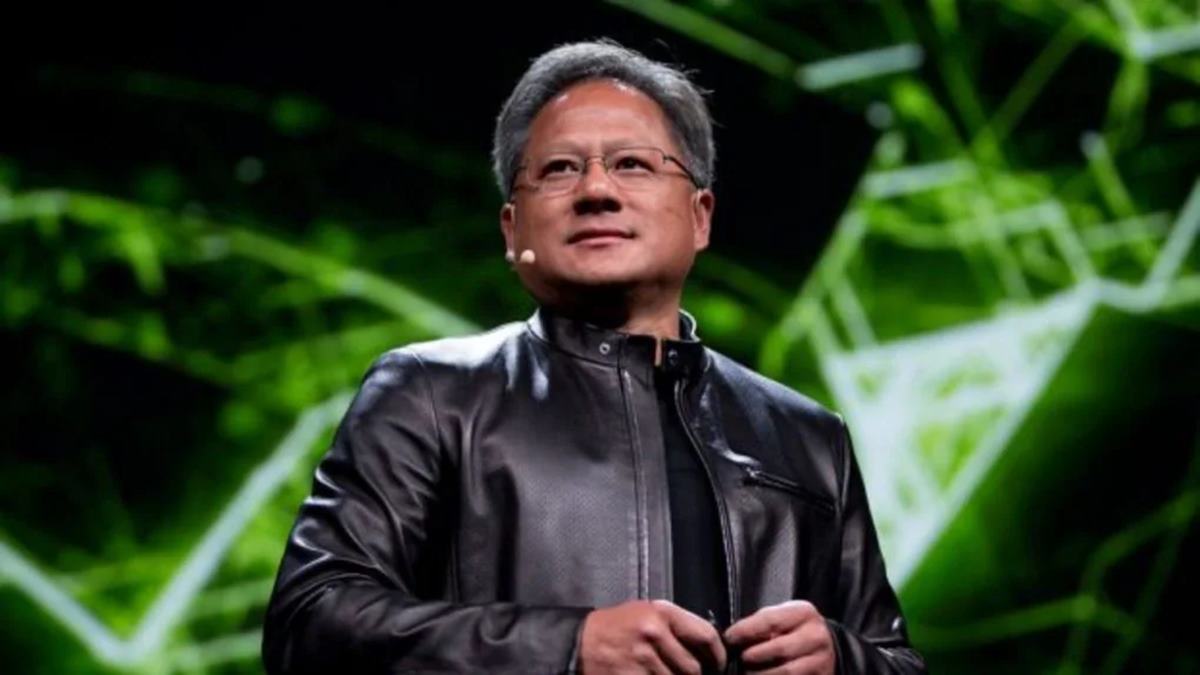
As anxiety builds among white-collar workers over AI-led layoffs, Nvidia Chief Executive Officer Jensen Huang has offered a note of reassurance: your job is not the same as the tools you use to do it.
According to a report by Fortune, speaking on the Lex Fridman Podcast, Huang acknowledged that many professionals are worried as companies ramp up investments in artificial intelligence. However, he stressed that AI should be seen as an enabler rather than a replacement. “I just want to remind them that the purpose of your job, and the tasks and tools that you use to do your job, are related, not the same,” he said.
Huang pointed to radiology to explain how AI can reshape rather than eliminate roles. The field was once expected to be among the first to be automated due to advances in computer vision. While AI now powers nearly every radiology platform, the number of radiologists has increased.
According to Huang, AI allows doctors to analyse scans faster, improve diagnosis, and treat more patients. This, in turn, has increased demand for professionals in the field rather than reducing it. He also cautioned that earlier predictions about automation discouraged some from entering radiology, contributing to a shortage of experts. “The alarmist warning went too far… it did harm,” he said.
Drawing from his own experience of leading Nvidia for over three decades, Huang said the tools he uses have changed dramatically over time, but his role has not disappeared.
He emphasised that while tasks and technologies evolve, the core purpose of jobs remains. Roles that involve decision-making and human judgement, he suggested, are unlikely to be fully replaced.
Adapting to AI is key
Huang reiterated that AI will impact every job, but those who adapt will have an advantage. “You’re not going to lose your job to an AI, but you’re going to lose your job to someone who uses AI,” he said at the Milken Institute Global Conference.
Other business leaders echoed similar views. Airbnb Chief Executive Officer Brian Chesky described AI as highly beneficial for businesses that embrace it, while JPMorgan Chief Executive Officer Jamie Dimon acknowledged that AI may eliminate some roles but stressed the importance of workers adapting to the technology. Huang’s broader message: AI is more likely to change how people work than replace them entirely.