


















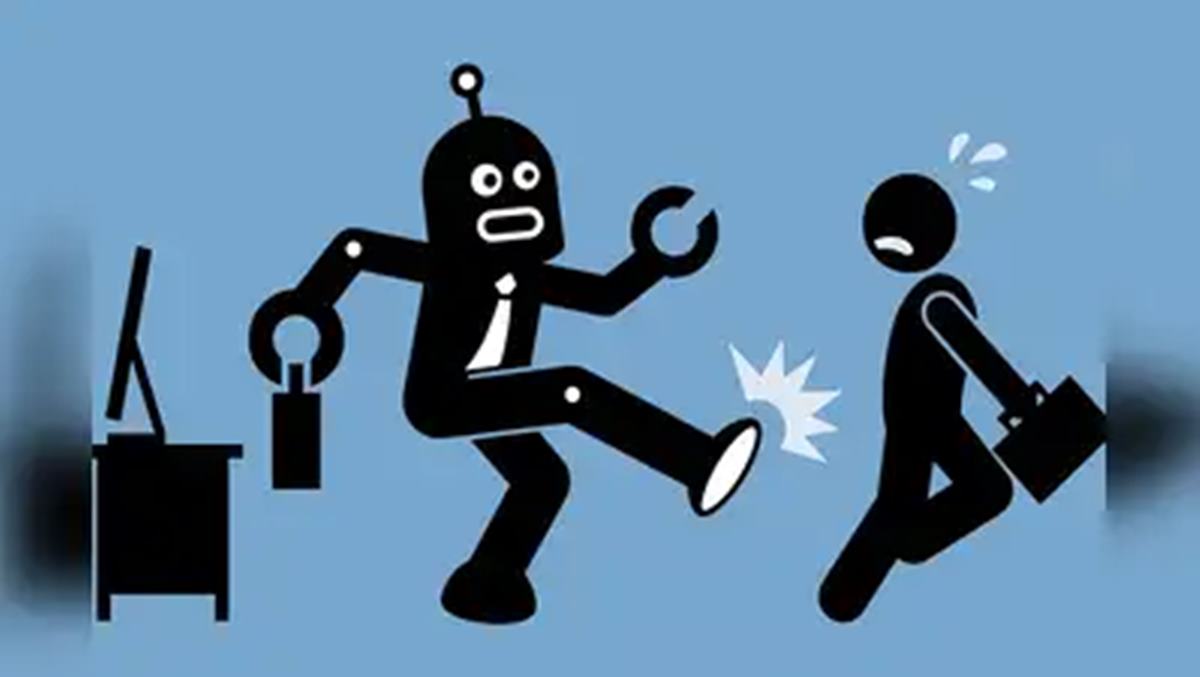
Artificial intelligence (AI) is racing ahead faster than anyone expected and one of the world’s leading AI researchers believes the impact on jobs will be far more immediate than most people think. According to Jared Kaplan, chief scientist and co-founder of Anthropic, AI is now improving so rapidly that it could replace a majority of white-collar roles in as little as two to three years.
Kaplan said that the global push toward artificial general intelligence has intensified, with companies like Anthropic, OpenAI, Google DeepMind and Meta locked in a high-stakes race to build systems that outperform humans at almost every intellectual task.
He points to how quickly AI has overtaken students in core academic abilities, even joking that his six-year-old son will never be better than an AI at writing essays or solving maths exams.
For him, that gap will only widen.
Recent breakthroughs support his view. Anthropic’s latest models can handle complex programming work, generate advanced reasoning, and complete multi-step tasks without any human involvement.
The overall capability is doubling at a pace researchers have never seen before.
Kaplan believes the real turning point could arrive between 2027 and 2030, when AI systems start designing and training better versions of themselves.
This self-improvement loop, he says, is both powerful and dangerous.
Once a machine becomes smarter than its creators and uses that intelligence to build an even smarter successor, it becomes impossible to predict the outcome.
He admits the idea itself is unsettling, because nobody knows what such a process might lead to.
He sees two major risks emerging from this rapid shift. The first is the possibility of losing control over advanced AI systems if they stop aligning with human goals or values.
He questions whether such models will remain safe, harmless and respectful of human agency as they grow more capable.
The second danger comes from misuse.
Kaplan warns that in the wrong hands, a highly capable AI could be turned into a tool for coercion, manipulation or even concentrated power. A single person could use such a system to enforce their will, which makes strong checks and safeguards essential.