















In our previous article, we explored how CEOs are increasingly turning to their C-suite peers to shape company-wide AI strategies. While those leaders bring diverse perspectives, their day-to-day responsibilities often leave little room to manage the practical realities of AI adoption. Nowhere is that tension clearer than in HR, where the promise of AI meets the constraints of budgets, vendor management requirements and workforce readiness.
Barriers to AI use in HR remain steep. Thirty-seven percent of organizations cite lack of knowledge as their top challenge, followed by privacy and data-quality concerns. For large enterprises, cost has now overtaken all other hurdles. Even so, optimism about improved efficiency and data access continues to rise. According to the Sapient Insights Group Annual HR Systems Survey, just over one-third of organizations already use AI within formal HR or workforce processes, a 1.5-times increase between 2023-25, and adoption is projected to climb another 25% by June 2026 as organizations continue expanding both stand-alone and embedded AI use.
Despite this progress, most productivity gains are still happening at the individual level. Eighty-one percent of HR professionals use AI personally to draft policies, summarize data or create presentations, often through tools such as ChatGPT or Microsoft Copilot. Adoption, however, does not always translate into impact. Many organizations are still learning how to scale pilots and measure meaningful results.
There are early signs of progress. Sapient Insights Group data show that user experience and vendor satisfaction ratings for HCM systems rose this year for the first time in several cycles, driven by AI’s ability to improve workflows and surface data at the point of need. Organizations actively using AI in HR also report an average 8% improvement in business, talent and HR outcomes, a trend sustained for two years. While early results center on efficiency and cost savings, the more transformative work begins with value creation—when humans and AI agents work together to redefine what is possible.
This shift reveals an uncomfortable truth: AI is no longer a project or a platform; it is part of the workforce conversations. For HR to remain credible, it must acknowledge that AI agents and automation will be central to workforce planning over the next three to five years. If HR does not lead this discussion, the CFO, COO or CTO will, and they are likely to do it with less consideration for the long-term implications for talent, ethics or organizational design. Like an orchestra adding new instruments, HR must learn to conduct a more complex composition that blends human expertise with algorithmic precision and continuous validation. Success depends on how well the players stay in tune with one another. AI cannot replace the conductor’s judgment; it expands the range and reshapes the sound of work itself.
HR’s role is to ensure this conversation happens with a clear understanding of long-term talent needs, data privacy, governance and shared accountability for performance and ethics across the human and AI-enabled workforce. The question is no longer whether HR should use AI, but how safely, intelligently and cost-effectively it can be implemented, scaled and governed.
This article explores how HR leaders are making those choices: which HR technology vendors they trust, how they are embedding AI into existing workflows, what skills and governance frameworks are needed for sustainable use and the outcomes expected as AI becomes an integrated part of their workforce strategy.
HR as the testing ground for AI impact at scale
Few areas of technology are experimenting with AI across the workforce as boldly as HR. The function sits at the intersection of process and people, data and dialogue. Many time-intensive activities—such as payroll validation, policy inquiries, candidate screening and skills matching—are now being streamlined through automation. At the same time, HR technology buyers are raising their expectations. They want interactive AI that understands natural language, supports collaboration between humans and systems and provides personalized, actionable guidance.
According to the Sapient Insights Group 2025 HR Systems Survey, embedded AI adoption within HR platforms has increased from last year but remains relatively modest. Only about 12 % of organizations report using an embedded HRMS AI solution in 2025, though this represents the highest adoption rate across all HR application categories. The leading HR vendors whose customers most often report awareness and active use of built-in AI capabilities are HiBob, Workday, Cornerstone, ADP and Oracle.
- Workday continues to lead in embedded AI adoption among large enterprises through its extensive list of Workday Illuminate features across the platform, while also giving customers control to enable or disable individual features. Following its February 2025 announcement of an Agent System of Record, Workday has quickly expanded its AI ecosystem through partnerships and acquisitions, including Flowise, Sana, and Pipedream.
- HiBob’s rapid rise in mid-market AI adoption demonstrates how accessible in-platform AI can democratize functionality. The 2025 launch of Bob Companion—rolled out to all customers at no additional cost—quickly drove adoption for drafting job descriptions, internal communications and employee “shoutouts,” while also responding to data and product queries without the need to navigate dashboards.
- Cornerstone, mostly known as a talent and learning platform, also plays the role of HRMS for many global organizations with disparate payroll environments. Its Galaxy architecture includes embedded AI features across learning, performance and skills.
- ADP Assist has now supported more than 6 million chat conversations (September 2024-November 2025) and, in one month, saved an estimated 19,000 minutes on policy questions, showing how vendors are moving from passive automation to guided, conversational AI that resolves issues in real time.
- Oracle HCM continues to roll out one of the broadest sets of embedded AI features in active use while maintaining flexibility in deployment, leading to the highest number of organizations currently implementing embedded AI and planning to adopt it in the future.
HR buyers are now making pivotal decisions about which systems they will trust to anchor their AI strategy. The focus is on solutions that integrate easily with non-HR systems, meet security and data-sovereignty requirements and enable business-led governance while keeping AI use intuitive and embedded in the flow of work. Many organizations are identifying their “anchor platforms”—core systems that serve as hubs connecting data, agents and applications across the enterprise. The differentiator is no longer which vendor leads, but how effectively organizations coordinate these tools to create a unified, reliable experience rather than a collection of disconnected automations.
Even with strong vendor innovation, buyers must still balance risk and reward for each AI investment. The right approach depends on the organization’s environment, risk tolerance and workforce priorities. A company managing high-volume hiring may find AI-driven assessments and matching worth the potential regulatory risk because of the time savings and reduced bias. Others may choose to deploy AI more conservatively, focusing on internal development, career mobility or HR help desk functions where the risk-reward balance is easier to control. In all cases, success depends on disciplined evaluation, transparent governance and continuous oversight.
The impact on HR roles is already visible. Positions focused on repetitive, rules-based work, such as HR coordination, recruiting, payroll and benefits administration are shrinking through attrition as automation absorbs routine tasks. Meanwhile, demand is rising for roles centered on consulting, empathy and strategic judgment, including HR business partners, employee relations specialists, talent management experts and HR technologists. This shift is occurring amid a global labor paradox, where skills shortages and AI-driven efficiencies are prompting both workforce reductions and expansions, with no end in sight, as over the next 36 months, 18% of organizations plan to increase headcount due to AI, 12% plan to decrease and most expect to maintain current levels.
Evaluating embedded AI and upskilling for use
One of the biggest questions in the market today is how to assess the value of AI investments and decide what organizations are willing to pay for them. Sapient Insights Group saw a 10 % increase this year in organizations paying an additional fee for AI, to 46%, while 40% said they would pay more only if they could see clear ROI or measurable improvement. Most HR vendors now include a baseline level of AI in their existing platforms, while a few offer premium modules or levels for an additional fee. We are also seeing the growing expansion of the consumption-based or usage-based pricing models, such as Workday Flex Credits.
Despite growing investment, many organizations still lack visibility into how AI is being used. Only 70% of HCM users could confirm whether AI features were active or available in their systems. This means most organizations already have access to embedded AI but have not yet determined how it is being applied or how it is benefiting their workforce.
As HR technology evolves, innovation is increasingly taking place within the platforms organizations already rely on. Embedded AI refers to intelligence built directly into HR applications that share the same data, security and workflows. In practice, embedded AI falls into one of three categories in today’s HR systems:
AI assistants: Conversational tools that use natural language processing, generative AI and machine learning to understand context, generate responses and guide users to the correct information. They act as a trusted guide, helping employees and managers complete routine tasks such as answering policy questions, creating content or preparing data summaries.
AI agents: Autonomous systems designed to plan, adapt and execute tasks based on defined goals. They behave like digital co-workers, triggering workflows, detecting anomalies or recommending subsequent actions without direct human input—but within established boundaries.
Intelligent guidance: Contextual insights generated by the system itself. These tools act as trusted advisors, analyzing workforce and business data to identify patterns, predict outcomes and recommend actions. For instance, they can suggest ways to address learning gaps or pay adjustments—providing guidance on previously unseen opportunities to HR and business leaders.
Together, these capabilities are redefining how HR delivers services, manages talent, and influences business decisions. Their true value, however, depends on how effectively organizations evaluate and govern their use.
Upskilling for effective AI use
Technology alone will not drive value without human fluency. Recent research from Sapient Insights Group and West Monroe identifies adaptability, collaboration and critical thinking as the most essential skills for success in the AI era. Additional capabilities—digital literacy, data fluency, communication and empathy—are equally critical to ensure automation enhances rather than replaces human decision-making.
Emerging research from MIT Sloan and the World Economic Forum adds that employees who excel in prompt engineering, data interpretation, ethical reasoning and cross-functional collaboration are most effective in human-AI teams. These skills allow workers to challenge AI outputs, interpret insights responsibly and apply them to real business problems.
The rise of the chief AI officer role reflects this shift at the executive level, but every HR professional now needs to become a data-literate conductor—able to translate algorithmic insight into informed business strategy. The organizations that invest in both responsible AI governance and workforce upskilling will be the ones that turn automation into lasting value.
Case in point: Eaton
Eaton provides a vivid example of thoughtful AI adoption (West Monroe client interviews and Eaton case notes, 2025). The company follows a “crawl-walk-run” agile approach, advancing adoption through structured governance, improvement iterations and training. Its AI Working Group includes representation from HR, IT, marketing, legal, data privacy, communications, etc. Every new AI capability passes ethics and privacy review before rollout.
Eaton’s HR team uses AI to assist in the generation of performance-reviews and goals, create engaging training videos from text using AI avatars and support managers with real-time workforce analytics. In addition, recruiting applications personalize candidate outreach and identify internal and external candidate matches based on skills. Yet, AI never makes final decisions—a human always remains “in the loop.” As one executive put it, “AI helps us work faster and think deeper, but not think less.” This philosophy—augment, don’t replace—anchors Eaton’s AI strategy and illustrates how disciplined governance and experimentation co-exist.
From pilots to practice
HR now stands at the pivot point between experimentation and execution. The data confirms AI’s growing value—but also its complexity and risks. The next phase requires intentionality, not just adoption.
- Advocate for alignment. Champion AI strategies that align with overall business goals rather than focusing solely on efficiency or workforce reduction.
- Assess your embedded AI. Review all HR systems to understand where AI already exists, how it is being used and the risks and untapped opportunities that remain.
- Inventory actual AI use. Map all AI and automation already active across HR and related functions. Include tools employees use independently (BYOAI). Understanding what’s already in play helps identify both risks and quick wins.
- Elevate AI governance. Move beyond compliance to establish governance as a strategic discipline that balances innovation and oversight. (For a deeper look, see our previous article, “Beyond the Buzz: Why a Careful Pace on AI Adoption Can Scale HR’s Impact.”)
- Integrate AI evaluation into vendor decisions. Treat AI readiness, transparency and ethics as core selection criteria for all technology partnerships.
- Invest in upskilling. Pair technical understanding with human judgment. Build critical thinking, data fluency and adaptability into every HR and manager training program.
- Lead workforce conversations. Be an active voice in discussions about AI as part of the extended workforce, ensuring HR brings both ethical and human context to the table.
- Gather feedback. Create safe channels for employees, managers and stakeholders to share experiences, challenges and concerns about AI use.
- Foster continuous learning. Encourage safe experimentation, with governance-approved sandboxes. Develop AI fluency across teams and embed responsible innovation into everyday work.
- Close the loop, measure and communicate outcomes. Define how success will be measured—efficiency, value creation, experience, accuracy or equity—and report those outcomes to leadership and employees to build trust and momentum.
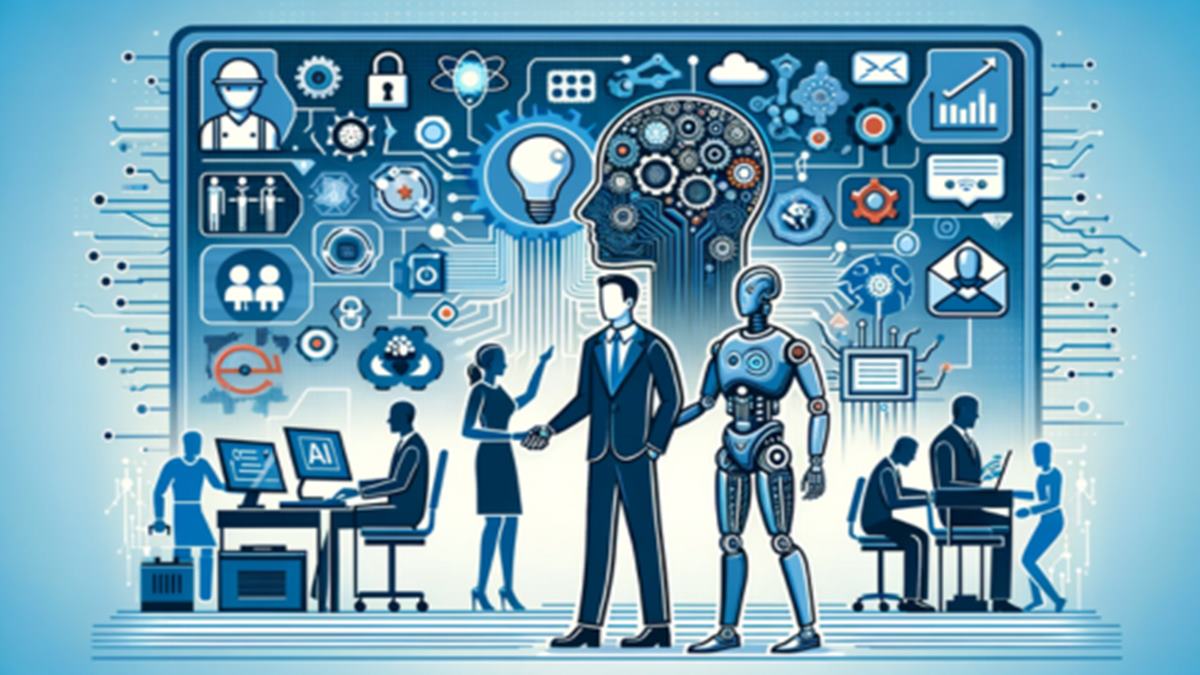
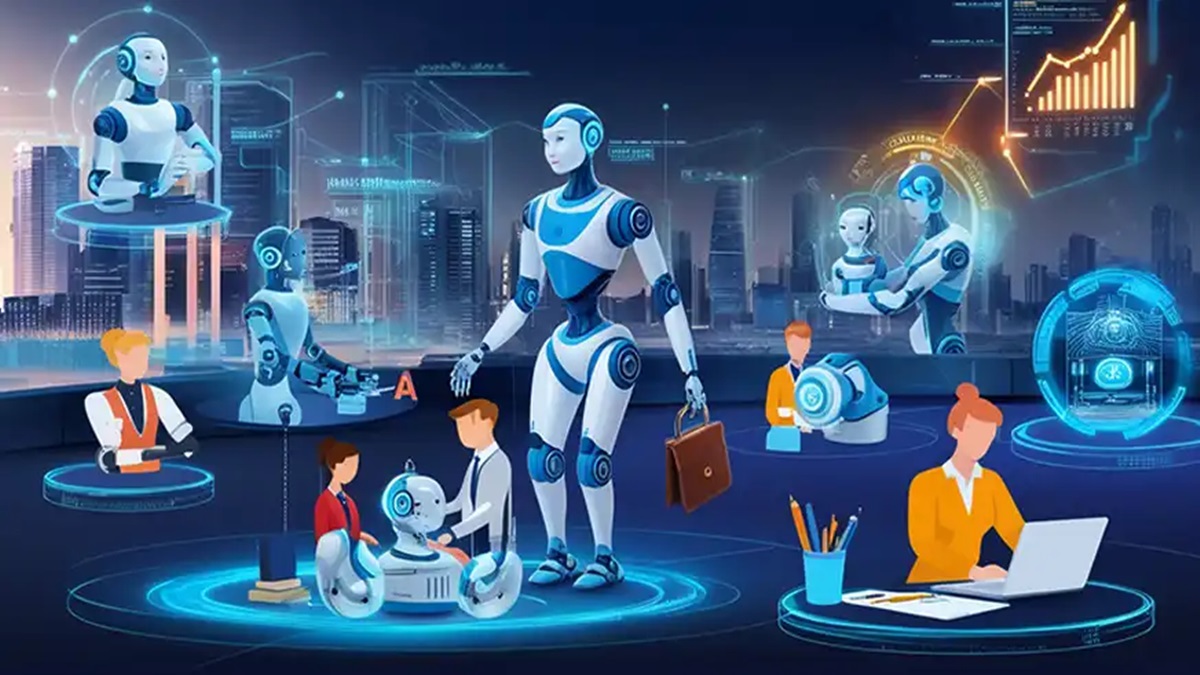
AI is no longer just a set of tools—it is becoming a distinct component of the workforce. Each model, agent and assistant performs labor in partnership with humans. The modern HR leader must plan for a hybrid workforce of human and digital colleagues that demands orchestration, not substitution.
The orchestra metaphor applies well: Humans remain composers, conductors and soloists, while AI adds new instruments capable of sustaining notes beyond human range and repeating passages with precision. When well conducted, the result is harmony; when left unsupervised, it is noise. Workforce planning must now account for these algorithmic performers—the tasks they own, how they integrate and how their “work” is governed through ethics, training and performance reviews.
As AI continues to reshape business models and workflows, the true differentiator will be human ingenuity and innovations supported and scaled by AI. The future of HR is not less human; it is more human-led and AI-enabled. Those who master the art of orchestration will turn today’s fragmented pilots into tomorrow’s competitive advantage. The music of work is already changing, and the most innovative organizations are learning how to conduct it.
Source – https://hrexecutive.com/beyond-the-buzz-inside-ai-enabled-hr-functions/