

















From career growth to cutting-edge HQs, 2025’s top CEOs are redefining success by making employees the heart of their business
In 2025, employee-centric leadership has moved from aspiration to expectation. As organisations navigate economic volatility, technological acceleration and shifting workforce priorities, the role of the CEO in shaping culture, wellbeing and long-term growth has never been more critical.
Employees increasingly seek purpose, flexibility and development, and the most successful leaders recognise that business performance is inseparable from employee experience.
Across industries, CEOs spent 2025 embedding people-first strategies into corporate decision-making through a focus on culture, wellbeing initiatives or physical workplace design. Here are some of the most notable examples we spotted.
A culture built on growth and belonging
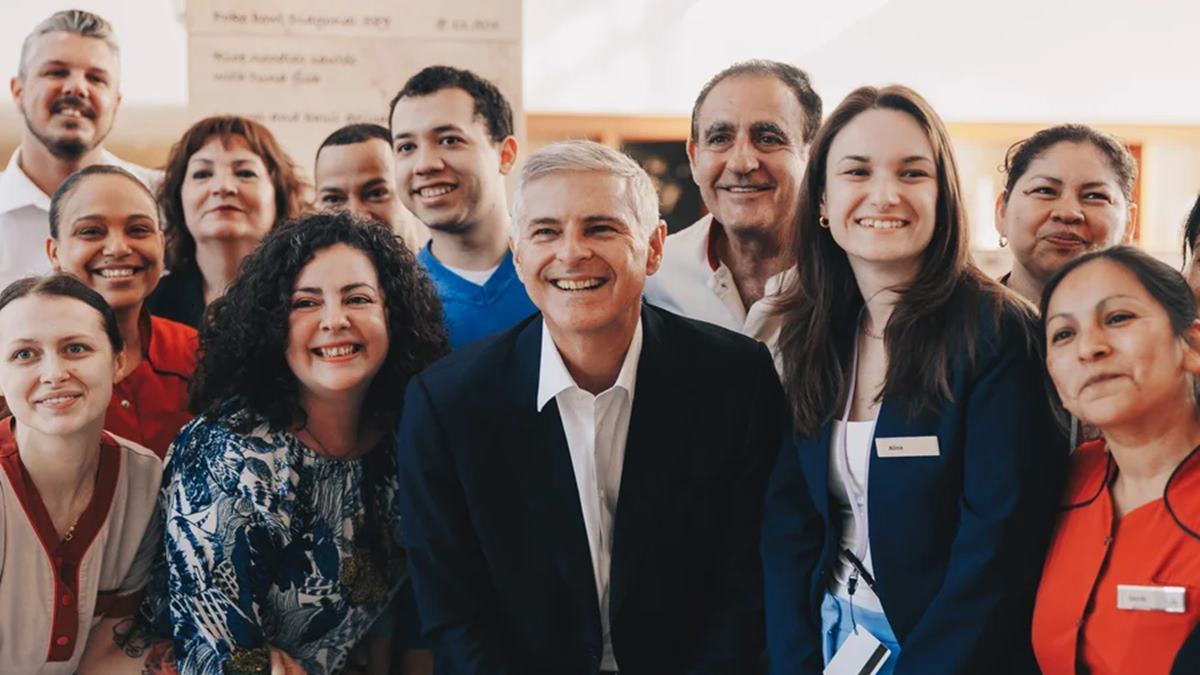
Hilton’s recognition as the World’s Best Workplace reflects a decade-long commitment by President and CEO Chris Nassetta to rebuild a people-first culture.
Internal data shows that 93% of team members say Hilton supports long-term growth and wellbeing, while 87% believe they can achieve their career goals within the company.
Discussing Hilton’s ranking, Chris said: “This milestone goes beyond ranking, it’s a reflection of who we are and what we’ve always believed: when we take great care of our people, they take great care of our guests.”
He emphasised the company’s shared purpose: “Our 500,000 team members around the world are united by a common purpose that our founder, Conrad Hilton, envisioned over a century ago: to fill the earth with the light and warmth of hospitality.”
Since 2022, Hilton has created over 2.5 million learning and career opportunities. Chris explained: “We are telling stories of all the things they were doing to help people understand why they matter and how that work aggregates into something that’s really powerful.”
Wellbeing-first leadership model
Microsoft’s position as the World’s Best Employer reflects CEO Satya Nadella’s focus on employee wellbeing, career development and work-life integration.
Satya stated: “Thriving employers are what will give organisations a competitive advantage in today’s economic environment.”
That philosophy drives the company’s strategies and tools to ensure employees are supported every day, even in a volatile global business environment.
Microsoft has long prioritised work-life balance, flexible policies and opportunities for growth.
The company’s internal systems, including Microsoft Viva, integrate communication, learning and wellbeing into employees’ daily workflows, enabling staff to manage work and personal responsibilities effectively.
Employees consistently rank the company highly for career advancement opportunities, benefits and the overall work environment, demonstrating that Microsoft doesn’t just pay lip service to employee wellbeing, it embeds it into the company’s operations.
By fostering a culture of trust and continuous learning, Satya ensures that employees feel empowered, valued and motivated to innovate.
The workplace as a leadership statement
JPMorgan Chase’s new global headquarters at 270 Park Avenue represents a tangible expression of CEO Jamie Dimon’s commitment to employees.
Jamie said at the time of the announcement in October: “The opening of our new global headquarters is not only a significant investment in New York but also a testament to our commitment to our clients and employees worldwide.
“By creating world-class environments where our employees can thrive, we are strengthening our ability to serve our clients and communities… for generations to come.”
The US$3bn all-electric skyscraper prioritises sustainability, well-being and smart technology.
Lord Normal Foster, Founder of Foster + Partners, said: “This is a somewhat unusual tower. It’s different, and it’s different for positive reasons.
“One of those reasons is the commitment to sustainability and employee well-being that drove the project.”
By investing in spaces that prioritise integration, collaboration and well-being, Jamie shows how a CEO can shape not only culture but the physical environment in which employees thrive.
Hilton, Microsoft and JPMorgan Chase demonstrate that employee-centric leadership in 2025 is deliberate, continuous and CEO-led, driving engagement, performance and long-term success.
Source – https://businesschief.com/news/ceos-in-2025-the-rise-of-employee-centric-leadership