
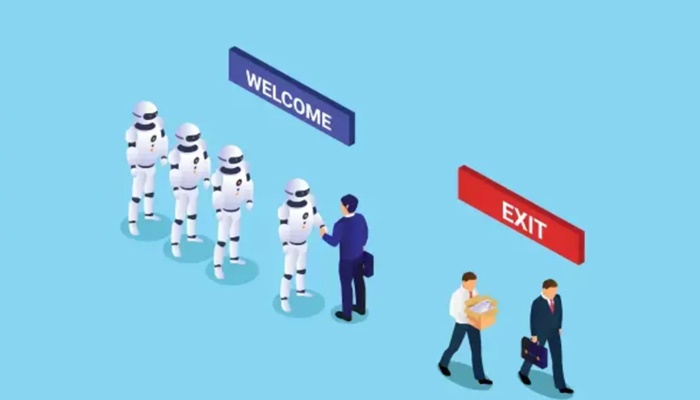












As technology companies continue to cut jobs to offset the rising costs of artificial intelligence infrastructure, questions are emerging about how far automation can realistically replace human talent. Salesforce, which laid off around 4,000 employees this year, is among the firms now showing signs of recalibrating its approach.
Across the tech sector, companies have reduced headcount with the expectation that automation and generative AI would lower hiring needs and free resources for new priorities. However, inside Salesforce, confidence around the pace and impact of this transition appears to be softening. The initial enthusiasm surrounding large language models has given way to a more cautious and selective deployment strategy.
Reportedly, senior leaders at the company have indicated that while AI remains valuable, it is no longer viewed as a blanket replacement for human effort. The focus has shifted toward targeted automation in well-defined use cases, where systems can reliably augment work rather than fully take it over. This shift reflects growing recognition that AI tools still require significant training, supervision, and human judgment—particularly in complex or unpredictable situations.
The reassessment also highlights broader concerns within enterprise environments. AI systems may perform effectively in controlled settings, but their limitations become evident when faced with ambiguity or high-stakes decision-making. For large organisations, reliability is critical, and any failure or unexpected behaviour from AI systems carries operational and reputational risks.
For Salesforce and others navigating similar transitions, the challenge lies in aligning AI investments with realistic expectations. The emerging consensus is that while AI can reshape productivity, it is unlikely to eliminate the need for skilled human talent in the near term.