


















The future of work rarely unfolds in a straight line, as the futurists have promised. Every piece of new technology is being introduced with great certainty and at the same time, it is accompanied by predictions of imminent disruption and huge job losses.Artificial intelligence, now dominating corporate world and politics alike, is the latest episode in this repetitive story.
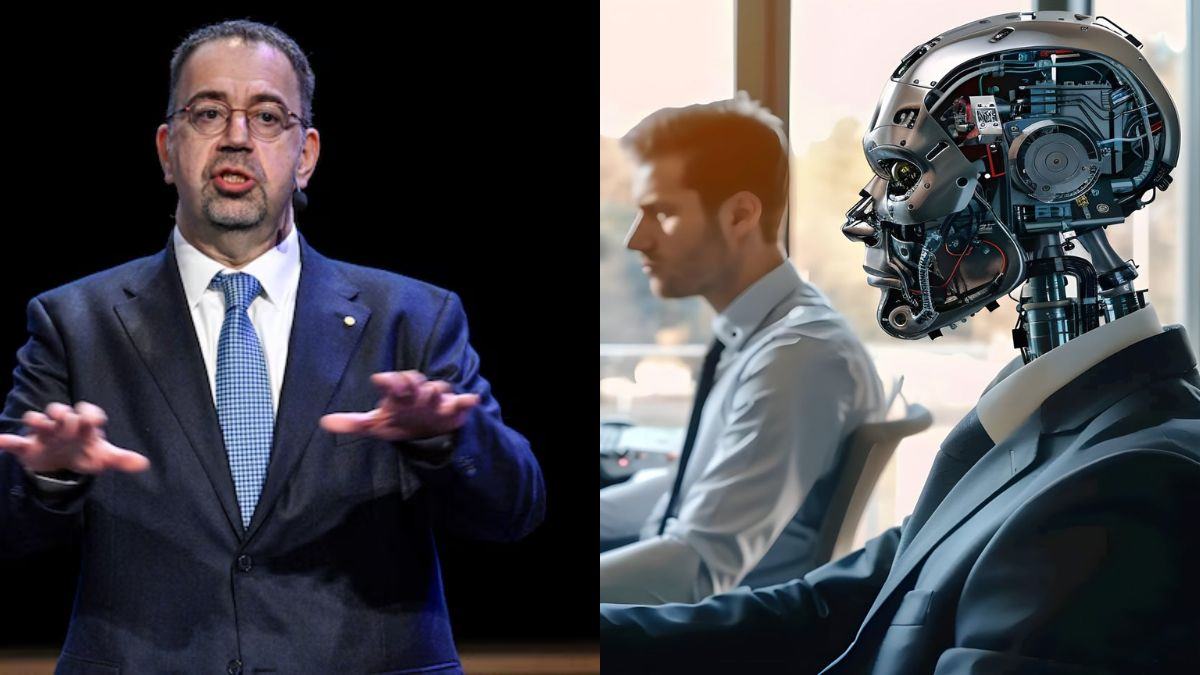
For Peter Cappelli, the George W. Taylor professor of management at the Wharton School, the current hype feels less like a revolution and more like a dj vu, a replay of earlier technologic predictions that promised a lot but delivered little.Cappelli points out that the AI hype is mainly generated by people who are the sellers of the technology. The temptation of sensational stories about the disappearance of masses of jobs or a world where one doesn’t have to work at all, in most cases, successfully wipes out the very fact that there are complexities in the process of implementation.
Lessons from the driverless truck era
Cappelli traces today’s AI exuberance back to the mid-2010s, when major consultancies and the World Economic Forumconfidently forecast the near-total elimination of truck drivers.Autonomous vehicles, they argued, would make human labour redundant within years. The logic was elegant. The predictions were dramatic. The reality, however, was far less accommodating.“You didn’t have to think very long to realize that just wasn’t going to make sense in practice,” Cappelli told Fortune on Zoom from his home in Philadelphia.He reduced years of speculative modelling to a handful of practical questions. “You didn’t have to think very long about driverless trucks to think about, okay, what happens when they need gas? You know? Or what happens if they have to stop and make a delivery? And if they have to have an employee sitting with them, of course, it defeats the purpose, right?”The gap between technological possibility and operational reality, Cappelli argues, is where most futuristic labour forecasts unravel.
Listening to the sellers, not the system
That skepticism has placed Cappelli at odds with much of today’s AI discourse. While companies rush to showcase generative tools and futurists predict a world where work becomes optional, Cappelli urges restraint, particularly when the loudest voices belong to those selling the technology.“If you’re listening to the people who make the technology, they’re telling you what’s possible, and they’re not thinking about what is practical,” he said.It is a distinction that has shaped his recent work, including a collaboration with Accenture on a podcast series examining what AI is actually doing to jobs, not what it is marketed to do. Much like his earlier critique of remote work, another trend oversold as universally beneficial, Cappelli’s position has earned him the label of a contrarian.“I mean, people say I’m a contrarian,” Cappelli said, “but I don’t think so, so much as I just am skeptical about stuff, you know?”When it was suggested that skepticism itself now counts as contrarianism, he laughed before returning to his core concern. “I just get nervous with hype.”
When the data disrupts the narrative
That unease hardened into evidence in the latter half of 2025, following an influential MIT study that found 95% of generative AI pilots failed to deliver any meaningful return. The finding unsettled corporate leaders who had embraced AI as an efficiency shortcut. For Cappelli, it reinforced a long-standing pattern: productivity revolutions are rarely cheap, fast, or straightforward.His preferred counterexample to utopian predictions comes not from failure, but from a rare success.
Inside an AI ‘success story’
Cappelli points to a Harvard Business Review case study he participated in on Ricoh, an insurance claims processor, exactly the kind of low-level administrative work often cited as ripe for automation. The assumption was that AI would handle such tasks effortlessly. The execution proved otherwise.“It’s hugely expensive to do this,” Cappelli said. “And this was a success.”Before productivity gains materialised, Ricoh spent a full year with a six-person implementation team, three of whom were outside consultants. The firm paid roughly $500,000 in consulting fees just to get the system operational.“The first thing they discovered,” Cappelli said, “is large language models could do this pretty well, at three times the cost of their employees doing it [manually]. Okay, so that’s not going to work.”
Fewer jobs lost than promised
Even after extensive optimisation, the economics remained sobering. Ricoh was still spending about $200,000 a month on AI fees, more than its total payroll for the task had been. Headcount declined only modestly, from 44 employees to 39, a far cry from the mass displacement often forecast in AI rhetoric.For Cappelli, the explanation echoes his earlier driverless truck analogy. Technology rarely removes the need for people; it reshapes their role.“The reason they still need employees is that lots of problems have to be chased down, and they’re harder to chase down if they come off of AI,” he said.
Productivity, at a price
In the end, the transformation did deliver results. The Ricoh division became three times as productive. But the journey exposed the uncomfortable truth beneath AI optimism: progress came slowly, expensively, and without eliminating human oversight.“So that’s the payoff, but it’s not cheap [and] it took a hell of a long time to do.”At a moment when artificial intelligence is framed as an unstoppable force poised to erase work itself, Cappelli’s research offers a grounded counterpoint. AI may reshape jobs, but not on the timelines, or at the scale, its most enthusiastic advocates promise. History, he suggests, belongs not to those who predict fastest, but to those who pause long enough to ask whether the future being sold can actually function in the real world.