



















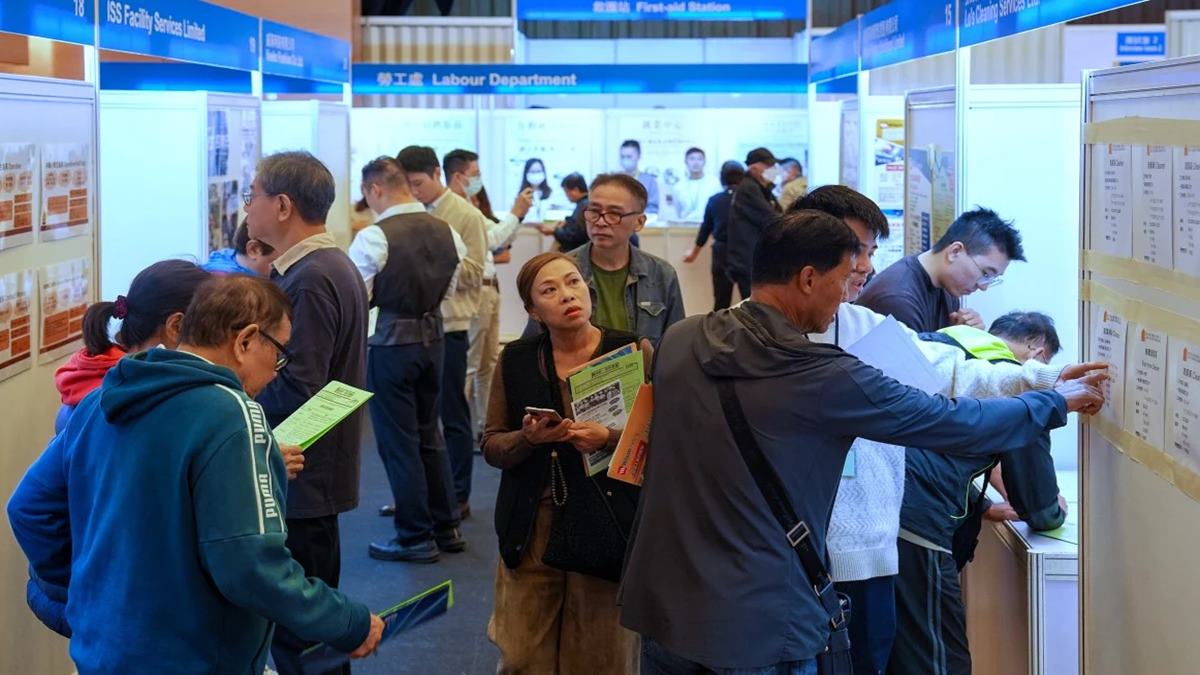
Competition in the Hong Kong labour market intensified in the past year with applications per job advertisement surging by nearly 60 per cent, even as AI eliminated some positions, according a popular online employment marketplace.
Jobsdb Hong Kong revealed on Monday that the average number of applications per advertisement on the platform rose 58 per cent year on year in 2025.
Competition was even keener for frontline positions, where applications per advertisement increased 78 per cent over the same period.
The platform added that jobseekers were also applying more actively, with a 33 per cent year-on-year increase in the number of applicants submitting more than 100 applications per month. It described more intense job hunting as a “new normal” for the city.
“Jobseekers are demonstrating a more proactive approach, while employers are adopting increasingly cautious and flexible hiring models to navigate diverse market conditions,” said Bill Lee Chern-hsing, Jobsdb Hong Kong’s managing director.
“Looking ahead to 2026, the job market is expected to remain highly fluid. While overall hiring demand will show a degree of resilience, the environment will be characterised by the dual forces of ongoing transformation and intense competition.”
The number of job advertisements on the platform decreased “moderately” in 2025, but advertised salaries rose by 4 per cent year on year.
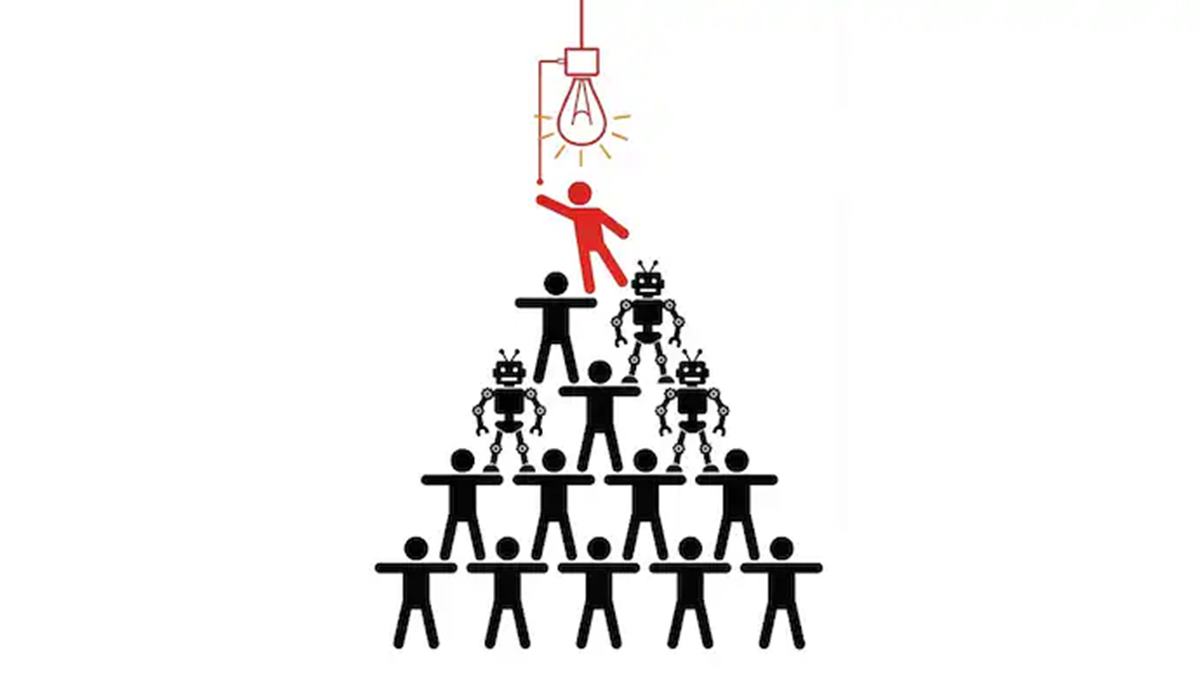
The platform also observed notable declines in the number of job openings in sectors such as call centres and customer service, retail and consumer products, and administration and office support, attributing the drop to a shift in global demand for such roles and the impact of artificial intelligence (AI).
“AI technology is automating many repetitive work processes, leading to a significant transformation in employers’ skill requirements for employees, with a greater emphasis on higher-order capabilities such as interpersonal communication, strategic thinking and leveraging AI tools to create value,” it said in a press release.
In contrast, the sports and recreation sector saw the greatest growth in openings, thanks to mega-events hosted in the city, followed by the medical and healthcare sector.
Provisional figures from the Census and Statistics Department showed that Hong Kong’s unemployment rate for the three-month period from September to November stood at 3.8 per cent.
The figure was 3.2 per cent in the first quarter of last year and rose to 3.9 per cent in the third quarter.
Flexible recruitment also emerged as a growing trend last year, with the number of part-time openings on the platform growing by 75 per cent year-on-year.
In response to the trend, jobseekers also displayed greater willingness to consider such roles, with searches for the keyword “part-time” growing by 7 per cent in the same period.
Lee said employers had adopted a more stringent screening process and prioritised experienced workers amid the current economic climate, encouraging fresh graduates to gain more practical experience through internships and part-time roles.
He also called on jobseekers to actively embrace innovative technologies in an era of widespread AI adoption.
However, Terence Chong Tai-leung, executive director of the Lau Chor Tak Institute of Global Economics and Finance at the Chinese University of Hong Kong, said the impact of AI should not be overstated.
While AI might affect industries involving translation work, skilled professionals would be less vulnerable to its impact, he said.
“AI cannot replace humans as it cannot be held accountable,” he said. “For professionals such as lawyers and accountants, even if AI can help with their jobs, they must still put their signature on documents and are responsible for the results.”
Chong added that the job market in Hong Kong would remain relatively stable in the coming year, while unemployment would mostly affect the construction and catering sectors, which have been impacted by imported labour.
“As the Hong Kong economy recovers, employers will expand hiring,” he said, playing down concerns that the use of AI will lead to a significant rise in the jobless rate.
Provisional government figures showed the unemployment rate in the period from September to November last year was 6.8 per cent in the construction industry and 6.1 per cent in the food and beverage sector.