

















Hyderabad: Artificial Intelligence (AI) is no longer just a futuristic idea; it is already transforming the workplace.
From chatbots and automation tools to data-driven decision-making, AI is changing the way businesses operate and how people work. While this shift brings exciting opportunities for innovation and greater efficiency, it also raises important questions: will AI replace jobs in India, or will it create new opportunities for employment?
Millions of Indian jobs at stake?
Over the last two and a half decades, India has built a huge industry by doing office and technology work for companies in the United States and Europe. Now new AI tools are starting to perform some of that work, and this shift could affect millions of jobs in India, according to a report published in The New York Times.
India’s modern economic transformation began under the leadership of former Prime Minister Dr Manmohan Singh, who helped establish a new economic framework that opened the country to global business and investment. This shift laid the foundation for the outsourcing industry, with companies from many developed countries beginning to send technology and business services work to India.
The beginning of IT transformation
The IT wave gained momentum in the mid-1990s, when Indian software engineers and technology professionals travelled to the United States to help address the Y2K problem.
During this period, the United States welcomed skilled Indian professionals, and at the same time, many American companies started assigning technology and back-office work to teams based in India, a model that became widely known as outsourcing.
Dr Manmohan Singh, then serving as Finance Minister, understood the importance of creating the right economic and policy environment that encouraged collaboration between India and the United States, helping the outsourcing and IT services industry grow rapidly.
Ripple effect in economy
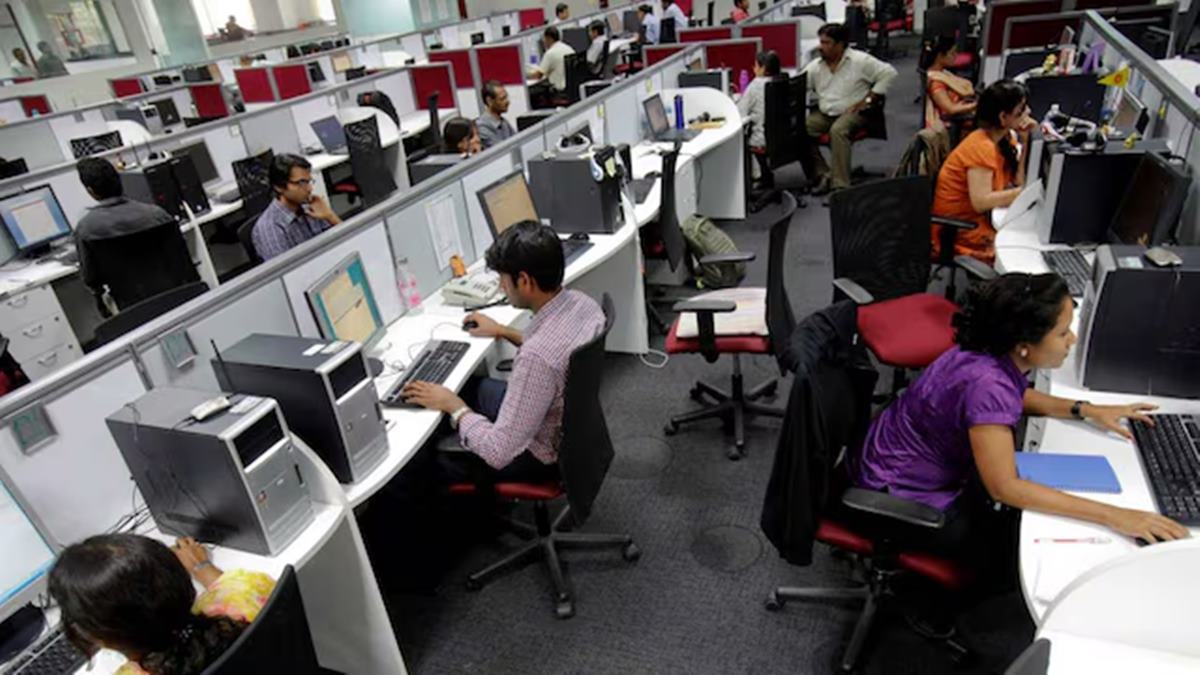
For many middle-class families, securing an entry-level job at an IT services company became a reliable path to financial stability. The growth of the IT services industry has also had a significant ripple effect across the economy, directly and indirectly contributing to nearly 25 per cent of the country’s economic activity.
Cities like Bengaluru, Hyderabad, Chennai, Mumbai and Pune grew rapidly because of this industry boom. Today, the IT services sector directly employs around 6 million (60 lakh) people, while the total number of direct and indirect jobs created by the industry is estimated to exceed 20 million (2 crore).
Evolution in work
Now, fast forward to the present. India is facing a major technological shift with the rise of AI, which could significantly disrupt the IT services industry that has grown into a $300-billion sector over the past three decades.
A 2023 McKinsey report estimated that up to 800 million jobs could be displaced by 2030, but this shift isn’t purely destructive; it’s evolutionary.
Workers in repetitive roles, such as data entry or basic assembly, face the brunt, as AI excels at scaling efficiency without fatigue. Yet, AI’s rise amplifies human strengths in high-skill domains. Jobs demanding creativity, empathy and complex problem-solving, like therapy, strategic leadership, or artistic design, remain resilient.
It’s been seen these days that entry-level hiring has significantly softened, with many graduates finding it harder to secure positions as GenAI automates routine coding, testing, and documentation tasks.
How can the govt ride the AI wave?
The big question is whether India is prepared for this technological shift. Can the country successfully ride the new AI wave?
To prepare for an AI-powered future, the Government of India needs to introduce strong policies focused on upskilling and reskilling the workforce. The engineering curriculum should be updated to include AI, data science and emerging technologies. Learning about robotics, programming, and computational thinking should also begin at the elementary school level.
At the same time, thoughtful policies are needed to protect jobs in certain sectors while helping workers transition into new roles created by the AI-driven economy.
To truly ride the AI wave, India must develop new frameworks, strategies, and policies that allow the country to fully benefit from this technological shift; otherwise, it could become a missed opportunity for the nation.