




















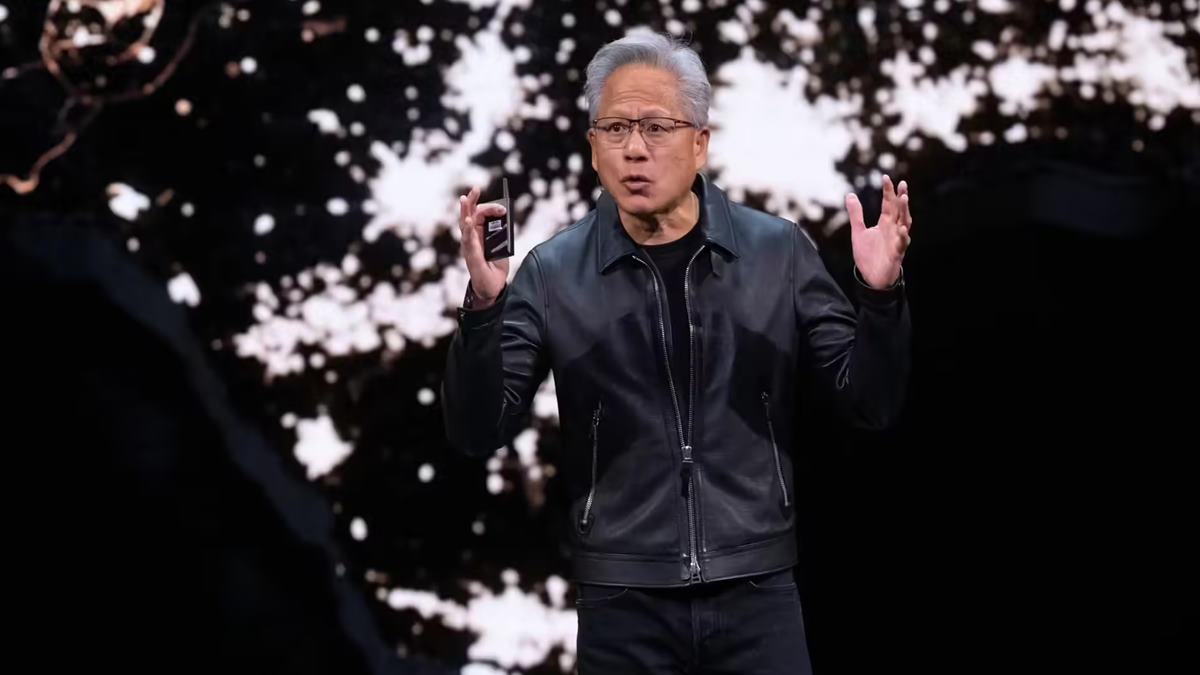
Jensen Huang, Chief Executive of Nvidia, has outlined a potential shift in hiring practices, suggesting that companies could soon include AI “token budgets” as part of employee compensation, The Economic Times reported.
Speaking at the GPU Technology Conference, Huang said that he envisions a future where “every single engineer will need an annual token budget,” highlighting the growing importance of AI computing resources in driving productivity.
Huang indicated that token allocations could become a key recruitment tool in Silicon Valley, particularly as demand for AI talent intensifies.
Engineers earning a few hundred thousand dollars annually could receive additional compensation in the form of tokens — units of AI computing usage — potentially amounting to a significant share of their base salary.“It is now one of the recruiting tools in Silicon Valley: How many tokens comes along with my job?” Huang said, adding that access to tokens can amplify engineer productivity by up to 10 times.
What tokens mean in AI systems
Tokens are small units of text processed by AI systems and are used to measure computing consumption. AI platforms typically price their services based on the number of tokens processed.
For instance, generating around 750 words requires roughly 1,000 tokens, while more complex tasks such as coding or running AI agents consume significantly higher volumes.
Companies such as OpenAI charge based on token usage, with advanced models priced at about $15 per million tokens, making compute costs a critical factor for businesses deploying AI at scale.
Rising costs reshape compensation models
The rising cost of AI compute is prompting companies to rethink traditional compensation structures. Reports suggest that engineers deploying AI-intensive applications can incur significant expenses, with some cases running into thousands of dollars per day.
Firms including Zapier and Kumo AI are already tracking token consumption per employee to optimise efficiency and identify high-performing engineers.
As a result, AI compute is increasingly being viewed as a “fourth pillar” of compensation, alongside salary, bonuses, and equity.
AI compute gains strategic importance
According to Thibault Sottiaux, candidates are already asking about dedicated AI compute resources during hiring discussions, underlining the shift in priorities within the tech workforce.
Huang also linked Nvidia’s future growth to the expanding “token economy”, stating that next-generation chips such as Blackwell and Vera Rubin could drive up to $1 trillion in purchase orders by 2027 due to their ability to generate tokens at scale.
As AI workloads expand rapidly, tokens are emerging as a new currency of productivity, potentially reshaping how companies attract, reward, and retain engineering talent in the years ahead, The Economic Times reported.