



















The work-from-home debate in India is no longer confined to corporate HR policy. It is rapidly becoming part of a larger conversation around fuel conservation, economic pressure and public infrastructure management.
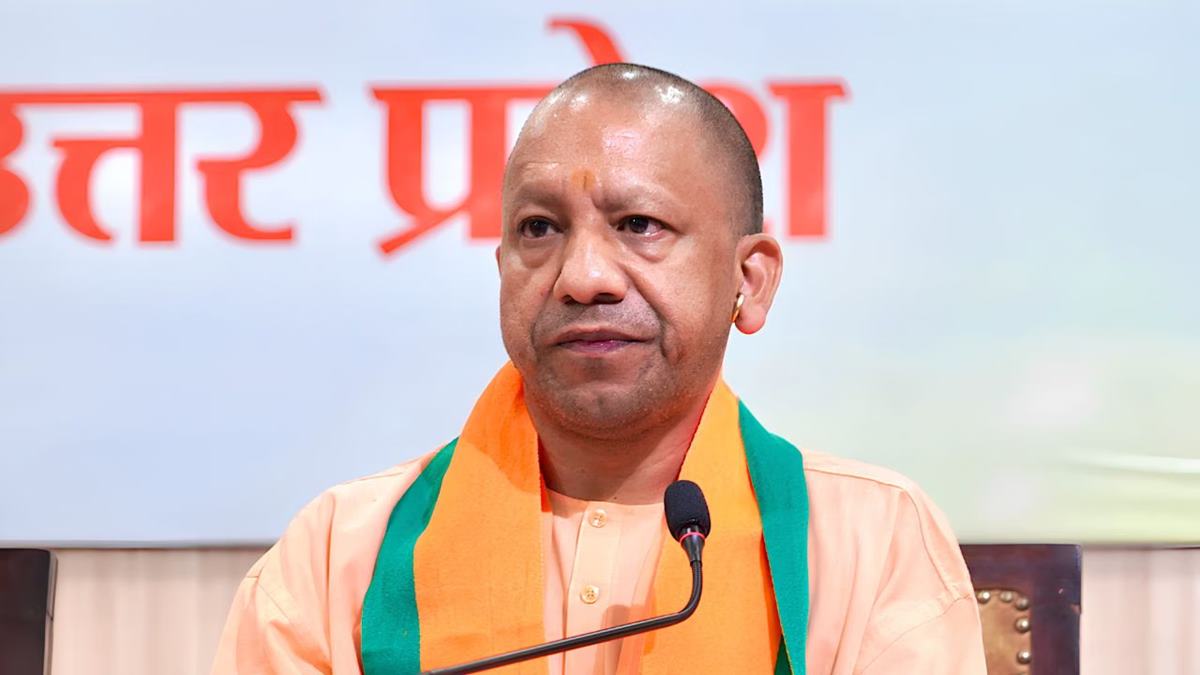
In one of the strongest policy signals yet, Uttar Pradesh Chief Minister Yogi Adityanath has proposed a two-day weekly work-from-home model for employees in large industrial units, IT companies and startups as part of a wider austerity and fuel-saving push.
According to a report by The Times of India, Adityanath directed officials to encourage industries and startups to adopt work-from-home systems and said the government may issue an advisory recommending remote work for two days a week in workplaces with large employee strength.
The proposal followed Prime Minister Narendra Modi’s recent appeal for reduced fuel consumption and economic restraint amid global uncertainty and rising energy concerns.
Remote work shifts from flexibility to fuel economics
The Uttar Pradesh government’s intervention marks a notable shift in how work from home is being discussed in India.
During the pandemic, remote work was primarily framed as a public health necessity. The current push is being driven by very different concerns:
- Fuel conservation
- Traffic congestion
- Urban infrastructure strain
- Public transport pressure
- Economic uncertainty
Adityanath’s directives extended well beyond workplace flexibility.
According to The Times of India, the chief minister ordered:
- A 50% reduction in official vehicle fleets used by ministers and bureaucrats
- Greater use of public transport by elected representatives
- Wider adoption of virtual meetings and online conferences
- Promotion of cycling, carpooling and electric vehicles
- Expansion of Metro and UPSRTC bus usage
He also proposed staggered office timings to reduce peak-hour congestion and directed that 50% of internal meetings in the State Secretariat and directorates should be conducted virtually wherever possible.
The policy momentum has been building all week
The Uttar Pradesh proposal comes after a series of developments that have collectively revived the national work-from-home conversation.
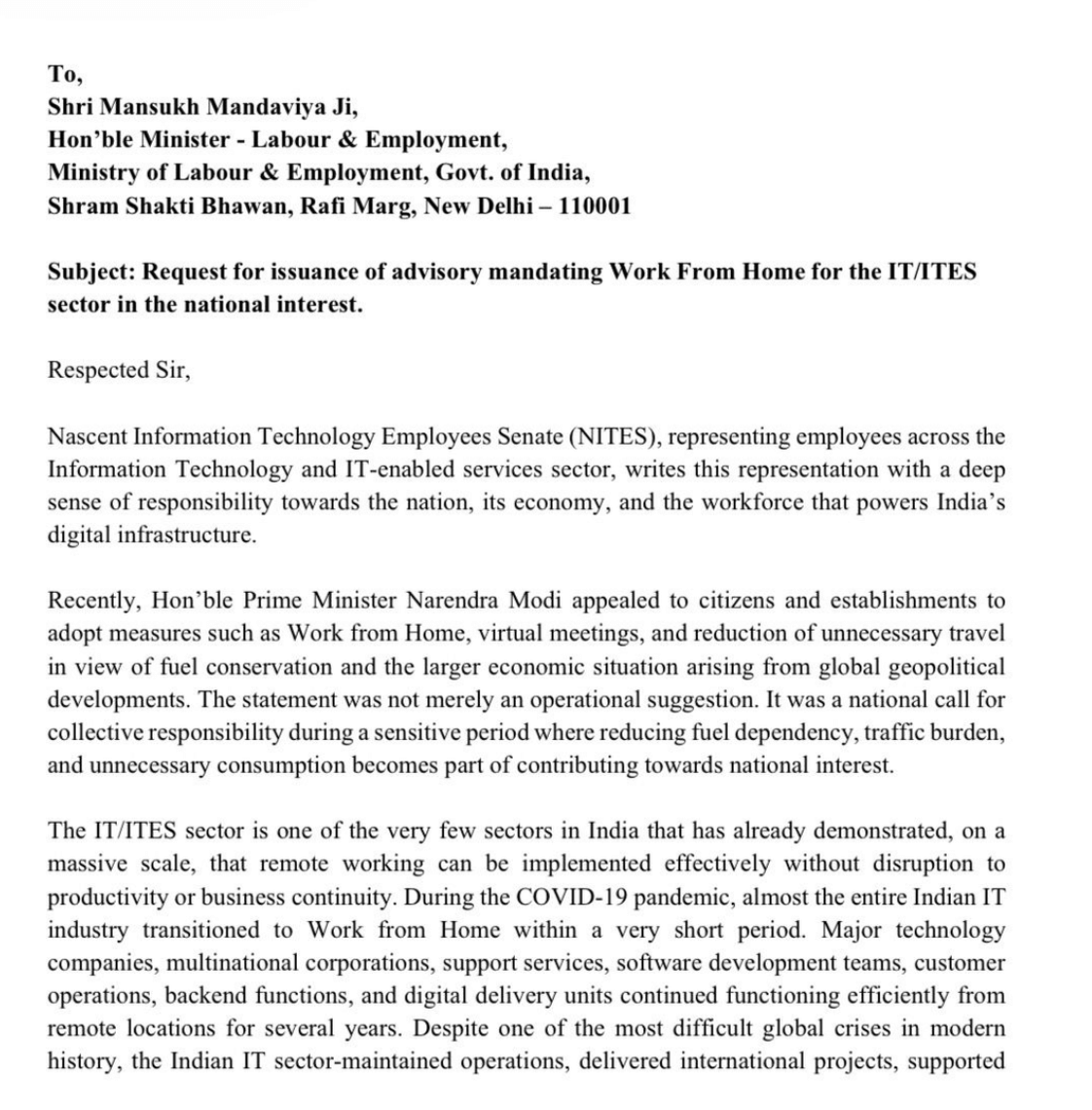
Earlier this week, the Nascent Information Technology Employees Senate (NITES) formally wrote to the Ministry of Labour and Employment seeking a government advisory encouraging remote work across the IT and IT-enabled services sector wherever operationally feasible.
In its letter to Labour Minister Mansukh Mandaviya, the employee body argued that the technology industry had already proven during the Covid-19 pandemic that large-scale remote work could maintain productivity and business continuity.
NITES positioned work from home as a broader economic measure rather than merely an employee benefit, arguing that mandatory daily commuting for lakhs of employees creates avoidable strain on:
- Fuel consumption
- Urban transport systems
- Traffic infrastructure
- Employee wellbeing
The organisation described its proposal as “collective national cooperation” aligned with Modi’s appeal for conservation measures.
Companies are beginning to respond
The discussion is also beginning to influence private sector workplace decisions.
Following the Prime Minister’s comments, Shaadi.com founder Anupam Mittal announced that the company would implement one remote work day every week for employees.
In a LinkedIn post, Mittal estimated that the move could reduce office commute fuel consumption by roughly 20% for the company’s workforce.
He also shared projected internal estimates suggesting:
- Around 30,000 litres of petrol could be saved annually
- Approximately six lakh kilometres of commuting could be avoided
- Nearly 500 employees would participate in the initiative
“Nation-building is not always a grand sacrifice. Sometimes it is just fewer cars on the road on a weekday,” Mittal wrote.
The post triggered wider debate online, with some users praising the move while others questioned why companies were not considering broader hybrid or fully remote models.
Return-to-office policies now face a different challenge
The renewed work-from-home discussion comes at a complicated moment for corporate India.
Over the past two years, many companies have tightened return-to-office mandates, arguing that in-person work improves:
- Collaboration
- Organisational culture
- Innovation
- Team engagement
- Leadership visibility
But the latest developments are reframing the issue.
The central question is no longer only whether employees prefer flexibility. It is increasingly whether large-scale daily commuting remains economically efficient in sectors where digital operations are already deeply embedded.
That shift could become particularly important for India’s IT and services sector, where remote infrastructure already exists at scale.
Hybrid work is becoming part of a wider policy conversation
What makes the Uttar Pradesh proposal significant is that it moves hybrid work into the domain of public policy rather than leaving it solely to corporate discretion.
The state government’s wider austerity measures included calls to:
- Reduce non-essential foreign travel
- Limit unnecessary electricity usage
- Promote domestic tourism
- Increase adoption of rooftop solar systems
- Encourage natural farming and local products
Within that broader framework, remote work was presented as one component of a larger economic and conservation strategy.
Whether other states adopt similar approaches remains unclear. But the combination of government signals, employee union pressure and early corporate responses suggests India’s work-from-home debate is entering a new phase.
This time, the conversation is not being driven by a health crisis. It is being driven by energy, economics and infrastructure.